

Your stovetop is the visual anchor of your kitchen. It is often the first thing guests notice and the surface that gets the most daily use. Even when your counters are spotless, a few burnt specks around the burners or dull patches on stainless steel can make your entire kitchen feel less fresh.
After testing multiple stovetop protectors over the past years, I have found that the easiest path to a consistently clean kitchen is not constant scrubbing. It is preventing stains before they happen.
This guide covers everything you need to know about stovetop protectors: how they work, what to look for when buying one, and how to maintain them for years of use.
Key Takeaways
- Stovetop protectors save 15-20 minutes of cleaning time per week by catching spills and grease before they bake onto your stove surface
- Custom-fit protectors outperform universal options because they sit flush and made for your exact model number
- Material thickness matters: Look for protectors at least 0.5mm thick for durability (budget options at 0.15-0.3mm can be flimsy and less durable)
- Heat resistance up to 500 degrees F is standard for quality non-stick coated fiberglass protectors
- Flat shipping prevents curling: Protectors shipped rolled often arrive with permanent curves and curls that affect fit
- A 365-day warranty signals manufacturer confidence in product durability versus 14-30 day guarantees
- Proper care extends lifespan: Simply hand wash or wipe down on the stovetop and dry immediately
Why Kitchen Cleanliness Starts With Your Stovetop
Walk into any home and look at the kitchen. The stovetop tells the story of how that space is maintained.
Daily cooking gradually wears down even the best stovetop surfaces. Grease splatters turn into faint heat marks. Stainless steel loses its factory shine. Micro-scratches from scrubbing pads accumulate until the surface looks dull and aged.
According to a 2024 survey by the American Cleaning Institute, the stovetop ranks as the second most time-consuming surface to clean in the average kitchen, trailing only the oven interior. Most households spend 15-20 minutes per week on stovetop cleaning alone.
A stovetop protector changes this equation entirely.
Instead of scrubbing baked-on residue, you simply wipe down the protector or remove it for a quick hand wash. Your stove maintains that bright, uniform appearance it had when you first bought it. The kitchen feels cleaner because the visual centerpiece actually stays clean.
What Is a Stovetop Protector?
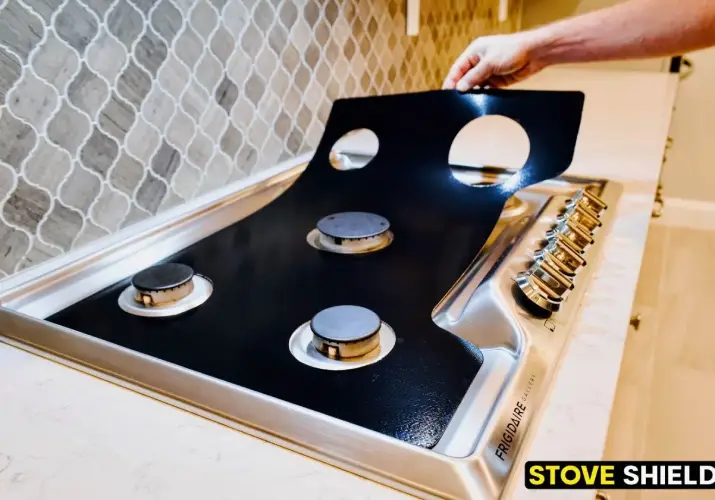
A gas stovetop protector is a durable, heat-resistant liner that sits on top of your stove surface, underneath the burner grates. It creates a barrier between cooking messes and your actual stovetop.
How It Works
The protector catches drips, splatters, and boil-overs before they reach your stove surface. When cooking is done, you wait for the grates to cool, then wipe down the protector while it is still on the stove or remove it for cleaning at the sink.
Most quality protectors are made from non-stick coated fiberglass. This material combination provides:
- Non-stick surface that prevents food from bonding
- Heat resistance typically rated to 500 degrees F
- Customization to conform to your exact stove model
- Durability for years of daily use
Custom-Fit vs. Universal Protectors
This is where many buyers make a costly mistake.
Universal protectors come in standard sizes with generic cutouts. They rarely fit perfectly, leaving gaps around burners where debris collects. You often need to trim them yourself, and even then the fit is imprecise.
Custom-fit protectors are designed for your specific stove model. Manufacturers maintain databases of thousands of stove configurations, cutting each protector to match exact burner placement, control panel location, and edge dimensions.
The difference shows immediately during use. A custom protector sits flush based on the stovetop panel molding, which limits awkward gaps or overlapping edges. Cleanup is faster because there are fewer places for grease to hide.
Benefits of Using a Stovetop Protector
Visual Benefits
A protected stovetop maintains its appearance far longer than an exposed one:
- Even brightness across the entire surface, without the dull patches that develop from repeated scrubbing
- No grease shadows around burners where oil tends to accumulate
- Preserved stainless steel shine instead of gradual dulling
- Uniform surface tone without heat-related discoloration
Practical Benefits
Beyond appearance, protectors deliver real time savings:
- Faster cleanup: Wiping a non-stick protector takes 2-3 minutes versus 15-20 minutes scrubbing baked-on residue
- Less harsh chemicals needed: The non-stick surface releases food without heavy degreasers
- Reduced scrubbing damage: Your stove surface never contacts abrasive pads
- Extended appliance lifespan: Less cleaning wear means your stove looks newer longer
Financial Benefits
Quality stovetop protectors typically cost $50-110 depending on brand and features. Compare this to:
- Professional deep cleaning services: $150-300 per visit
- Replacement stovetop surfaces: $500-2000+ depending on model
- Time value of weekly cleaning (at minimum wage): $260+ per year
A single protector that lasts 1-2 years with proper care delivers significant return on investment.
How to Choose the Right Stovetop Protector
Material Details
| Thickness | Durability | Typical Price Range |
|---|---|---|
| 0.15-0.2mm | Budget, may wear quickly | $15-30 |
| 0.25-0.3mm | Basic, 3-9 months | $30-50 |
| 0.5mm+ | Premium, 12-24+ months | $70+ |
Thicker protectors resist tears, maintain their shape better over time, and provide more substantial protection. Budget options often need replacement within a few months.
Products like Stove Shield offer 0.5-0.6mm thickness at the $80 price point, delivering premium durability without the $150+ price tag for more expensive options.
Heat Resistance
Look for protectors rated to at least 500 degrees F. This covers all standard cooking temperatures for gas stoves. Most PTFE non-stick coated fiberglass products meet this standard.
Note that the protector is not cookware. This protector sits under the grates, not in direct flame contact. The grates absorb most direct heat while the protector handles radiant heat and drip temperature.
Fit and Shipping Method
Two factors determine how well a protector fits your stove:
Fit type:
- Custom-cut for your exact model number (best)
- Universal with DIY trimming
Shipping method:
- Flat shipping (protector arrives ready to use without curling)
- Rolled shipping (may arrive curled, affecting fit and appearance)
Stove Shield ships flat and offers custom stove covers for over 15,000+ gas and electric coil stove models. This combination ensures the protector lies perfectly flat from day one.
Warranty and Customer Service
Warranty length signals manufacturer confidence in product quality:
- 14-30 days: Minimal commitment
- 90-180 days: Standard
- 365 days: Premium commitment, indicates quality materials and construction
Customer service reputation matters when you need support. Check review sites like Trustpilot and BBB ratings before purchasing. Some brands have documented customer service issues despite decent products.
Popular 2025 Gas Stove Models That Benefit Most
These popular 2025 stove models are favorites and have custom-fitted protectors available on the market:
Whirlpool WFG320M0MS (30″) – Simple layout with highly visible burner areas. The brushed stainless surface shows grease spots quickly.
GE JGBS66REKSS (30″) – A favorite among families who prioritize organization. The smooth finish dulls noticeably without protection.
Bosch HGI8056UC (30″) – Premium stainless steel with a polished finish that requires careful upkeep to maintain its showroom appearance.
Samsung NX60T8511SS (30″) – Popular among families with children. Fingerprints and splatters appear instantly on the bright surface.
Frigidaire Gallery FGGH3047VF (30″) – Known for its clean, modern aesthetic where every spot stands out against the uniform finish.
These models benefit substantially from stovetop protection because their design philosophy emphasizes visual cleanliness.
Installation Guide
Installing a stovetop protector takes about five minutes:
Step 1: Ensure your stovetop is completely cool and clean. Remove any existing residue with a gentle cleaner.
Step 2: Remove the burner grates and set them aside.
Step 3: Position the protector over the stovetop, aligning the burner cutouts with each burner.
Step 4: For custom-fit protectors, the alignment should be precise.
Step 5: Replace the burner grates.
Step 6: Light each burner briefly to verify flames burn normally. Burner flames should emit vertically – if any nozzle is emitting flames sideways it’s important to fix this nozzle prior to using the protector.
No tools required. No adhesive needed. It’s very simple.
Maintenance and Care
Proper maintenance extends protector life significantly:
Daily Care
After cooking, wait for the grates to cool (the protector itself does not retain significant heat). Wipe down the protector with a damp cloth to remove fresh splatters.
Weekly Deep Clean
Remove the protector and hand wash at the sink. Rinse thoroughly and dry immediately to maintain shape. Never soak or submerge for extended periods.
What to Avoid
- Never use the dishwasher. The harsh detergents and heat cycles damage the non-stick coating and can warp the protector.
- Never soak the protector. Extended water exposure can warp the protector.
- Never use abrasive scrubbers. use soft cloths or non-scratch sponges only.
- Never let the protector contact open flame. Burner flames should emit vertically – if any nozzle is emitting flames sideways it’s important to fix this nozzle prior to using the protector.
With proper care, a quality protector can last years with daily use.
Accessories That Complete the Package
Beyond the stovetop protector, consider these complementary products:
Oven liners catch drips inside the oven, preventing the baked-on messes that require hours of cleaning. Products like OvenShield use similar non-stick features.
Stove gap covers fill the space between your stove edge and counter where crumbs and liquids may fall.
Together, these accessories create a comprehensive protection system that minimizes kitchen cleaning time.
Frequently Asked Questions
Are stovetop protectors safe for gas stoves?
Yes. Quality protectors made from non-stick coated fiberglass are designed specifically for gas stove use. They lay on top of the stovetop surface, maintaining safe distance from flames. The material withstands temperatures up to 500 degrees F, well above normal cooking heat.
How often should I replace my stovetop protector?
With proper care, quality protectors last 12-24+ months. Signs it is time for replacement include permanent staining that will not clean, tears or burns in the material, or edges that no longer lie flat.
Can I trim a protector to fit my stove?
This is not necessary when you purchase custom-fitted protectors designed for your model.
Will a protector affect cooking performance?
No. Stovetop protectors are not cookware. It’s a protective layer between your stovetop surface and spills. Properly installed protectors do not interfere with heat distribution or flame patterns.
What is the difference between a stovetop protector and a stove cover?
A stovetop protector stays in place during cooking, protecting the stovetop surface while you use the stove. A stove cover (sometimes called a noodle board) covers the entire stovetop when not in use, providing counter space. Protectors are for active cooking protection; covers are for aesthetics and extra workspace.
How do I know which size protector fits my stove?
Most manufacturers offer search tools where you enter your stove brand and model number. Custom-fit services use this information to cut protectors matching your exact specifications. If your model is not in their database, you sometimes can request to have your stove model added.
Conclusion
A clean stovetop transforms how your entire kitchen looks and feels. Instead of spending 15-20 minutes weekly scrubbing baked-on grease, you can maintain that bright, polished appearance with a quick wipe.
The right stovetop protector makes this possible. Look for:
- Material thickness of at least 0.5mm for durability
- Custom fit for your specific stove model
- Flat shipping to prevent curling
- Heat resistance to 500 degrees F minimum
- Strong warranty backing (365 days ideal)
For homeowners serious about maintaining a clean kitchen with minimal effort, Stove Shield checks all these boxes. Their protectors are 2-4x thicker than budget alternatives, ship flat to your door, and come with a 365-day product warranty. Custom fits are available for over 15,000+ stove models.
Start with your stovetop. Once that visual anchor stays clean, maintaining the rest of your kitchen becomes noticeably easier.
Sources
- American Cleaning Institute – Kitchen Cleaning Survey 2024 – Industry data on household cleaning time allocation
- America’s Test Kitchen – The Best Way to Clean Your Stovetop – Expert cleaning methodology and product testing
- Maytag – How to Clean Gas Stove Grates & Burners – Manufacturer guidance on gas stove maintenance
- CNET – How to Clean Gas, Induction and Glass Cooktops – Comprehensive stovetop cleaning guide
- BestReviews – Best Gas Range Protectors – Independent product comparison and testing
- Reddit r/Cooking – Stovetop Protector Discussion – Real user experiences and recommendations
- Clean My Space – Expert Tips for Cleaning a Gas Stovetop (YouTube) – Professional cleaning demonstration
About the Author
Ben Karlovich is an expert in the stove niche and has spent his career creating products and accessories that enhance household kitchen stoves. In 2016 he launched stovedecals.com(Stove Decals brand) and was the first to create and offer replacement stove decals across thousands of stove models. In 2022 he created stoveshield.com (Stove Shield brand) focused on stove top protectors, a patented knob panel protector, and other useful stove accessories fitted for your exact stove model. This niche expertise helps bring a unique blend of creativity and innovation to every article post.
Disclaimer: This article is for informational and educational purposes only and should not be relied upon as the sole basis for purchasing decisions. Product specifications, pricing, and availability are subject to change – contact the relevant manufacturer or retailer for the most current information. Stove Shield is not affiliated with and receives no compensation from any brands mentioned in this article.