



Key Takeaways
- Budget picks deliver reliability: The Whirlpool WFG320M0M ($500-$700) and Whirlpool WFES3030 ($600-$800) top reliability charts according to Yale Appliance service data from 33,000+ calls
- Mid-range sweet spot: GE and Samsung dominate the $900-$1,500 range with smart features, air fry capability, and solid build quality
- Professional ranges cost more but last longer: Wolf and Thermador 48-inch ranges ($8,000-$12,000) have the lowest service rates in the industry
- Size matters for holiday cooking: 30-inch ranges suit most households, but if you regularly cook for 10+ people, consider stepping up to 36 or 48 inches
- Gas vs. induction is personal: Gas offers precise heat control; induction heats faster but repair costs run $400+ per module if something fails
- Brand reliability varies significantly: Whirlpool and Bosch lead reliability ratings, while Samsung draws mixed reviews for customer service
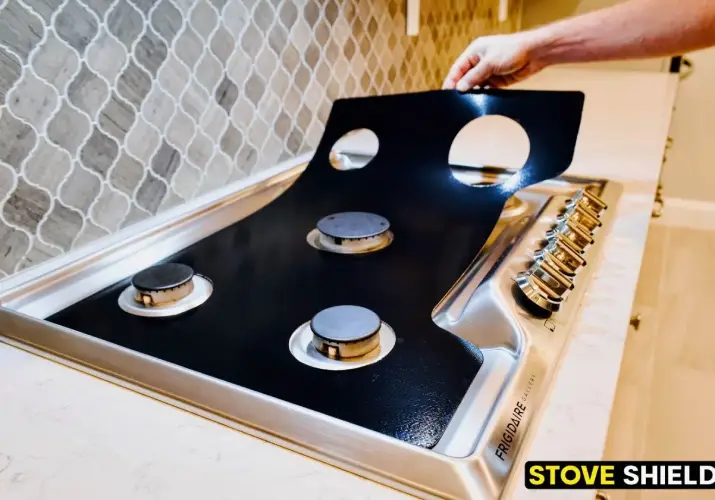
- Protect your investment: A quality stovetop protector like Stove Shield ($79.99, 365-day warranty) offers an easy solution to simplifying cleanups and protecting your stovetop
The kitchen transforms during the holidays. What’s normally a space for quick weeknight dinners suddenly becomes command central for roasting 20-pound turkeys, simmering three kinds of gravy simultaneously, and baking enough cookies to feed the neighborhood.
Your stove handles the brunt of this workload. And if you’re shopping for a new range this season, you’re probably wondering: Which stoves actually perform when it matters most?
I’ve spent weeks digging through lab tests from Consumer Reports, reliability data from Yale Appliance (they track 33,000+ service calls annually), expert reviews from Wirecutter, and real user experiences from Reddit’s r/Appliances community. Here’s what I found about the best stoves for 2025.
What Makes a Great Holiday Stove?
Before diving into specific models, let’s talk about what actually matters when you’re cooking for a crowd.
BTU Power for Searing and Boiling
When you need to sear a roast or bring a large pot of water to boil quickly, BTU ratings matter. Most standard burners run 9,000-12,000 BTUs. For serious cooking, look for at least one high-power burner in the 15,000-20,000 BTU range.
That said, raw BTU numbers don’t tell the whole story. Heat distribution and simmer control matter just as much. A burner that can maintain a steady 140-degree simmer for your hollandaise is worth more than one that just blasts heat.
Oven Capacity for Big Birds
Thanksgiving turkeys and Christmas roasts need space. Most 30-inch ranges offer 5.0-6.3 cubic feet of oven capacity, which handles turkeys up to 25 pounds. If you regularly cook for large gatherings, the extra width of a 36-inch or 48-inch range gives you room for multiple dishes at once.
Continuous Grates for Heavy Pots
Sliding a 12-quart stockpot full of soup from one burner to another without lifting? That’s what continuous cast-iron grates are for. They’re standard on pro-style ranges and increasingly common on mid-range models too.
Smart Features That Actually Help
Wi-Fi connectivity sounds gimmicky until you’re monitoring your oven temperature from the living room while entertaining guests. Remote preheat and temperature alerts have become genuinely useful features.
Best 30-Inch Stoves for 2025
The 30-inch range fits most kitchen cutouts and handles typical household cooking needs. Here are the standout models across different price points.
Best Budget Gas: Whirlpool WFG320M0M ($500-$700)
Whirlpool may not win design awards, but it wins where it counts: reliability. This freestanding gas range has been a consistent performer for years.
What you get:
- Four sealed burners (up to 15,000 BTU)
- 5.1 cubic feet oven capacity
- Simple, intuitive controls
- Self-cleaning option
The trade-off: No convection, no smart features, basic styling. But parts are cheap, repair techs know these ranges inside out, and they just keep working. For a starter home or rental property, this is the smart choice.
Consumer Reports ranks Whirlpool among the most reliable brands based on member surveys.
Best Budget Electric: Whirlpool WFES3030 ($600-$800)
Same reliability story as the gas model. Coil elements instead of a smooth glass top mean fewer repair headaches.
What you get:
- Four coil heating elements
- 4.8 cubic feet oven capacity
- Self-cleaning oven
- Storage drawer
Real talk: Coil burners clean up a bit harder than smooth glass tops, but they’re nearly indestructible. A user on r/Appliances put it well: “My parents’ Whirlpool range is 18 years old and still going strong. Meanwhile, my neighbor’s fancy Samsung died after 3 years.”
Best Mid-Range Gas: GE GGF600AVSS ($1,100-$1,400)
GE hits the sweet spot between features and value. This slide-in range looks more expensive than it is.
What you get:
- Five sealed burners (15,000 BTU Power Boil + 18,000 BTU center burner)
- 5.3 cubic feet convection oven
- No-preheat air fry mode
- Self-cleaning with steam option
- Continuous cast-iron grates
Holiday bonus: The edge-to-edge grates let you slide heavy pots between burners without lifting. That matters when you’re juggling multiple dishes.
Best Smart Range: Samsung NSG6DG8500SR ($1,200-$1,600)
Samsung packs more technology into their ranges than anyone else. Whether you’ll use it is another question.
What you get:
- Five burners with dual power (18,000 + 16,000 BTU)
- 6.0 cubic feet oven with Air Fry and Air Sous Vide
- Wi-Fi with SmartThings integration
- Fingerprint-resistant stainless steel
- Slide-in design
The caveat: Samsung’s reliability record is mixed. Yale Appliance data shows higher service rates than Whirlpool or GE. If you love smart home integration and accept the trade-off, this is a feature-packed choice. Just keep the warranty in mind.
Best Premium 30-Inch: LG LRGN6325X ($1,500-$1,800)
LG combines smart features with solid build quality in this ProBake range.
What you get:
- Five burners including 20,000 BTU UltraHeat
- 6.3 cubic feet ProBake Convection oven
- EasyClean and Self Clean options
- ThinQ smart connectivity
- Fingerprint-resistant finish
Why it stands out: The ProBake element positions the heating source on the back wall instead of the bottom, improving heat distribution. That means more even baking for cookies and casseroles.
Best 36-Inch Stoves for 2025
When you need more cooking power but don’t have space (or budget) for a 48-inch pro range, 36-inch models hit the sweet spot.
Best Value 36-Inch Gas: Frigidaire GCFG3661AF ($1,800-$2,200)
Frigidaire packs six burners into this 36-inch freestanding range at a competitive price.
What you get:
- Six burners with two 18,000 BTU Quick Boil burners
- 5.1 cubic feet True Convection oven
- Air Fry and Steam Clean
- Smudge-Proof stainless steel
- Continuous cast-iron grates
Practical note: The Smudge-Proof finish actually works. Fingerprints wipe off easily, which matters more than you’d think during the holidays when everyone’s in and out of the kitchen.
Best Performance 36-Inch: Forno FFSGS6125-36 ($2,500-$3,200)
Forno isn’t a household name, but this Italian-made dual-fuel range competes with brands costing twice as much.
What you get:
- Six sealed burners (83,000 total BTU output)
- 5.36 cubic feet true convection electric oven
- Blue enamel oven interior
- Heavy-duty cast-iron grates
- Triple-layer glass door
The dual-fuel advantage: Gas burners give you precise cooktop control; the electric convection oven provides even baking heat. It’s the best of both worlds for serious cooks.
Best Cooktop-Only: Whirlpool KCGS556ESS06 ($1,400-$1,800)
If you prefer a separate cooktop and wall oven setup, this 36-inch Whirlpool delivers.
What you get:
- Five burners with 20,000 BTU dual-ring center burner
- CookShield finish resists stains
- Continuous cast-iron grates
- Low-profile design
Design consideration: Separate cooktops allow more flexibility in kitchen layout. You can position the oven at a comfortable height and place the cooktop wherever makes sense for your workflow.
Best 48-Inch Professional Ranges for 2025
These are statement pieces: expensive, powerful, and built to last decades. If you’re serious about cooking and have the budget, here’s where to invest.
Best Overall Pro Range: Wolf DF48650GSP ($10,000-$14,000)
Wolf is the standard by which other pro ranges are measured. Sub-Zero (Wolf’s parent company) has built this reputation over decades.
What you get:
- Six dual-stacked sealed burners (up to 20,000 BTU each)
- Infrared griddle
- Dual convection electric ovens with 10 cooking modes
- Self-clean option
- Wi-Fi enabled Gourmet Mode (50+ presets)
- Signature red knobs
Why it costs what it costs: Wolf ranges have the lowest service rates in the pro-range category according to Yale Appliance. Parts availability, professional installation support, and build quality justify the investment for many serious home cooks.
Yale Appliance data: Wolf ranges require service less frequently than most competitors, despite heavier use.
Best Value Pro Range: Forno FFSGS6244-48 ($4,500-$6,000)
Forno delivers pro-range aesthetics and performance at nearly half the Wolf price.
What you get:
- Eight Italian brass burners
- Dual ovens (4.32 + 2.26 cubic feet) with convection
- 20,000 BTU dual-ring burner
- Professional stainless steel body
- Triple-layer oven glass
The trade-off: You don’t get Wolf’s service network or brand legacy. But for the money saved, you can afford plenty of service calls if needed.
Best for Precision Cooking: Thermador PCG486WD ($8,000-$11,000)
Thermador’s patented Star burners offer something no other brand matches: consistent flame pattern for even heat distribution.
What you get:
- Six Star burners (the star shape provides even heating)
- Electric griddle
- ExtraLow simmer (reliable 140-degree simmer)
- Cast-iron continuous grates
- QuickClean Base for easier maintenance
- Convertible for LP or natural gas
The detail that matters: ExtraLow simmer technology lets you hold delicate sauces and melted chocolate at precisely low temperatures without scorching. That’s a meaningful upgrade for anyone who makes hollandaise or tempering chocolate.
Comparison Table: 2025’s Best Stoves by Category
| Category | Model | Price Range | BTU (High) | Oven Capacity | Key Feature |
|---|---|---|---|---|---|
| Budget Gas | Whirlpool WFG320M0M | $500-$700 | 15,000 | 5.1 cu ft | Reliability leader |
| Budget Electric | Whirlpool WFES3030 | $600-$800 | N/A | 4.8 cu ft | Long-term durability |
| Mid-Range Gas | GE GGF600AVSS | $1,100-$1,400 | 18,000 | 5.3 cu ft | No-preheat air fry |
| Smart Range | Samsung NSG6DG8500SR | $1,200-$1,600 | 18,000 | 6.0 cu ft | SmartThings integration |
| Premium 30″ | LG LRGN6325X | $1,500-$1,800 | 20,000 | 6.3 cu ft | ProBake Convection |
| Value 36″ | Frigidaire GCFG3661AF | $1,800-$2,200 | 18,000 | 5.1 cu ft | Smudge-Proof finish |
| Performance 36″ | Forno FFSGS6125-36 | $2,500-$3,200 | 18,000 | 5.36 cu ft | Dual-fuel design |
| Pro Range | Wolf DF48650GSP | $10,000-$14,000 | 20,000 | Dual ovens | Lowest service rates |
| Value Pro | Forno FFSGS6244-48 | $4,500-$6,000 | 20,000 | Dual ovens | Italian brass burners |
| Precision Pro | Thermador PCG486WD | $8,000-$11,000 | Star burners | Rangetop only | ExtraLow simmer |
Gas vs. Electric vs. Induction: Which Is Best for Holiday Cooking?
This question comes up constantly in appliance forums. Here’s the straightforward answer:
Gas Ranges
Advantages:
- Instant heat adjustment
- Visual flame feedback
- Works during power outages
- Lower operating costs in many regions
- Traditional cooking feel
Disadvantages:
- Indoor air quality concerns (ventilation recommended)
- Harder to clean around burners
- Less even oven heating than electric
Best for: Cooks who want precise heat control and the satisfaction of cooking with visible flame.
Electric Ranges
Advantages:
- Even oven baking
- Easier to clean smooth glass tops
- Lower upfront cost
- No combustion byproducts
Disadvantages:
- Slower to heat and cool
- Glass tops can crack under impact
- Requires compatible cookware for smooth tops
Best for: Bakers who prioritize oven performance over stovetop flexibility.
Induction Ranges
Advantages:
- Fastest heat response (faster than gas)
- Precise temperature control
- Cool-to-touch surface
- Energy efficient
- Easy to clean flat surface
Disadvantages:
- Requires magnetic cookware (cast iron, magnetic stainless)
- Expensive repairs ($400+ per induction module)
- May require electrical upgrade
- Some users dislike the learning curve
Best for: Cooks who want speed and precision and are willing to invest in compatible cookware.
Reddit community insight: “Induction is great until something breaks. Control boards and modules are expensive and not every repair tech knows how to work on them.” – r/Appliances
Brand Reliability Rankings for 2025
Yale Appliance tracks service data from 33,000+ calls annually. Here’s how brands stack up:
Most Reliable Stove Brands
- Whirlpool – Consistently low service rates, affordable parts
- Bosch – German engineering, solid long-term performance
- Miele – Premium price but exceptional longevity
- Wolf – Lowest service rates among pro ranges
- LG (basic models) – Reliable when not overloaded with features
Good Reliability
- GE / GE Profile
- Frigidaire
- KitchenAid
- Thermador
Mixed Reviews
- Samsung – Great features, but higher service rates and polarizing customer service experiences
- LG (feature-heavy models) – More electronics mean more potential failure points
Important note: Reliability data comes from actual service records. A brand with higher service rates isn’t necessarily “bad” – it might just have more complex technology.
What to Look For When Buying a New Range
Before shopping, measure your existing range cutout carefully. Most 30-inch ranges are actually 29-7/8 inches wide, but installation dimensions vary.
Critical Measurements
- Width: Standard sizes are 30, 36, and 48 inches
- Depth: Most ranges are 25-28 inches deep; slide-in models may be shallower
- Height: Consider backsplash height for slide-in vs. freestanding
- Electrical/Gas: Verify you have the right hookup (or budget for conversion)
Features Worth Paying For
- Convection oven: More even heat distribution for baking
- Continuous grates: Essential for heavy pot sliding
- High-BTU burner: At least one 15,000+ BTU burner for searing
- Easy-clean surfaces: Self-cleaning oven or steam clean option
- Good controls: Responsive knobs, clear temperature readouts
Features You Might Skip
- Multiple smart features: Unless you’ll actually use app connectivity
- Warming drawers: Nice but rarely essential
- Built-in griddles: Takes up a burner; a separate griddle works fine
- Premium finishes: Black stainless scratches; fingerprint-resistant standard stainless is often more practical
Protecting Your Investment During Heavy Holiday Use
Between Thanksgiving prep, Christmas dinner, and New Year’s Eve entertaining, your stovetop takes a beating during the holidays. Sauces bubble over. Turkey drippings splatter. Kids spill hot chocolate.
One option for keeping a new stove pristine: custom-fit stovetop protectors. Products like Stove Shield offer heat-resistant protectors (up to 500 degrees) cut specifically for your stove model. At $79.99 with a 365-day warranty, it’s a fraction of the cost of replacing scratched or stained stovetop surfaces. The non-stick surface makes for easy cleanups so you spend less time cleaning and more time enjoying quality family time!
The difference from generic protectors: Stove Shield ships flat (not rolled) and uses 0.5-0.6mm thick material – about twice as thick as budget alternatives. Each protector is designed based on the stove model’s panel molding.
Holiday Deal Timing: When to Buy
Stove shopping around the holidays? Here’s when deals typically hit:
Black Friday / Cyber Monday (Late November): Best discounts of the year, especially on last year’s models. Expect 15-30% off.
December clearance (Week before Christmas): Retailers push remaining inventory. Selection is limited but discounts are steep.
Post-holiday sales (Late December – January): Floor model sales and returns at significant discounts.
Presidents Day (February): Traditional appliance sale period. Good deals on current models.
Pro tip: If you find the right stove at 15% off during Black Friday, buy it. Waiting for a deeper discount often means losing the model you want.
Conclusion
The best stove for your kitchen depends on how you cook, how much space you have, and what you’re willing to spend.
If reliability is your priority: Whirlpool gas or electric ranges deliver years of trouble-free cooking at budget-friendly prices. They’re not exciting, but they work.
If you want features without breaking the bank: GE and LG hit the sweet spot around $1,200-$1,800, combining smart technology, powerful burners, and convection baking.
If you’re serious about cooking: Wolf, Thermador, and Forno professional ranges deliver restaurant-level performance for home cooks willing to invest.
My recommendation for most holiday cooks: The GE GGF600AVSS ($1,100-$1,400) offers the best balance of power, features, and reliability. You get a high-BTU burner for searing, convection for even baking, air fry for convenience, and GE’s solid service network if something goes wrong.
Whatever you choose, measure twice before ordering and factor in professional installation costs (typically $150-$400 depending on whether you need electrical or gas work).
Happy cooking this holiday season.
Sources
- Consumer Reports – Best Ranges of 2025 – Lab testing methodology and reliability survey data
- NYT Wirecutter – The 5 Best Gas Stoves and Ranges – Expert testing and top pick recommendations
- Yale Appliance – Most Reliable Electric Ranges – Service data from 33,000+ calls annually
- Reviewed.com – 9 Best Ranges, Tested – Lab testing and category rankings
- Reddit r/Appliances – Best ranges that don’t break the bank – Real user experiences and brand recommendations
- Reddit r/Appliances – Best appliances as of 2025 – Community consensus on reliability
- GE Appliances – Range Collection – Official specifications and pricing
- Wolf/Sub-Zero – Wolf Ranges – Professional range specifications
- Thermador – Professional Rangetops – Pro-range features and technology
About the Author
Ben Karlovich is an expert in the stove niche and has spent his career creating products and accessories that enhance household kitchen stoves. In 2016 he launched stovedecals.com(Stove Decals brand) and was the first to create and offer replacement stove decals across thousands of stove models. In 2022 he created stoveshield.com (Stove Shield brand) focused on stove top protectors, a patented knob panel protector, and other useful stove accessories fitted for your exact stove model. This niche expertise helps bring a unique blend of creativity and innovation to every article post.
Disclaimer: This article is for informational and educational purposes only and should not be relied upon as the sole basis for purchasing decisions. Product specifications, pricing, and availability are subject to change – contact the relevant manufacturer or retailer for the most current information. Stove Shield is not affiliated with and receives no compensation from any brands mentioned in this article.