


Key Takeaways
- 62% of Americans now cook at home regularly, up from 53% in 2003 — and men are driving the biggest shift, jumping from 36% to 52% over that same period (NIH/PMC study)
- The average American spends 37 minutes per day on food prep, serving, and cleanup combined, according to the Bureau of Labor Statistics American Time Use Survey 2024
- Home cooking costs $4.31 per serving on average, while eating out runs about $20.37 — that’s nearly a 5x price difference that explains why 78% of consumers say they cook at home to save money
- Cooking frequency drops sharply by the end of the week: 61% of Americans cook on Mondays, but only 49% bother on Fridays
- Generational habits vary widely — 70% of Boomers make dinner from scratch on Sundays, compared to just 40% of Gen Z
- The kitchen claims roughly 400 hours of your year, and small changes to cleanup routines (like using a stovetop protector) can reclaim a meaningful chunk of that time
- Women still cook more, averaging 71 minutes per day compared to men’s 50 minutes — but the gap has been narrowing for two decades
Introduction
Sixty-two percent of Americans cook at home on a regular basis. That number might surprise you — or it might not, depending on whether you’re reading this with a saucepan on the burner right now.
What’s genuinely interesting isn’t that people cook at home. It’s that more people are doing it now than 20 years ago, even though we’re busier, more distracted, and have more takeout options than any generation before us. Back in 2003, only 53% of Americans cooked regularly. Since then, meal kit services, food delivery apps, and ghost kitchens have exploded onto the scene. And yet — people are choosing the stovetop over the smartphone order.
So what’s going on? Why do millions of Americans come home after long days and decide to cook? And just as importantly — how are they finding the time?
This article breaks down the real numbers behind home cooking in America. We’ll look at who’s cooking, how long it actually takes, what it costs compared to eating out, and the practical strategies busy households use to keep cooking without losing their evenings to kitchen cleanup.
Who’s Actually Cooking at Home? The Numbers Might Surprise You
The most complete picture we have comes from a peer-reviewed study published in the National Institutes of Health that tracked American cooking habits over a full 20-year span, from 2003 to 2023. And the trend is clear: more Americans are cooking, not fewer.
The Gender Shift
The biggest story isn’t just that cooking participation is up. It’s who started cooking.
- Women who cook: 72% (up from 69% in 2003). A modest increase.
- Men who cook: 52% (up from 36% in 2003). That’s a 16-percentage-point jump.
Men didn’t just start helping with dinner. Over two decades, more than half of American men became regular home cooks. That’s a real cultural shift, and it’s backed by hard data — not just anecdotal TikTok cooking videos.
Among those who actually cook, women spend about 71 minutes per day on food preparation. Men average 50 minutes. So women still cook more — both in terms of participation rate and time invested — but the gap is closing. In 2003, men who cooked spent only 45 minutes at it. By 2023, that rose to 50 minutes.
Education and Income Patterns
Here’s a detail that often gets missed: college-educated Americans saw the biggest jump in cooking participation — up 13 percentage points from 53% to 66%. Meanwhile, adults without a high school diploma who cook actually spend the most time doing it, averaging 77 to 85 minutes per day.
That suggests something worth thinking about. People with higher education might be cooking more often, but people with less formal education who do cook tend to prepare more labor-intensive meals — possibly from scratch, using less expensive ingredients that require more preparation.
How Much Time Does Home Cooking Really Take?
Let’s talk numbers. According to the Bureau of Labor Statistics American Time Use Survey (ATUS) 2024, Americans spend an average of 37 minutes per day on food preparation and cleanup combined. That includes everything: chopping vegetables, standing over the stove, serving, and washing up afterward.
But that’s the average across all Americans — including those who don’t cook at all. Among people who actually cook, the time commitment is quite different.
Daily Time Breakdown
People who regularly prepare meals at home spend about 62 to 63 minutes per day on cooking-related activities. And that doesn’t even count eating.
The same ATUS data shows Americans spend another 74.4 minutes per day just eating and drinking. On weekdays, that’s about 70.8 minutes. Weekends push it higher to 81.6 minutes — makes sense, since weekend brunches tend to be more relaxed affairs.
Add the cooking time to the eating time, and you’re looking at well over two hours of your day devoted to food. Across a full year, the kitchen claims roughly 400 hours of your time. That’s equivalent to ten 40-hour work weeks.
Why This Matters
Four hundred hours. Think about that for a second.
If you could shave even 15 minutes off your daily kitchen routine — whether that’s faster cleanup, better meal planning, or simpler recipes — you’d get back more than 90 hours per year. That’s almost four full days.
The time pressure is real, and it’s one of the biggest reasons people cite for not cooking more often. But as we’ll see, the cost pressure pushes back hard in the other direction.
The Money Factor: Why Home Cooking Wins the Budget Battle
If time is the reason people stop cooking, money is the reason they start again.
The math is pretty stark. According to consumer research data compiled by Instacart and corroborated by USDA food spending reports:
- Home-cooked meal: $4.31 per serving (average)
- Restaurant meal: $20.37 per serving (average)
That’s not a marginal difference. Eating out costs roughly 4.7 times more than cooking at home. For a family of four eating dinner every night, that’s the difference between about $17 and $81 per meal. Over a month, cooking at home saves approximately $1,900 compared to eating out nightly.
No wonder 78% of consumers say they cook at home primarily to save money.
Inflation Made It Worse
The cost gap has actually widened in recent years. In 2024, grocery prices rose about 1.6%, while restaurant prices climbed 3.6% — more than double the grocery increase. As restaurants pass along higher labor costs, food costs, and rent, that $20.37 average restaurant meal keeps getting more expensive. Home cooking becomes an even better deal by comparison.
Fox Business reported in June 2025 that economic concerns are actively driving more Americans back into the kitchen. The trend isn’t abstract — it’s showing up in grocery sales numbers and declining restaurant traffic counts.
What Real People Say About It
This tracks with what actual Americans report on forums. In a popular r/AskAnAmerican thread with over 140 comments, the consensus was clear: families with kids almost always cook at home because the economics make it unavoidable. One commenter put it simply — feeding four people at a restaurant three times adds up to what their weekly grocery bill costs.
On Quora, users echoed a similar theme: most families with children cook at home because it’s cheaper and less hassle than wrangling kids at a restaurant. The financial motivation is primary, but convenience — particularly with young children — runs a close second.
The Weekly Cooking Rhythm: Mondays vs. Fridays
Not every day looks the same in American kitchens. Cooking frequency follows a predictable weekly pattern, and it tells us something about when motivation is high versus when fatigue wins.
61% of Americans cook on Mondays. Fresh week, fresh groceries, fresh intentions. By Friday, that drops to 49%. After five days of work, commutes, and responsibilities, nearly half the country is reaching for the delivery app instead of the cutting board.
Generational Cooking Habits
The generational divide is just as telling.
On Sundays — traditionally the big home cooking day — 70% of Boomers prepare dinner from scratch. For Gen Z? That number is 40%. Still respectable (four in ten young adults cooking a full Sunday dinner isn’t nothing), but the 30-percentage-point gap highlights a real generational difference in cooking culture.
A Reddit thread on r/NoStupidQuestions touched on this gap, with users debating what “cooking” even means. Some counted assembling a sandwich. Others insisted it only counted if you started with raw ingredients. The definition matters because it affects how we interpret these statistics — and it helps explain why younger generations might report lower “from scratch” numbers even if they’re preparing meals at home regularly.
Why Cooking at Home Beats Takeout Beyond the Price Tag
Cost savings alone don’t explain why home cooking participation keeps rising. People stay in the kitchen for reasons that go beyond their wallets.
Health and Ingredient Control
When you cook at home, you decide what goes into your food. No hidden sodium. No mystery oils. No supersized portions designed to make a restaurant plate look generous. Research consistently links home cooking with better dietary outcomes — fewer calories consumed, more vegetables eaten, and lower rates of obesity.
That control matters more to some people than the money savings. Parents cooking for children with allergies don’t have the luxury of trusting a restaurant’s kitchen. People managing conditions like diabetes or hypertension need to control their sodium and sugar intake with precision that a takeout order can’t guarantee.
The Satisfaction Factor
There’s also something that data doesn’t easily capture: the satisfaction of making something yourself. Cooking is one of the few daily activities where you create something tangible. You start with ingredients and end with a meal. It’s productive in a way that most desk jobs aren’t.
Community discussions on Quora reveal that many home cooks find genuine enjoyment in the process. Users share detailed strategies for stretching ingredients across multiple meals — turning a roast chicken into shawarma wraps one night, then using the carcass for stock the next day. That kind of resourceful cooking isn’t drudgery for them. It’s a skill they take pride in.
Practical Ways to Cut Kitchen Time Without Cutting Home Cooking
So you want to cook at home — for the savings, the health benefits, the satisfaction — but 400 hours a year feels like a lot. Fair enough. Here’s how busy households are making it work.
Batch Cooking and Meal Prep
The single biggest time-saver is cooking more food in fewer sessions. Spend two hours on Sunday preparing grains, proteins, and roasted vegetables, and you’ve got building blocks for weeknight dinners that take 15 minutes to assemble instead of 45 minutes to cook from scratch.
This isn’t a new idea, but it’s gained momentum. The meal prepping trend has moved from fitness communities into mainstream households because it works. Cook once, eat multiple times.
Simplify Weeknight Meals
Not every dinner needs to be an elaborate production. A weeknight meal can be sheet-pan chicken with vegetables (20 minutes of prep, 25 minutes in the oven, one pan to wash). Or a grain bowl with pre-cooked rice, canned beans, and whatever vegetables are in the fridge.
The trick is giving yourself permission to cook “simple” without feeling like you’ve failed at dinner. A homemade meal of scrambled eggs, toast, and a salad is still cheaper and healthier than most takeout options.
Reduce Cleanup Friction
Here’s where a lot of people lose the battle. The cooking itself might be enjoyable, but the cleanup afterward? That’s what pushes people toward ordering takeout on a Wednesday night.
Smart households minimize cleanup in a few ways:
- One-pot and sheet-pan meals cut dishes dramatically
- Clean as you go — wipe down counters and wash prep bowls while food cooks
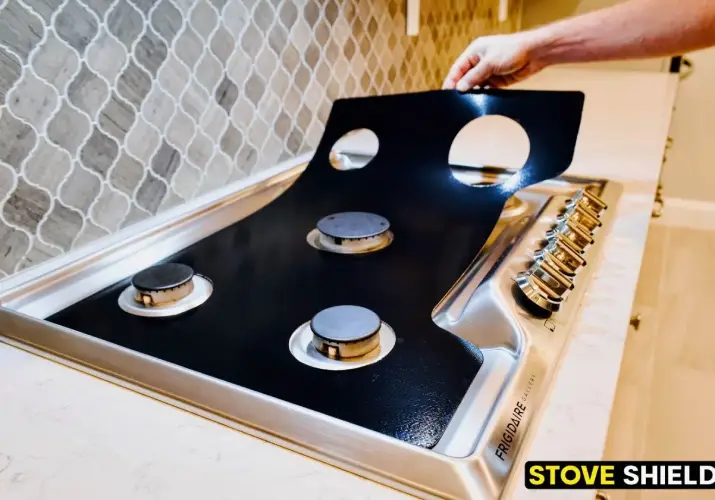
- Protect surfaces proactively — using stovetop protectors, for example, can prevent baked-on spills from ever becoming a scrubbing problem
For gas stovetop owners specifically, products like Stoveshield.com (starting at $79.99) offer a custom-fit, 1, 2, 3 or 4 piece protector that sits on your cooktop and catches spills before they reach the surface. At 0.5-0.6mm thick — that’s 2-3 times thicker than what many other brands offer — it holds up to regular use. It ships flat (not rolled, which means no curling on arrival), and includes a 365-day product warranty. The cleaning process is simple: wipe it down on the stovetop with a damp cloth, or hand wash it at the sink. Stick to hand washing only — just wipe or rinse, then dry it right away to keep its shape. That’s it.
The whole point of a protector like this is time. When spills sit on bare cooktops, they burn on and require serious scrubbing. A protector catches that mess before it bakes onto the surface. Less scrubbing means less time stuck cleaning after all that cooking.
Plan Around Your Energy Levels
Remember the Monday-to-Friday drop-off? Use that knowledge. Cook more ambitious meals early in the week when your energy and motivation are highest. Save the simple stuff — pasta with jarred sauce, quesadillas, leftovers — for Thursday and Friday.
This isn’t a failure of discipline. It’s acknowledging that willpower runs on a weekly cycle, and planning your meals around that reality.
Home Cooking Trends to Watch
The trajectory is clear: more Americans are cooking at home, and the trend shows no sign of reversing. A few patterns stand out.
Remote Work Changed Everything
The shift to remote and hybrid work schedules gave millions of Americans something they’d lost: access to their kitchens during the day. Lunch isn’t just a leftovers-in-the-microwave affair anymore. People are cooking actual meals at midday, which reduces the pressure on dinner as the sole home-cooked event.
Men Are Closing the Gap
The 16-percentage-point jump in male cooking participation (36% to 52%) from 2003 to 2023 is one of the most significant shifts in American domestic life. Cultural expectations are evolving, dual-income households require shared responsibilities, and cooking content on YouTube and social media has made the kitchen less intimidating for people who didn’t grow up learning to cook.
Budget Cooking Is Getting More Creative
Inflation hasn’t dampened home cooking — it’s fueled creativity. “Nose-to-tail” approaches, repurposing leftovers across multiple meals, and ingredient-focused planning (buying what’s on sale and building meals around it) are all gaining traction. These aren’t just frugal strategies. They’re practical skills that reduce food waste while keeping home cooking sustainable even on tight budgets.
Conclusion
Home cooking in America isn’t declining. It’s actually growing — steadily, quietly, and for reasons that make solid practical sense.
The numbers tell a straightforward story. At $4.31 per serving compared to $20.37 eating out, the financial incentive is overwhelming. Add the health benefits of controlling your own ingredients, the cultural shifts bringing more men into the kitchen, and the practical reality that 62% of Americans are already cooking regularly, and the trend has serious staying power.
The real challenge was never “should I cook at home?” For most people, the answer is obvious. The challenge is “how do I make it sustainable when I’m busy, tired, and facing a messy kitchen?”
That’s a solvable problem. Here’s where to start:
- Batch cook on weekends — two hours of prep on Sunday saves hours during the week
- Match meals to your energy — cook ambitious dishes on Monday, keep Friday simple
- Minimize cleanup friction — use one-pot recipes, clean as you go, and consider a stovetop protector to prevent baked-on messes
- Track your savings — even one month of home cooking versus eating out will show you hundreds of dollars saved
- Start simple — scrambled eggs and toast count. Not every meal needs to be a production.
Americans are spending roughly 400 hours a year in the kitchen. Making those hours more efficient — through better planning, simpler cleanup, and realistic expectations — is what keeps home cooking from feeling like a chore and lets it stay something we actually want to do.
Sources
- Bureau of Labor Statistics – American Time Use Survey 2024 – Daily food preparation and cleanup time (37 minutes average), eating/drinking time (74.4 minutes)
- NIH/PMC – Trends in Home Cooking among US Adults from 2003 to 2023 – Cooking participation rates (62% overall, gender breakdowns, education patterns)
- Instacart – 55+ Cooking Statistics for the Foodie + Home Chef – Cost comparison data ($4.31 vs $20.37 per serving), cooking frequency patterns
- Fox Business – Americans Turn to Home Cooking as Economic Concerns Weigh – 2025 economic trends driving home cooking increases, grocery vs restaurant inflation
- HelloFresh – The 2025-2026 State of Home Cooking Report – Generational cooking differences, weekly cooking patterns, consumer motivations
- Reddit: r/AskAnAmerican – “How often does the average American cook/eat at home?” – Community perspectives on family cooking frequency (140+ comments)
- Reddit: r/NoStupidQuestions – “How often do Americans cook homemade food?” – Discussion on varying definitions of “cooking” (90+ comments)
- Quora – “Do most Americans know how to cook at home nowadays?” – Family cooking motivations and cost-driven decisions
- Quora – “Tips for organizing groceries and saving time when cooking” – Home cook strategies for ingredient stretching and meal resourcefulness
About the Author
Ben Karlovich is an expert in the stove niche and has spent his career creating products and accessories that enhance household kitchen stoves. In 2016 he launched stovedecals.com (Stove Decals brand) and was the first to create and offer replacement stove decals across thousands of stove models. In 2022 he created stoveshield.com (Stove Shield brand) focused on stove top protectors, a patented knob panel protector, and other useful stove accessories fitted for your exact stove model. This niche expertise helps bring a unique blend of creativity and innovation to every article post.
Disclaimer: This article is for informational and educational purposes only and should not be relied upon as the sole basis for purchasing decisions. Product specifications, pricing, and availability are subject to change – contact the relevant manufacturer or retailer for the most current information. Stove Shield is not affiliated with and receives no compensation from any brands mentioned in this article.