


Here’s something that might surprise you: the average American spends about 40 minutes every single day just preparing food and cleaning up afterward. That’s not counting eating. That’s not counting grocery shopping. Just the cooking and the dishes.
I started tracking my own kitchen time last month, and honestly? The numbers shocked me. Between making breakfast, packing lunches, cooking dinner, and dealing with the aftermath, I was spending way more time than I realized.
The good news is that the U.S. Bureau of Labor Statistics tracks this stuff precisely. Their American Time Use Survey gives us real data on how Americans actually spend their hours. And understanding where your kitchen time goes is the first step toward taking some of it back.
Key Takeaways
- Americans average 40 minutes per day on food prep and cleanup, based on 2024 BLS data
- Women still do nearly twice as much kitchen work as men (52 minutes vs. 28 minutes daily)
- That adds up to 245 hours per year – more than ten full days spent in the kitchen
- Weekend cooking barely increases – just 3 extra minutes compared to weekdays
- 57% of Americans cook daily, and those who do spend about 53 minutes on average
- Men are cooking more – new research shows the gender gap is slowly narrowing
- Smart kitchen habits can cut cleanup time by 10-15 minutes without changing what you eat
The Real Numbers: 40 Minutes Daily
The BLS American Time Use Survey for 2024 tracks exactly how we spend our time. For food prep and cleanup? Americans 15 and older average 0.67 hours per day.
In plain English: 40 minutes every day.
That might not sound like a lot. But think about what 40 minutes a day actually means. It’s longer than most commutes. It’s longer than the average workout. It’s a chunk of time that shows up whether you feel like cooking or not.
What Counts in These Numbers?
The BLS tracks these specific activities:
- Cooking and preparing food
- Setting the table
- Washing dishes (by hand or using the dishwasher)
- Cleaning the cooking area
- Putting away food and supplies
- Kitchen tidying related to meals
What’s not included? Grocery shopping gets tracked separately. Eating the meal is counted elsewhere too. These 40 minutes are purely the work of getting food ready and cleaning up.
The Gender Split: It’s Still Not Equal
Let’s talk about something the data makes really clear. Women spend significantly more time on food prep and cleanup than men do.
From BLS Table 1 (2024):
| Gender | Daily Average | In Minutes |
|---|---|---|
| Men | 0.46 hours | ~28 minutes |
| Women | 0.86 hours | ~52 minutes |
| Overall | 0.67 hours | ~40 minutes |
Women spend 86% more time in the kitchen than men.
This gap shows up across age groups and employment status. Even in households where both partners work full-time jobs, women typically handle more of the cooking and cleanup.
But Here’s What’s Changing
Good news on this front. A 2025 study in Current Developments in Nutrition looked at 20 years of data. From 2003 to 2023, men are cooking more.
Among those who cook:
- Women: 67-73 minutes per day (fairly stable over 20 years)
- Men: increased from 42 to 50 minutes per day
The gap is shrinking. Slowly, but it’s happening. More men cook now. This is especially true in younger households and among college grads.
Why This Matters
This gap shows up in other chores too. The BLS data shows women spend more time on:
- Interior cleaning (33 minutes vs. 14 minutes for men)
- Laundry (14 minutes vs. 5 minutes for men)
- General household management
These numbers can start real conversations. Who does what? Is it fair? Should things change?
Weekdays vs. Weekends: Barely Any Difference
You’d expect weekends to involve more cooking, right? More time at home, more elaborate meals, maybe some meal prep for the week ahead.
The data says otherwise.
From BLS Table 2 (2024):
| Day Type | Daily Average | In Minutes |
|---|---|---|
| Weekdays | 0.65 hours | ~39 minutes |
| Weekends/Holidays | 0.70 hours | ~42 minutes |
Weekend cooking adds just 3 extra minutes per day.
This surprised me. Even with weekends free, people don’t cook much more. Kitchen duties stay pretty constant all week long.
When Does Cooking Actually Happen?
BLS data tracks when people cook during the day. The peaks are predictable:
- 7-8 AM: Breakfast prep
- 11 AM – 1 PM: Lunch prep
- 5-7 PM: Dinner prep (the biggest spike)
That evening window is when most cooking happens. It’s why dinner cleanup feels so heavy. Everyone cooks at once. Everyone faces dishes at once.
The Yearly Math: 245 Hours
Let’s do the multiplication that really puts these numbers in perspective.
For the Average American
- 0.67 hours/day × 365 days = 244.55 hours per year
- That’s roughly 10.2 full days spent on food prep and cleanup annually
Split by Gender
| Gender | Hours Per Year | Equivalent Days |
|---|---|---|
| Men | 168 hours | ~7 days |
| Women | 314 hours | ~13 days |
| Overall | 245 hours | ~10 days |
Women spend nearly two full weeks per year on food preparation and cleanup alone.
And remember, this doesn’t include grocery shopping, meal planning, or actual eating. This is purely the cooking and cleaning portion.
A Lifetime Perspective
Here’s a sobering thought. The Palm Beach Post reports that 80% of Americans will spend nearly a full year of their life on household chores. Food prep and cleanup? One of the biggest pieces of that time.
Who’s Actually Cooking?
The 40-minute average includes everyone – even people who didn’t cook at all that day. Looking at participation rates tells a different story.
From BLS data:
- 57.2% of Americans age 15+ prepared food on an average day in 2024
- Among those who cooked, average time spent was 1.06 hours (about 64 minutes)
Participation by Gender
| Gender | Who Cooks? | Time If They Cook |
|---|---|---|
| Men | Lower rate | 0.86 hours (~52 min) |
| Women | Higher rate | 1.20 hours (~72 min) |
| Overall | 57.2% | 1.06 hours (~64 min) |
See the pattern? When you cook, it takes real time. The 40-minute average gets pulled down by takeout days, delivery nights, and leftover meals.
What Actual Families Say About Kitchen Time
Statistics are useful, but what do real people experience?
In a popular Reddit thread on r/AskAnAmerican, users shared their actual kitchen time:
“1-2 hours is usually pretty good for cooking and cleanup combined.”
“Batch cooking on Sundays changed everything for us. Maybe 3 hours once a week, but then almost nothing on weeknights.”
“Single person here – I spend less total time, but more per meal since there’s no one to split tasks with.”
The discussion shows that individual experience varies based on:
- Household size (more people = more food = more time)
- Cooking style (from scratch vs. convenience foods)
- Kitchen organization (well-organized = less wasted time)
- Division of labor (shared cooking vs. one person doing everything)
Does Cooking Time Affect Health?
Here’s where it gets interesting. Does cooking time affect what you eat? Research from the NIH says yes. This study has been cited over 429 times, and the findings are clear.
Key findings:
- People who spent more time cooking had better dietary outcomes
- About 16% of participants spent less than 1 hour daily on food prep
- Those with limited cooking time relied more on convenience foods
The takeaway? You don’t need more time in the kitchen. You need better skills. Learn to cook healthy meals fast. That gives you good nutrition without the endless hours.
Practical Ways to Cut Your Kitchen Time
If 245 hours per year feels excessive, here are strategies that actually work:
1. Protect High-Mess Areas Before Cooking
The stovetop catches most cooking splatters. Boil-overs, grease pops, sauce drips – they all land in the same place.
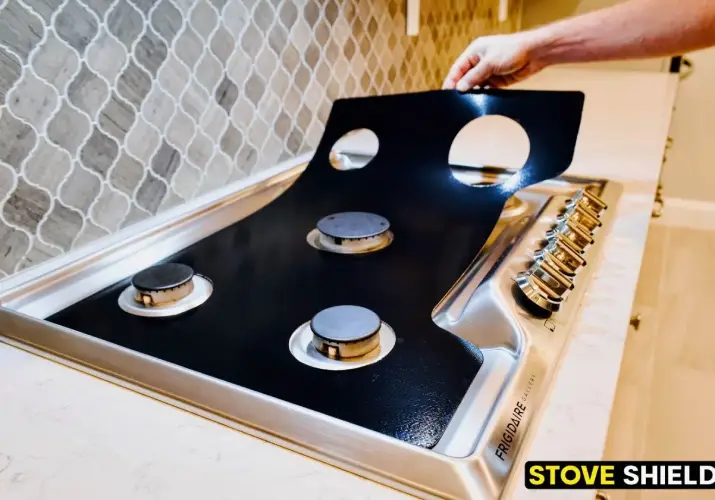
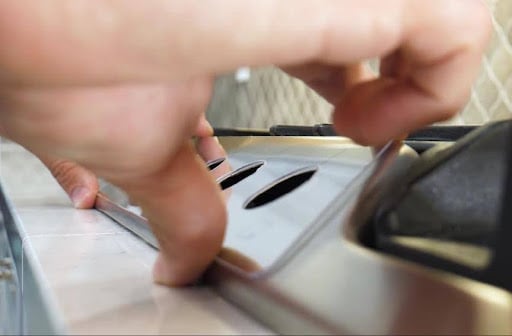
A fitted gas stovetop protector changes everything. Wipe for seconds instead of scrubbing for minutes. Stoveshield.com makes custom-fit protectors with a non-stick surface which helps reduce cleaning time by guarding your stovetop from difficult spills and stains..
This single change can reduce post-cooking cleanup from 10+ minutes of scrubbing to a quick 1-2 minute wipe.
Estimated Daily Kitchen Cleanup Time Savings With a Stove Protector
| Gender | BLS Minutes per Day (Prep + Cleanup) | With Protector (12% Less) | Minutes Saved per Day |
| Men | 28 | 24.64 | 3.36 |
| Women | 52 | 45.76 | 6.24 |
| Overall | 40 | 35.2 | 4.8 |
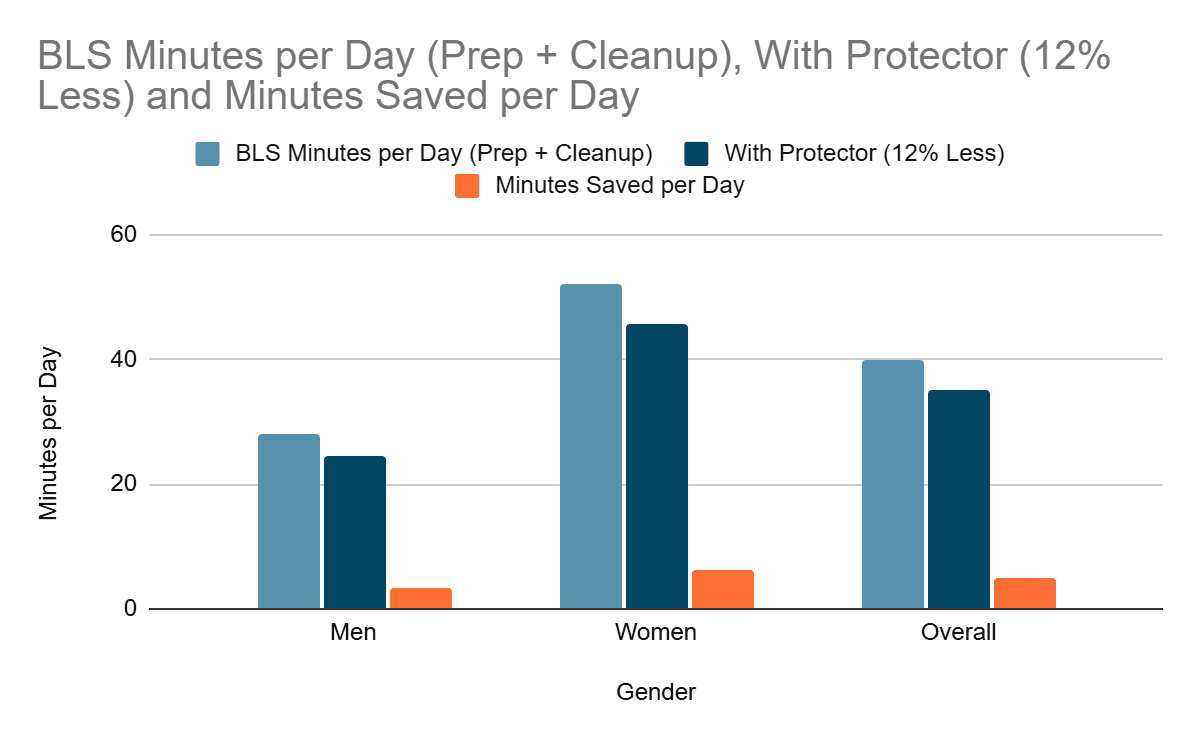
Protector scenario assumes ~12% less food prep & cleanup time (illustrative estimate)
Even small daily time savings add up.
Using a stove protector can save the average household over one full day per year on food preparation and cleanup — and for women, nearly two full days annually.
That’s time reclaimed for family, rest, or simply a cleaner, calmer kitchen routine.
2. Clean As You Cook
Professional kitchens run on this principle. While a pot simmers or something bakes:
- Wash prep bowls and utensils
- Wipe down counters
- Put away ingredients you’re done with
This spreads cleanup across your cooking time. No mountain of dirty dishes at the end.
3. Batch Your Prep Work
Instead of starting from scratch every night:
- Cook a large batch of grains (rice, quinoa) for the week
- Prep vegetables for several days at once
- Make sauces or dressings in larger quantities
Batch prepping can save 15-20 minutes daily while still providing home-cooked meals.
4. Organize Your Kitchen for Speed
Keep frequently used items accessible:
- Cooking utensils near the stove
- Cleaning supplies under the sink or in a nearby caddy
- Drawer organizers to stop searching for tools
An organized kitchen saves 5-10 minutes per meal. Less walking. Less searching. More cooking.
5. Use the One-Touch Rule
Touch things once. Don’t set dishes on the counter “to deal with later.” Put them straight in the dishwasher. Or wash them right away.
As home organization experts at Home As We Make It recommend, this simple habit prevents cleanup from piling up.
Conclusion: Making Kitchen Time Count
The BLS data confirms what you probably already feel. Kitchen work takes real time. At 40 minutes daily or 245 hours yearly, it’s one of your biggest time commitments after work and sleep.
What you can do with this information:
- Track your actual time. Spend one week noting when you start and stop kitchen tasks. Compare your reality to the averages.
- Talk about distribution. If one person handles far more than the 40-minute average, consider whether rebalancing makes sense for your household.
- Find your biggest time drain. Is it cooking, dishes, or cleaning surfaces? Focus improvements where they’ll have the most impact.
- Make one targeted change. Pick a single strategy – batch cooking, clean-as-you-go, or protecting your stovetop – and try it for a month.
The goal isn’t zero kitchen time. Home cooking brings good things: better food, family time, the joy of making something yourself. The goal is making those hours count.
Sources
- U.S. Bureau of Labor Statistics – American Time Use Survey Summary, 2024 Results – Primary source for daily time use data
- BLS Table 1: Time spent in primary activities by sex, 2024 – Gender breakdown of food prep time
- BLS Table 2: Time spent on weekdays and weekends, 2024 – Weekday vs. weekend comparison
- BLS – Exploring time spent on cooking and other activities – Participation rates and time among cookers
- Ewoldt et al. – Trends in Home Cooking among US Adults 2003-2023 (Current Developments in Nutrition, 2025) – 20-year trend analysis showing men cooking more
- Monsivais et al. – Time Spent on Home Food Preparation and Indicators of Healthy Eating (NIH, 2014) – Connection between cooking time and diet quality
- Reddit r/AskAnAmerican – How much time do you and your family spend on cooking – Real user experiences and time estimates
- Taylor, E. – 20 Ways to Make Evening Cleanups Fast and Painless (Home As We Make It) – Practical cleanup strategies
About the Author
Ben Karlovich is an expert in the stove niche and has spent his career creating products and accessories that enhance household kitchen stoves. In 2016 he launched stovedecals.com (Stove Decals brand) and was the first to create and offer replacement stove decals across thousands of stove models. In 2022 he created stoveshield.com (Stove Shield brand) focused on stove top protectors, a patented knob panel protector, and other useful stove accessories fitted for your exact stove model. This niche expertise helps bring a unique blend of creativity and innovation to every article post.
Disclaimer: This article is for informational and educational purposes only and should not be relied upon as the sole basis for purchasing decisions. Product specifications, pricing, and availability are subject to change – contact the relevant manufacturer or retailer for the most current information. Stove Shield is not affiliated with and receives no compensation from any brands mentioned in this article.