



Indian cuisine has quietly become one of America’s favorite home cooking adventures. What once seemed like an intimidating world of unfamiliar spices and techniques is now finding its way into everyday kitchens across the country. According to recent industry reports, upscale Indian dining in the U.S. has seen significant growth, and this restaurant enthusiasm is translating directly into home cooking interest.
If you have ever ordered butter chicken at a restaurant and wondered whether you could recreate that rich, aromatic sauce at home, the answer is absolutely yes. The truth is that Indian cooking relies on a handful of core techniques and a modest spice collection. Once you understand the basics, an entire world of flavorful dishes opens up.
Key Takeaways
- Start with just 6-8 essential spices – cumin seeds, turmeric, coriander, red chili powder, garam masala, and mustard seeds cover most recipes
- Master the “tadka” technique – blooming spices in hot oil is the foundation of Indian flavor development
- Indian cooking suits gas stovetops perfectly – precise heat control helps with long simmering and spice tempering
- Butter chicken is the ideal first recipe – approachable flavors and forgiving techniques make it beginner-friendly
- Batch cooking works exceptionally well – most Indian dishes taste better the next day as flavors meld
- Community tip: Start simple – Reddit’s r/IndianFood community recommends dal and rice as the best first dish for beginners
- Protect your stovetop – oil tempering and curry splatters can stain surfaces, especially during extended cooking sessions
Why Indian Cuisine Is Gaining Ground in American Kitchens
The numbers tell a compelling story. A 2025 Instacart survey found that 62% of Americans now feel confident in their cooking skills, with social media recipes driving much of this enthusiasm. Meanwhile, Mintel’s 2024 report on cooking trends notes that “enthusiasm for cooking at home is back on the rise,” with consumers increasingly interested in skill improvement.
Indian cuisine fits perfectly into this moment. The dishes reward patience and attention. They fill your kitchen with aromas that make the cooking process itself enjoyable. And unlike some cuisines that require specialized equipment, most Indian recipes need nothing more than a good skillet, a heavy-bottomed pot, and your stovetop.
What Makes Indian Food Different
Indian cooking is spice-driven and layered. Flavors develop gradually, typically starting with oil or ghee infused with aromatics. Spices bloom and release their essential oils when they hit hot fat. This technique, called “tadka” or tempering, transforms raw spices into something fragrant and complex.
Common stovetop moments in Indian cooking include:
- Onions slowly caramelizing until golden brown (this takes 15-20 minutes for proper flavor)
- Whole spices crackling in hot oil, releasing their aroma
- Tomato-based sauces simmering until oil separates at the edges
- Proteins gently cooking in rich, spiced gravies
Gas stovetops work particularly well for Indian cooking because they allow precise heat control during these extended cooking processes.
Building Your Indian Spice Pantry: The Essential Starter Kit
One of the biggest barriers to Indian cooking is the perception that you need dozens of spices. This is not true. Food writer Nik Sharma, in his guide for Food52, emphasizes that “cooking Indian food at home is easier than you think” and that most home cooks likely already have several key spices.
The Core Six (Start Here)
Based on advice from the Quora cooking community and professional chefs, these six spices will cover 80% of beginner recipes:
| Spice | Form | Primary Use | Flavor Profile |
|---|---|---|---|
| Cumin Seeds | Whole | Tempering, rice dishes | Earthy, warm, slightly nutty |
| Turmeric | Ground | Color, anti-inflammatory base | Warm, slightly bitter, musky |
| Coriander | Ground | Curry bases, marinades | Citrusy, mild, slightly sweet |
| Red Chili Powder | Ground | Heat and color | Hot, earthy (varies by type) |
| Garam Masala | Ground blend | Finishing spice | Warm, aromatic, complex |
| Mustard Seeds | Whole | South Indian tempering | Sharp, pungent when popped |
The Supporting Cast (Add When Ready)
Once comfortable with the core six, expand to:
- Cumin powder – for when you want cumin flavor without texture
- Cardamom pods – essential for rice dishes and desserts
- Cinnamon sticks – adds warmth to biryanis and curries
- Bay leaves – subtle background flavor
- Fenugreek leaves (kasuri methi) – the secret ingredient in butter chicken
Storage Tips
Keep whole spices in airtight containers away from light and heat. They stay potent for about a year. Ground spices lose their punch faster, so buy smaller quantities and replace every 6 months. As one Quora contributor noted, “Commercial ground spices are pushing the grind-your-own practice into the past, but buy only enough so that you have to get fresh spices often.”
Essential Techniques: The Building Blocks
Blooming Spices (Tadka/Tempering)
This technique separates good Indian food from great Indian food. When whole spices hit hot fat (oil or ghee), their essential oils release into the cooking medium. This infused oil then carries flavor throughout the entire dish.
How to do it:
- Heat oil or ghee in a small pan until shimmering (not smoking)
- Add whole spices (cumin seeds, mustard seeds, or dried chilies)
- Watch for visual cues: cumin seeds will darken slightly and float, mustard seeds will pop
- The process takes only 20-30 seconds – pay close attention
- Immediately add your next ingredient (onions, garlic, or pour over finished dal)
Pro tip: Have all ingredients prepped and within reach. The window between perfectly bloomed spices and burnt spices is narrow.
Building a Curry Base (The Onion-Tomato Foundation)
Most North Indian curries start with the same base:
- Saute onions until deeply golden (15-20 minutes on medium heat – do not rush this)
- Add ginger-garlic paste and cook until raw smell disappears (2-3 minutes)
- Add ground spices (turmeric, coriander, chili) and stir constantly for 1 minute
- Add tomatoes and cook until oil separates at edges (10-15 minutes)
This base, called “masala” or “gravy base,” forms the foundation of butter chicken, chana masala, and countless other dishes.
Popular Indian Dishes Americans Cook at Home
The following recipes are arranged from most approachable to slightly more involved. Each has been tested and refined based on what works best for home cooks without professional equipment.
Butter Chicken (Murgh Makhani)
Serves: 4 | Time: 45 minutes (plus marinating) | Difficulty: Medium
This dish consistently ranks as the most-searched Indian recipe in America, with Google showing approximately 165,000 monthly searches for “butter chicken recipe.” Its creamy, mildly spiced sauce makes it accessible for palates new to Indian food.
Ingredients
For the Marinade:
- 1.5 lb boneless chicken thighs, cut into 2-inch pieces
- 1/2 cup plain yogurt
- 1 tablespoon garam masala
- 1 teaspoon turmeric
- 1 teaspoon salt
- Juice of half a lemon
For the Sauce:
- 3 tablespoons butter
- 1 large onion, finely diced
- 4 cloves garlic, minced
- 1 tablespoon fresh ginger, grated
- 1 can (14 oz) crushed tomatoes
- 1 tablespoon garam masala
- 1 teaspoon paprika (for color)
- 3/4 cup heavy cream
- 2 tablespoons honey or sugar (optional, for sweetness)
- Fresh cilantro for garnish
Instructions
- Marinate the chicken: Combine all marinade ingredients in a bowl. Cover and refrigerate for at least 30 minutes, or up to overnight for deeper flavor.
- Cook the chicken: Heat 1 tablespoon butter in a large skillet over medium-high heat. Add marinated chicken pieces and cook until lightly browned on all sides, about 5-6 minutes. The chicken does not need to be fully cooked through at this stage. Remove and set aside.
- Build the sauce: In the same skillet, add remaining butter. Saute onion until softened and golden, about 8-10 minutes. Add garlic and ginger, cooking until fragrant (about 2 minutes).
Note: During this step, spice-infused oils can splatter. Many home cooks use gas stove protectors or stove liners to keep their stovetop surfaces clean during extended cooking sessions.
- Add spices and tomatoes: Stir in garam masala and paprika, cooking for 30 seconds. Add crushed tomatoes and simmer for 10-12 minutes until the sauce thickens slightly.
- Finish the dish: Return chicken to the skillet. Reduce heat to medium-low and simmer for 10 minutes until chicken is fully cooked. Stir in heavy cream and honey. Adjust salt to taste.
- Serve: Garnish with fresh cilantro. Serve over basmati rice or with warm naan bread.
Recipe Notes
| Attribute | Detail |
|---|---|
| Spice Level | Mild to Medium |
| Best For | Families, guests, weeknight dinners |
| Storage | Refrigerates well for 4 days |
| Make-Ahead Tip | Sauce improves overnight as flavors meld |
Chana Masala (Chickpea Curry)
Serves: 4 | Time: 30 minutes | Difficulty: Easy
This plant-based dish delivers bold flavor with minimal effort. With nearly 15,000 monthly searches, it ranks among the most popular vegetarian Indian recipes in America.
Ingredients
- 2 cans (15 oz each) chickpeas, drained and rinsed
- 3 tablespoons vegetable oil
- 1 large onion, finely diced
- 4 cloves garlic, minced
- 1 tablespoon fresh ginger, grated
- 2 tablespoons coriander powder
- 1 tablespoon cumin powder
- 1 teaspoon turmeric
- 1/2 teaspoon red chili powder (adjust to taste)
- 1 can (14 oz) crushed tomatoes
- 1 teaspoon garam masala
- Salt to taste
- Fresh cilantro and lemon wedges for serving
Instructions
- Heat oil in a large pan over medium heat. Add onion and cook until deeply golden, about 12-15 minutes.
- Add garlic and ginger. Cook for 2 minutes until fragrant.
- Add coriander, cumin, turmeric, and chili powder. Stir constantly for 1 minute to bloom the spices.
- Add crushed tomatoes and cook for 8-10 minutes until the mixture thickens and oil begins to separate at the edges.
- Add chickpeas and 1/2 cup water. Simmer for 10-12 minutes, mashing a few chickpeas against the side of the pan to thicken the sauce.
Thick curries tend to bubble and splatter during simmering. A gas stove liner can significantly reduce cleanup time.
- Finish with garam masala. Taste and adjust salt.
- Serve hot with rice or roti, garnished with cilantro and a squeeze of lemon.
Recipe Notes
| Attribute | Detail |
|---|---|
| Spice Level | Medium |
| Best For | Vegetarians, vegans (skip ghee), meal prep |
| Storage | Refrigerates for 5 days, freezes well |
| Budget-Friendly | Exceptionally economical |
Dal Tadka (Lentil Stew with Tempered Spices)
Serves: 4-6 | Time: 35 minutes | Difficulty: Easy
Dal is the comfort food of India. Nearly every household has their own version. This recipe showcases the tadka technique in its purest form.
Ingredients
For the Dal:
- 1.5 cups red lentils (masoor dal), rinsed
- 4 cups water
- 1/2 teaspoon turmeric
- Salt to taste
For the Tadka (Tempering):
- 3 tablespoons ghee or oil
- 1 teaspoon cumin seeds
- 4 cloves garlic, thinly sliced
- 1 medium onion, thinly sliced
- 2 dried red chilies (optional)
- 1/2 teaspoon red chili powder
- Fresh cilantro for garnish
Instructions
- Cook the lentils: Combine lentils, water, turmeric, and salt in a pot. Bring to a boil, then reduce heat and simmer for 20-25 minutes until lentils are soft and broken down. Stir occasionally and add water if needed. Use a whisk to achieve a creamy consistency.
- Prepare the tadka: In a small pan, heat ghee until shimmering. Add cumin seeds – they should sizzle immediately. Add sliced garlic and cook until golden (about 1 minute). Add onion slices and dried chilies, cooking until onions are crispy at the edges.
Hot oil tempering requires attention. The oil should be hot enough to make spices sizzle but not smoke. Having a stove protector in place helps catch any spatters from this step.
- Add chili powder to the tadka and immediately pour the entire contents over the cooked dal. You will hear a satisfying sizzle.
- Stir gently, garnish with cilantro, and serve immediately with rice or roti.
Recipe Notes
| Attribute | Detail |
|---|---|
| Spice Level | Mild |
| Best For | Everyday comfort food, families, meal prep |
| Storage | Refrigerates for 4 days (may thicken – add water when reheating) |
| Protein Content | High – lentils provide excellent plant protein |
Paneer Tikka Masala
Serves: 4 | Time: 40 minutes | Difficulty: Medium
This vegetarian showstopper delivers restaurant-quality results. With over 22,000 monthly searches, it has become a favorite for those seeking impressive meatless main dishes.
Ingredients
For the Paneer:
- 14 oz paneer, cut into 1-inch cubes
- 1/2 cup yogurt
- 1 tablespoon tikka masala spice (or garam masala plus paprika)
- 1/2 teaspoon salt
- 2 tablespoons oil for pan-frying
For the Sauce:
- 2 tablespoons butter
- 1 large onion, finely diced
- 3 cloves garlic, minced
- 1 tablespoon ginger, grated
- 1 cup tomato puree
- 1 teaspoon garam masala
- 1/2 teaspoon turmeric
- 1/2 teaspoon paprika
- 3/4 cup heavy cream
- Salt to taste
- Fresh cilantro for garnish
Instructions
- Marinate paneer: Toss paneer cubes with yogurt, tikka masala spice, and salt. Let sit for 15 minutes minimum.
- Sear paneer: Heat oil in a non-stick skillet over medium-high heat. Add paneer cubes and cook until golden on two sides (about 2-3 minutes per side). Remove and set aside.
- Make the sauce: In the same pan, add butter. Saute onion until softened and lightly golden, about 8 minutes. Add garlic and ginger, cook for 2 minutes.
Creamy sauces can leave residue on stovetop surfaces. Gas stove liners simplify cleanup after preparing rich dishes like this one.
- Add garam masala, turmeric, and paprika. Stir for 30 seconds.
- Add tomato puree and simmer for 10 minutes until sauce thickens.
- Stir in cream and return seared paneer to the pan. Simmer gently for 5 minutes.
- Garnish with cilantro and serve with naan or rice.
Recipe Notes
| Attribute | Detail |
|---|---|
| Spice Level | Medium |
| Best For | Vegetarians, dinner parties, weekend cooking |
| Storage | Best eaten fresh; paneer can become rubbery when refrigerated |
| Substitution | Firm tofu works for a vegan version |
Protecting Your Stovetop During Indian Cooking
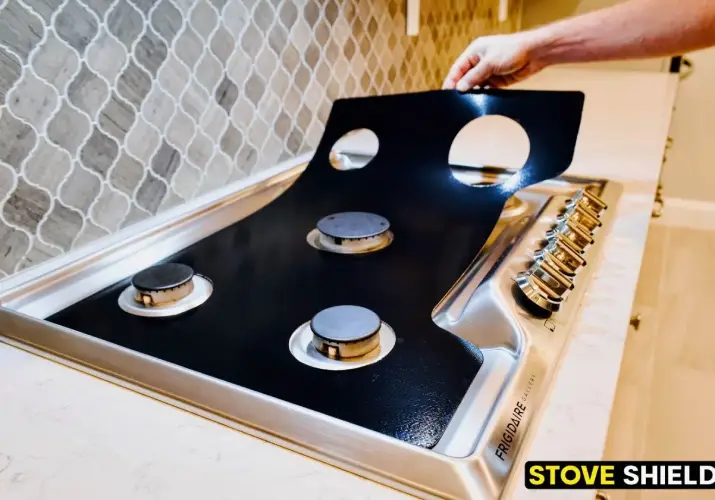
Indian cuisine often involves extended cooking sessions, oil tempering, and rich sauces that can splatter. Gas stovetops, while ideal for the precise heat control Indian cooking requires, can accumulate stains from turmeric, oil, and tomato-based sauces.
Many home cooks who regularly prepare Indian food use stove covers or gas stove liners to protect their cooking surfaces. Stove Shield offers custom-fit stove protectors designed for popular gas range models, including options for Wolf, Zline, and Thermador ranges:
For oven-based Indian dishes like tandoori chicken or baked samosas, an OvenShield Liner helps protect the oven floor from drips and spills.
These protective solutions help keep your kitchen clean while you focus on developing those complex, layered flavors that make Indian cooking so rewarding.
Storage and Meal Prep Tips
Indian food is exceptionally well-suited for batch cooking and meal prep. Here is what experienced home cooks recommend:
What Stores Well
- Curries and dals – Most taste better on day two as spices meld. Store in airtight containers for up to 5 days.
- Curry bases – Make a large batch of the onion-tomato base and freeze in portions. Thaw and add protein or vegetables for quick weeknight meals.
- Spiced rice – Portion and freeze. Reheats well in the microwave with a splash of water.
What to Make Fresh
- Roti and naan – Best eaten immediately after cooking
- Raita (yogurt sauce) – Make fresh; cucumbers release water over time
- Paneer dishes – Paneer can become rubbery when refrigerated and reheated
Freezer-Friendly Batch Cooking
Dal, chana masala, and butter chicken sauce (without cream) all freeze beautifully for up to 3 months. Add fresh cream when reheating for butter chicken.
Frequently Asked Questions
What is the easiest Indian dish to make at home?
According to Reddit’s r/IndianFood community, dal (lentils) with rice is the most approachable starting point. It requires minimal spices, uses an affordable pantry staple, and teaches the essential tadka technique. One community member noted, “Dal and rice is basically the Indian equivalent of comfort food basics.”
Do I need special equipment for Indian cooking?
No. A heavy-bottomed pot, a good skillet, and a small pan for tempering cover most needs. As your skills develop, you might consider a pressure cooker (dramatically speeds up dal and bean cooking) or a flat griddle (tawa) for making roti.
How do I reduce the spice level in recipes?
Start with half the recommended chili powder and add more gradually. The heat comes primarily from chili, not from the aromatic spices like cumin or coriander. You can always add heat at the end, but you cannot remove it.
Why do my curries taste flat?
The most common issue is not cooking the onion-tomato base long enough. Rushing this step produces sauce that tastes raw and one-dimensional. Cook until you see oil separating at the edges of the sauce – this indicates the masala is properly cooked.
Can I substitute dried spices for fresh?
Dried spices cannot directly replace fresh ginger and garlic. These aromatics provide crucial flavor notes. However, in a pinch, 1/4 teaspoon of ground ginger equals about 1 teaspoon of fresh, and 1/8 teaspoon of garlic powder equals one fresh clove.
Conclusion: Your Indian Cooking Journey Starts Now
Indian cuisine offers home cooks something increasingly rare: dishes that reward patience and attention with deeply satisfying results. The techniques you learn while making butter chicken or dal will serve you across hundreds of recipes.
Here is your action plan:
- This week: Stock your pantry with the core six spices listed above
- First recipe: Try the Dal Tadka – it teaches tempering with minimal ingredients
- Build confidence: Move to Chana Masala or Butter Chicken once you are comfortable with spice handling
- Protect your workspace: Consider a stove protector if you plan to cook Indian food regularly – turmeric stains are notoriously difficult to remove
The journey from restaurant admirer to confident home cook is shorter than you might think. Start with one recipe, master the basics, and let your spice collection grow naturally with your skills.
Sources
- CNBC. “From ‘cheap food and curry houses’ to upscale dining: The rise of Indian restaurants in the U.S.” August 30, 2025.
- Instacart. “62% of Americans Are Confident in the Kitchen: How Time, Tech and Tradition Shape Home Cooking in 2025.” November 12, 2025.
- Mintel. “Cooking In America Consumer Report 2024.” 2024.
- Sharma, Nik. “How to Stock an Indian Pantry.” Food52, July 16, 2015.
- Serious Eats. “Indian Spices 101: How to Work With Dry Spices.” Updated April 17, 2019.
- Reddit r/IndianFood. “What are some beginner Recipes for people new to Indian cooking?” Community discussion, 2023.
- Quora. “What is the easiest Indian food I can make at home?” Community answers, various contributors.
- Home Cooking Collective. “Essential Indian Spices (And How to Cook With Them).” September 24, 2024.
About the Author
Ben Karlovich is an expert in the stove niche and has spent his career creating products and accessories that enhance household kitchen stoves. In 2016 he launched stovedecals.com(Stove Decals brand) and was the first to create and offer replacement stove decals across thousands of stove models. In 2022 he created stoveshield.com (Stove Shield brand) focused on stove top protectors, a patented knob panel protector, and other useful stove accessories fitted for your exact stove model. This niche expertise helps bring a unique blend of creativity and innovation to every article post.
Disclaimer: This article is for informational and educational purposes only and should not be relied upon as the sole basis for purchasing decisions. Product specifications, pricing, and availability are subject to change – contact the relevant manufacturer or retailer for the most current information. Stove Shield is not affiliated with and receives no compensation from any brands mentioned in this article.