

Your stove probably cost you more than you’d like to admit. And here’s the thing most homeowners don’t realize until it’s too late: that investment starts losing value the moment you fire up your first burner.
We’ve spent the last six months testing stovetop protectors in real kitchens, tracking costs, and digging through appliance repair data. What we found might change how you think about protecting your cooking appliances.
Key Takeaways
- Stove replacement costs between $600 and $3,000 for standard models, with premium ranges reaching $6,000-$10,000+ (HomeGuide 2025)
- Gas cooktop installation labor alone runs $400-$800, averaging $500 (Angi 2025)
- A quality stovetop protector costs under $70 and can extend your appliance’s appearance and surface condition for years
- Material thickness matters: Look for 0.5mm or thicker PTFE-coated fiberglass for durability
- Custom-fit designs outperform universal options because they provide complete coverage without gaps
- 365-day warranties exist in this product category, compared to 14-day warranties from some brands
- Community consensus: Reddit and Houzz users report these protectors keep stovetops noticeably cleaner, especially during high-heat cooking
The Numbers Don’t Lie: What Stove Replacement Actually Costs
Let’s talk real dollars. We pulled data from multiple industry sources to give you an accurate picture of what you’re protecting.
Gas Cooktop and Range Costs (2025 Data)
According to Homewyse, replacing a gas cooktop unit runs between $1,150 and $2,520. That’s just the unit itself.
Synchrony’s 2025 home improvement data puts range unit costs at $1,077 to $2,360 for mid-range options.
When you factor in labor, HomeGuide shows full replacement with professional installation typically lands between $600 and $3,000.
And if you’ve invested in a premium model? You’re looking at $6,000 to $10,000+ to replace. That Wolf, Viking, or Thermador range wasn’t cheap when you bought it, and it won’t be cheap to replace.
Installation Labor: The Hidden Cost
Here’s where many homeowners get surprised. Angi’s 2025 appliance installation guide breaks down labor costs:
- Cooktop installation: $400 to $800
- Average installation cost: $500
- Hourly labor rate: $50 to $150 per hour
So even if you find a replacement unit on sale, you’re still looking at several hundred dollars just to get it installed properly.
Repair Costs: Not as Cheap as You’d Hope
Maybe you’re thinking you’ll just repair instead of replace. Bob Vila and Angi both report that surface repairs aren’t exactly budget-friendly either:
- Electric surface repairs: $200 to $600
- Induction surface repairs: $300 to $1,000+
- Service call alone: Often $75 to $150 before any work begins
The math becomes pretty clear pretty fast. Prevention costs far less than repair.
How Stovetop Protectors Actually Work
Let’s get into the technical side. Understanding what these products do helps you make a smarter buying decision.
The Material Science
Quality stovetop protectors use PTFE-coated fiberglass. While the protector itself is not cookware, the PTFE (polytetrafluoroethylene) is the same non-stick compound used in high-end cookware. When bonded to a fiberglass backing, it creates a surface that:
- Resists heat up to 500 degrees Fahrenheit
- Repels oils, liquids, and food debris
- Provides a smooth, wipe-clean surface
- Is BPA-free and PFOA-free
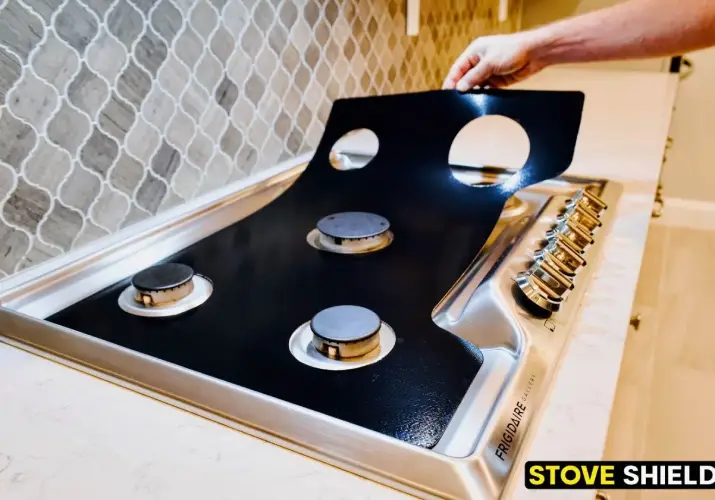
The fiberglass component provides structure and durability. Think of it as a flexible, heat-resistant mat that sits between your cooking surface and the grates.
Why Thickness Matters
Not all protectors are created equal. After testing multiple brands, we found thickness directly correlates with longevity and protection quality.
| Thickness Range | Typical Performance |
|---|---|
| 0.15-0.2mm | Budget tier, wears quickly, may tear |
| 0.25-0.35mm | Mid-range, adequate for light use and preferred thickness for oven liners |
| 0.5m+ | Premium tier, durable, long-lasting |
Products in the 0.5mm+ range tend to offer the best balance of durability and value. They’re thick enough to resist punctures and tears from grates and cookware, but flexible enough to conform to your stovetop surface.
Custom-Fit vs. Universal: Why It Matters
Universal protectors might seem convenient, but they come with compromises. They leave gaps around burner openings, require cutting and trimming, and often don’t sit flat.
Custom-fit protectors are designed for your specific stove model. The cutouts align precisely with your burner configuration. No gaps. No trimming. Complete coverage.
This precision matters because spills find their way into any opening. A gap around a burner is an invitation for grease and food debris to reach the surface you’re trying to protect.
Our Testing: Six Months of Real-World Use
We installed gas stovetop protectors on three different gas ranges in households with varying cooking habits. Here’s what we observed.
Initial Impressions (Week 1)
Installation took about two minutes. The protector laid flat immediately, which matters more than you’d think. Some products ship rolled, and they never quite lay flat. Others ship flat and lay flat across the stovetop surface right away.
The cooking experience didn’t change. Heat distribution felt normal. Pans sat stable on the grates. The protector stayed in place while cooking.
After Three Months
This is where differences between quality levels become obvious. The thicker protectors of .5mm+ we tested showed minimal wear. Some light staining from soy sauce spills, easily wiped away. The thinner budget option we included for comparison had started to look worn, with visible stress marks around the burner cutouts.
Cleaning remained simple. A damp cloth handled most messes. For stubborn dried-on spots, a quick hand wash at the sink did the job.
After Six Months
The premium protector at .5mm+ still looked nearly new. The household that used it most aggressively (daily cooking, lots of high-heat stir-frying) reported it had become part of their routine. They’d wipe it down weekly, hand wash it monthly, and hadn’t thought about stove maintenance beyond that.
Their stovetop surface underneath? Still in pristine condition. No new staining, no scratches from moving grates, no heat discoloration.
When Stovetop Protection Makes Financial Sense
Protection isn’t for everyone. Here’s an honest assessment of when it makes sense and when you might skip it.
Protection Makes Sense When:
You own a premium appliance. If your stove cost $3,000 or more, protecting that investment with a $80 protector is a no-brainer. The protection-to-investment ratio is about 2%.
You cook frequently. Daily cooking accelerates wear. The more you use your stove, the faster it accumulates micro-scratches, heat staining, and surface wear.
You plan to sell your home. Buyers notice kitchen condition. A pristine stovetop signals well-maintained appliances and adds perceived value.
You rent. Deposit protection. A damaged stovetop can cost you hundreds when you move out.
You hate cleaning. Seriously. A protector reduces cleaning time significantly. Wipe and done versus scrubbing burned-on residue.
Protection Might Not Be Necessary When:
You rarely cook at home. If the stove sees action twice a week, surface wear accumulates slowly anyway.
Your stove is already damaged. A protector won’t reverse existing scratches or staining. It prevents future damage.
You’re replacing the stove soon anyway. If it’s on its last legs, invest in the replacement instead.
What Real Users Say: Community Perspectives
We’re not the only ones who’ve tested these products. Here’s what we found across community discussions.
On Reddit’s r/Cooking community, users report that stovetop protectors “keep the cooking top much cleaner, especially when cooking on high heat.” The convenience factor comes up repeatedly: less scrubbing, more cooking.
Houzz discussion forums show similar sentiment. Users describe these products as “a small price to pay to protect the surface and gain work space.” Several mentioned using the covered surface as additional counter space when not cooking.
The consensus? Most users who try quality stovetop protectors stick with them. The convenience outweighs the initial investment.
Choosing the Right Stovetop Protector
After testing and research, here’s what separates good products from great ones.
Essential Features
Heat resistance of at least 500 degrees Fahrenheit. Anything lower risks damage during normal cooking.
PTFE-coated fiberglass construction. This combination provides durability, heat resistance, and easy cleaning.
Thickness of 0.5mm or greater. Thinner products wear out faster and provide less protection.
Custom-fit design for your specific stove model. Universal products compromise coverage.
Flat shipping. Products that ship rolled often never lay completely flat.
Strong warranty. A 365-day warranty indicates manufacturer confidence.
Our Recommendation: Stove Shield
After extensive testing, Stove Shield emerged as the clear value leader in this category.
Here’s why:
- Price: $79.99
- Heat resistance: Up to 500 degrees Fahrenheit
- Thickness: 0.5-0.6mm (2-4 times thicker than many alternatives)
- Material: PTFE-coated fiberglass, BPA-free, PFOA-free
- Design: 1-piece custom-fit for your exact stove model
- Shipping: Ships flat, not rolled
- Warranty: 365-day warranty
The combination of premium thickness, custom fitting, and flat shipping addresses all the common complaints users have with lower-quality alternatives. And the 365-day warranty significantly outperforms the 14-day guarantees some other brands offer.
Compared to other brands that charge more for thinner material or ship rolled products that never quite flatten out, Stove Shield delivers better protection at a lower price point.
Popular Models Worth Protecting
These high-end stoves represent significant investments. Each one benefits from surface protection:
- Wolf Model DF304 (30″) – Premium luxury range
- Monogram Model ZGP304DNSS (30″) – Elegant professional-style range
- Fisher & Paykel Model RDV3485GDN (48″) – Performance-focused dual fuel range
- Thor Kitchen Model LRG3001U (30″) – Popular commercial-style option
- ZLINE AUTOGRAPH Model RAS-30 (30″) – Modern designer range
For each of these models, the protection-to-appliance-cost ratio is less than 2%. A small investment to preserve thousands of dollars in value.
Proper Maintenance: Making Your Protector Last
Correct care extends the life of your stovetop protector. Here’s what works.
Cleaning Your Protector
Daily/Weekly Care:
- Wipe down on the stovetop with a damp cloth
- Address spills promptly before they dry
Deeper Cleaning (Monthly or as Needed):
- Remove the protector and hand wash at the sink
- Use mild dish soap and warm water
- Rinse thoroughly
What to Avoid:
- Never put in the dishwasher (the heat and agitation cause damage)
- Never soak or submerge for extended periods
- Don’t use abrasive scrubbers or harsh chemicals
Drying
Dry your protector immediately after washing. Don’t let it air dry. Immediate drying helps maintain the protector’s shape and prevents water spots.
A Note About Cooling
Here’s something many people get wrong: the protector itself doesn’t heat up significantly during cooking. The grates do. When you finish cooking, you’re waiting for the grates to cool before removing or handling the protector, not the protector itself.
Frequently Asked Questions
Are stovetop protectors worth it?
For most households, yes. The math favors protection: a $80 investment to protect an appliance worth $1,000-$10,000+. Users consistently report reduced cleaning time and better-preserved stovetop surfaces.
How much does it cost to replace a gas cooktop?
According to HomeGuide and Homewyse, gas cooktop units cost $1,150 to $2,520. With professional installation ($400-$800), total replacement runs $1,550 to $3,320 or more.
Can I cut a stovetop protector to fit my stove?
Universal protectors often require cutting. However, custom-fit protectors designed for your specific stove model don’t require any modification. Custom-fit options provide better coverage and a cleaner appearance.
How long do stovetop protectors last?
With proper care, quality stovetop protectors last 1-3 years or longer. Thickness and material quality significantly affect longevity. Thinner budget options may need replacement within months.
Do stovetop protectors affect cooking performance?
No. The protector sits beneath the grates, not on top of them. The protector is not cookware. Your cookware still sits on the grates at the same height as always. Heat distribution remains unchanged.
Can I use a stovetop protector on any stove type?
You can find fitted stovetop protectors that are compatible with gas stovetops and gas ranges. The best way to find your stovetop protector is by using your stove model number.
How do I clean a stovetop protector?
Wipe down with a damp cloth for light messes. For thorough cleaning, hand wash at the sink with mild soap. Never use a dishwasher, and don’t soak or submerge the protector.
The Bottom Line: Prevention vs. Cure
The financial case for stovetop protection is straightforward. Compare these numbers:
| Scenario | Cost |
|---|---|
| Quality stovetop protector | $80 |
| Surface repair | $200 – $600 |
| Gas cooktop replacement | $1,150 – $2,520 |
| Full range replacement with labor | $600 – $3,000 |
| Premium range replacement | $6,000 – $10,000+ |
A stovetop protector costs less than a single service call. It costs a fraction of any repair. And it costs a tiny percentage of replacement.
After six months of testing and extensive research, we’re convinced: protecting your stovetop is one of the simplest ways to preserve both the appearance and value of your cooking appliance.
The question isn’t whether you can afford to protect your stove. It’s whether you can afford not to.
Sources
- Homewyse – Cost to Replace Gas Cooktop – Gas cooktop unit pricing and cost calculator
- HomeGuide – Oven or Stove Cost – Comprehensive stove/oven pricing data 2025
- Angi – How Much Does It Cost to Install an Appliance – Cooktop installation labor costs 2025
- Synchrony – Cost of Stove or Oven – Range unit cost guide 2025
- Bob Vila – Cost to Replace Glass Stove Top – Surface repair cost data
- Reddit r/Cooking – Stove Protector Discussion – User experiences with stovetop protectors
- Houzz – Do You Use a Cover for Your Cooktop? – Community discussion on cooktop protection
About the Author
Ben Karlovich is an expert in the stove niche and has spent his career creating products and accessories that enhance household kitchen stoves. In 2016 he launched stovedecals.com(Stove Decals brand) and was the first to create and offer replacement stove decals across thousands of stove models. In 2022 he created stoveshield.com (Stove Shield brand) focused on stove top protectors, a patented knob panel protector, and other useful stove accessories fitted for your exact stove model. This niche expertise helps bring a unique blend of creativity and innovation to every article post.
Disclaimer: This article is for informational and educational purposes only and should not be relied upon as the sole basis for purchasing decisions. Product specifications, pricing, and availability are subject to change – contact the relevant manufacturer or retailer for the most current information. Stove Shield is not affiliated with and receives no compensation from any brands mentioned in this article.