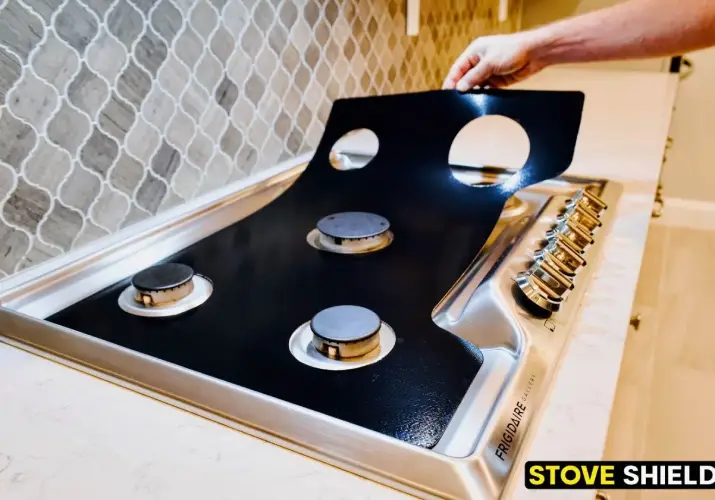

The ammonia bag cleaning method works on porcelain-enameled cast iron grates and most burner caps when you seal them with a quarter cup of household ammonia for 8 to 12 hours in a ventilated space. It doesn’t work on aluminum, can strip seasoning from raw cast iron, and Sub-Zero/Wolf forbids it for their ovens. Material matters.
Key Takeaways
- The ammonia bag trick works on porcelain-enameled cast iron grates and burner caps. Most modern gas ranges have these.
- It does not work on aluminum ammonia pits aluminum permanently. Check burner caps before bagging. If your range has removable drip pans, follow our guide to cleaning stove drip pans instead of using ammonia on aluminum parts.
- It strips seasoning from raw cast iron. If your grates are unenameled, use baking soda and a stiff brush instead.
- A quarter cup of household ammonia in a sealed gallon bag for 8 to 12 hours is the median dose and time across the leading cleaning guides.
- Never mix with bleach. Chloramine gas formation is documented by the CDC and EPA. Ventilate during the soak and when opening the bag. OSHA’s 8-hour exposure limit is 25 ppm.
- Sub-Zero/Wolf advises against overnight ammonia-cleaning methods for ovens, while some appliance-care guides associated with GE Appliances describe versions of the bag method for stove grates. Better Homes & Gardens also recommends avoiding ammonia on raw cast iron. As always, check your appliance manual before using any cleaning method.
- If asthma, COPD, pregnancy, or a baby is in the house, skip the method and use Bar Keepers Friend or a baking soda paste instead.
What Is the Ammonia Bag Trick?
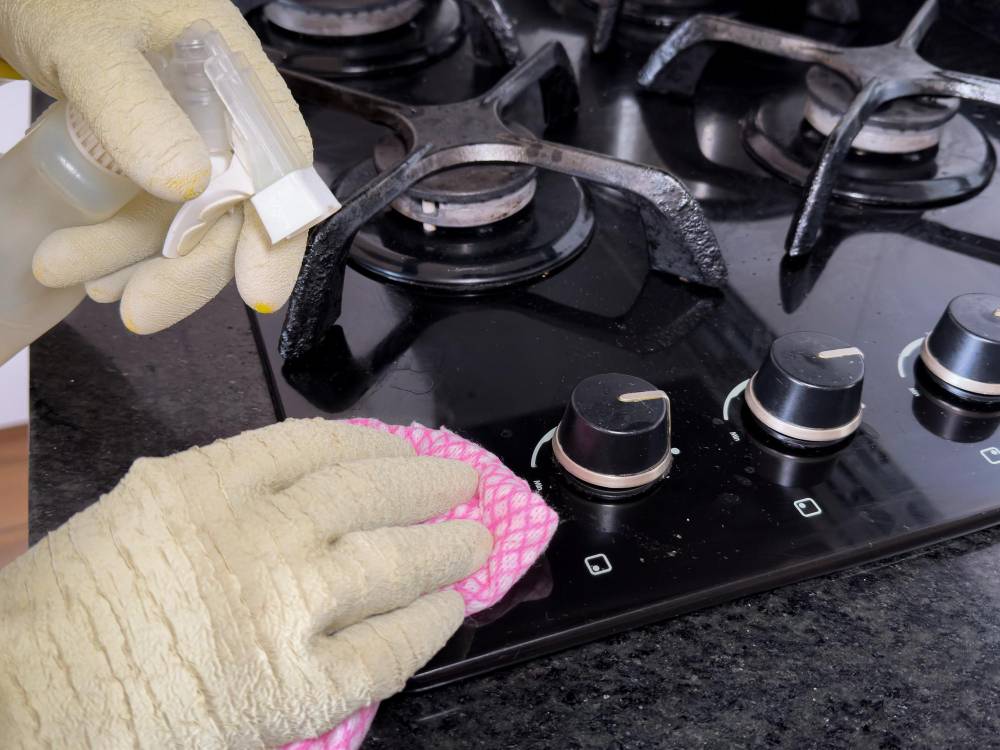
The ammonia bag trick is a no-scrub way to degrease stove grates and burner caps. If your burner caps need separate care, follow our burner cap cleaning guide. You seal the greasy parts in a heavy plastic bag with a small amount of household ammonia, leave the bag overnight, and wipe the grease off the next morning. The fumes do the work. There’s no soak involved.
Some appliance-care guidance associated with GE Appliances has described versions of the ammonia bag method for stove grates.
The method is effective on the right materials but risky on the wrong ones.
How Does the Method Actually Work?
Ammonia fumes help loosen greasy residue over time, making buildup easier to wipe away after an overnight soak. The process works gradually inside the sealed bag, which is why heavily soiled grates usually need several hours before the grease softens enough to clean easily. One important detail: the grates are exposed to fumes, not submerged in liquid during the process.
Two practical details matter most when using this method:
- It’s the fumes, not the liquid, that do the work. The grates don’t need to be submerged.
- The reaction takes time. Eight to twelve hours of fume contact is the consensus across six of the seven top-ranking guides on this topic.
That timing matters. If you crack the bag open at the four-hour mark hoping for a shortcut, the grease will still be tacky on heavier deposits. The reaction is slow because grease is hydrophobic and the fume concentration inside a sealed bag is low.
Which Grate Materials Can You Safely Use It On?
This is the deciding question, and it’s the one the top-ranking guides answer least clearly. Here’s the matrix:
| Grate / Cap Material | Verdict | Why |
|---|---|---|
| Porcelain-enameled cast iron (most modern gas ranges) | Safe default green light | The enamel protects the iron from ammonia contact and resists discoloration. |
| Raw / seasoned cast iron (older or specialty grates) | Avoid prolonged soak | Better Homes & Gardens advises against using ammonia on raw cast iron grates because it can damage the seasoning layer. |
| Aluminum (some burner caps, drip pans) | Do not use | Ammonia exposure can accelerate corrosion on aluminum surfaces, especially when moisture, air, and residual salts are present. |
| Painted or matte-black finishes (older ranges) | Caution test first | Ammonia can lift paint where flames have contacted the grate; a community comment on ThriftyFun warns about exactly this on older stoves. |
| Chrome-plated parts (rare on caps, common on oven racks) | Avoid | Same ammonia stripping concern as paint; one gardenweb community thread explicitly warns against it. |
How do you tell what you have? If the grate is glossy black, smooth, and lighter than you’d expect for its size, it’s almost certainly porcelain-enameled cast iron. That’s the safe category. If it’s matte gray, slightly rough, and feels heavy in your hand, treat it as raw cast iron and use a different method. Burner caps are more often aluminum than the grates themselves. Check the underside for a silvery sheen before bagging anything.
If you’re not sure default to no. The downside of misidentifying aluminum is permanent pitting. The downside of skipping the bag method is using baking soda paste instead.
How Do You Set Up the Ammonia Bag Step by Step?
The process is short. Six steps, most of which are setup.
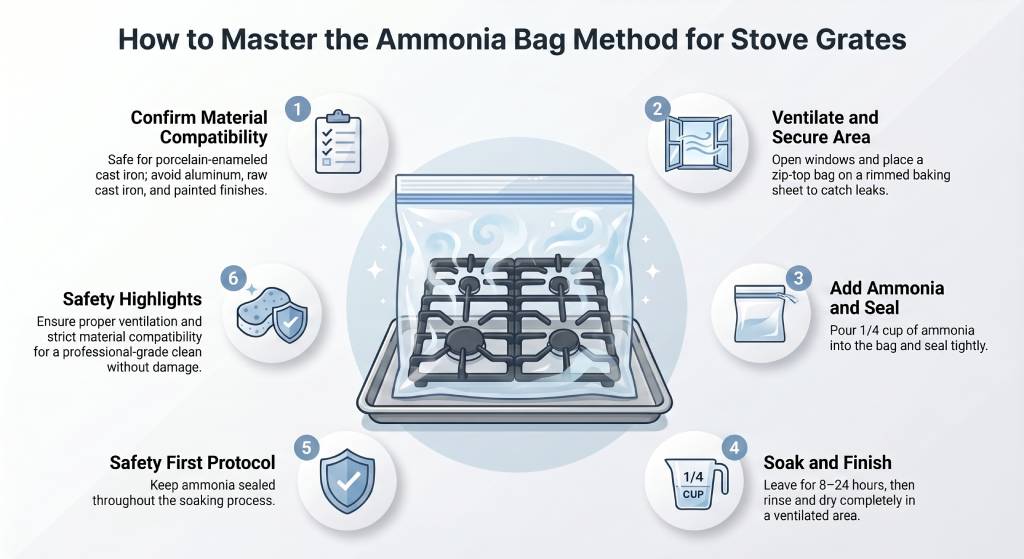
- Confirm the material is safe. Porcelain-enameled cast iron is the green light. Aluminum, raw cast iron, painted finishes pick a different method.
- Open windows and turn on the range hood. The fumes are the active ingredient. They’ll plume when you open the bag the next morning.
- Place a gallon-size zip-top bag on a rimmed baking sheet. The baking sheet catches any seepage from a pinhole leak. For a full set of four grates, use a thick contractor-grade trash bag and double-bag it.
- Add about a quarter cup of household ammonia. Most home guides land between two tablespoons and half a cup. A quarter cup is the median and works for one or two grates in a gallon bag.
- Add the grates or caps, seal the bag, and leave it overnight. Eight to twelve hours is the working range. Twenty-four hours for heavily caked grates. Place the sealed bag in a ventilated area outdoor porch, garage, or an unused bathroom with the fan on. Not a closed pantry.
- Open the bag outdoors or under the range hood, wipe the grates with a sponge, rinse with hot water, and dry thoroughly. Cast iron even enameled should be towel-dried, then left to air-dry separately. If you used the method on raw cast iron despite the warning, re-season immediately with a neutral oil.
A note on disposal pour leftover ammonia down a sink with cold water running and the room ventilated. Don’t store the used bag. Toss it in an outdoor bin.
What Safety Steps Are Non-Negotiable?
Every top-ranking guide mentions this section in passing. None of them cite it properly. The facts below are what move this piece from “another cleaning hack post” to a citable source.
Never mix ammonia with bleach Combining the two can release chloramine gases that irritate the eyes and respiratory system. The CDC and EPA both warn against mixing ammonia with bleach-containing cleaners. The same caution applies to household products that may already contain bleach, including some bathroom and disinfecting sprays stored under the sink.
- Don’t mix ammonia with vinegar either. The reaction is less violent than chloramine, but it neutralizes both cleaners and produces ammonium acetate. That’s useless for degreasing.
- Ventilate the area during the soak and again when opening the bag the next morning. Ammonia fumes can irritate the eyes, nose, and respiratory system in enclosed spaces, especially with prolonged exposure. Workplace safety guidance from OSHA and public-health agencies includes exposure limits for airborne ammonia, which is why airflow matters when using this method indoors. Household ammonia cleaners are typically diluted solutions, but fumes can still build up quickly in a small, closed kitchen without proper ventilation.
- People with asthma, COPD, chemical sensitivities, or pregnancy-related concerns may prefer lower-fume cleaning alternatives. The CDC’s public health statement on ammonia notes that respiratory irritation is the primary acute risk, and asthmatics are especially sensitive. If anyone in the household has chronic respiratory conditions, use a different method entirely.
- Keep pets and children out of the room during the soak and when you open the bag. Cats and small dogs sit at the worst part of any fume plume.
These aren’t optional. Many quick cleaning tutorials mention the method without explaining the ventilation and material-safety considerations in detail.
When Should You Skip This Method?
Situations where an alternative cleaning method may be safer:
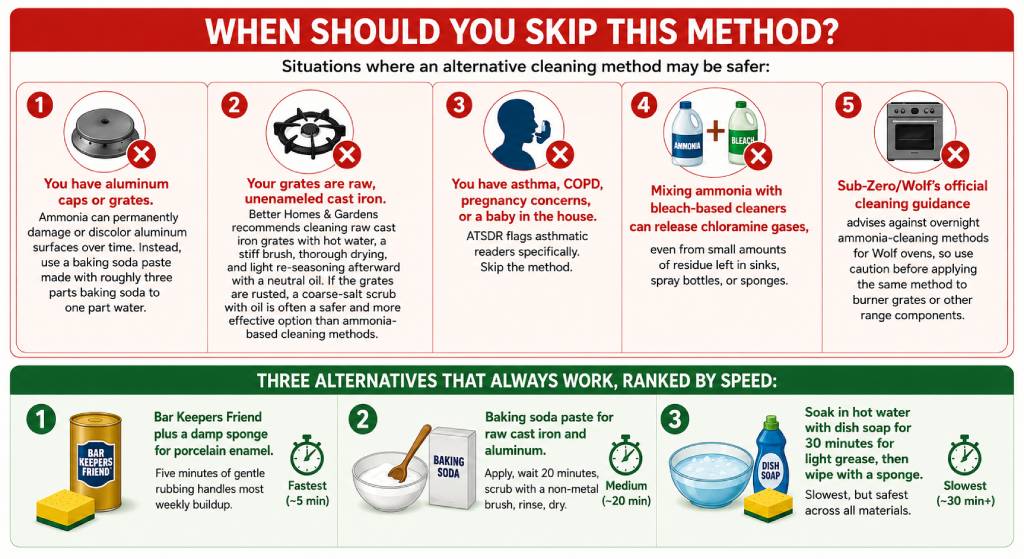
- You have aluminum caps or grates. Ammonia can permanently damage or discolor aluminum surfaces over time. Instead, use a baking soda paste made with roughly three parts baking soda to one part water.
- Your grates are raw, unenameled cast iron. Better Homes & Gardens recommends cleaning raw cast iron grates with hot water, a stiff brush, thorough drying, and light re-seasoning afterward with a neutral oil. For detailed instructions, see our complete cast iron grate cleaning guide. If the grates are rusted, a coarse-salt scrub with oil is often a safer and more effective option than ammonia-based cleaning methods.
- You have asthma, COPD, pregnancy concerns, or a baby in the house. ATSDR flags asthmatic readers specifically. Skip the method.
- Mixing ammonia with bleach-based cleaners can release chloramine gases, even from small amounts of residue left in sinks, spray bottles, or sponges.
- Sub-Zero/Wolf’s official cleaning guidance advises against overnight ammonia-cleaning methods for Wolf ovens, so use caution before applying the same method to burner grates or other range components.
Three alternatives that always work, ranked by speed. If you’re comparing approaches for different materials and buildup levels, see our stove grate cleaning methods guide:
- Bar Keepers Friend plus a damp sponge for porcelain enamel. Five minutes of gentle rubbing handles most weekly buildup.
- Baking soda paste for raw cast iron and aluminum. Apply, wait 20 minutes, scrub with a non-metal brush, rinse, dry.
- Soak in hot water with dish soap for 30 minutes for light grease, then wipe with a sponge. Slowest, but safest across all materials.
Which Manufacturers Endorse or Forbid It?
The split here is unusually clean:
| Manufacturer | Position | Where they say it |
|---|---|---|
| GE Appliances | Describes the bag method in their appliance care guidance | Cited by Hunker’s editorial team; verify on ge.com directly before reproducing |
| Sub-Zero / Wolf | Forbids ammonia overnight in their ovens | Brand’s official answer database, current as of May 2026 |
| Better Homes & Gardens | Forbids ammonia on raw cast iron grates | Their cast iron care article, May 2024 |
| Weber | Recommends brushing, not ammonia, for porcelain-enameled cast iron grill grates | Weber’s grill care guide, written by Jenny Bartels |
| Heloise / King Features | Endorses a version of the method | Multiple Hints from Heloise columns over several decades |
The pattern: mass-market manufacturers and editorial cleaning columnists tend to be more permissive. Premium appliance brands like Sub-Zero/Wolf and material specialists like BHG and Weber carve out specific exceptions. If your range came with a manual that addressed cleaning directly, that manual outranks any cleaning column.
Frequently Asked Questions
Does the ammonia bag trick actually work?
Yes, on the right materials. Porcelain-enameled cast iron grates and most burner caps come out of an 8 to 12 hour soak with grease that wipes off with a sponge. It works because prolonged exposure to ammonia fumes helps loosen greasy residue, making it easier to wipe away after soaking overnight.
How much ammonia do you put in the bag?
A quarter cup of household ammonia is the median across the major cleaning guides. Two tablespoons is enough for a single small burner cap. Half a cup is reasonable for a full set of four grates in a contractor-grade trash bag. More ammonia doesn’t speed up the reaction. The fume concentration plateaus quickly inside a sealed bag.
How long should grates sit in the ammonia bag?
Eight to twelve hours covers most cases. Lightly soiled grates clean in four to five hours. Heavily caked grates burnt-on residue from a year of cooking can need 24 hours. Beyond 24 hours the fume reaction has plateaued, and you’re only delaying the cleanup.