
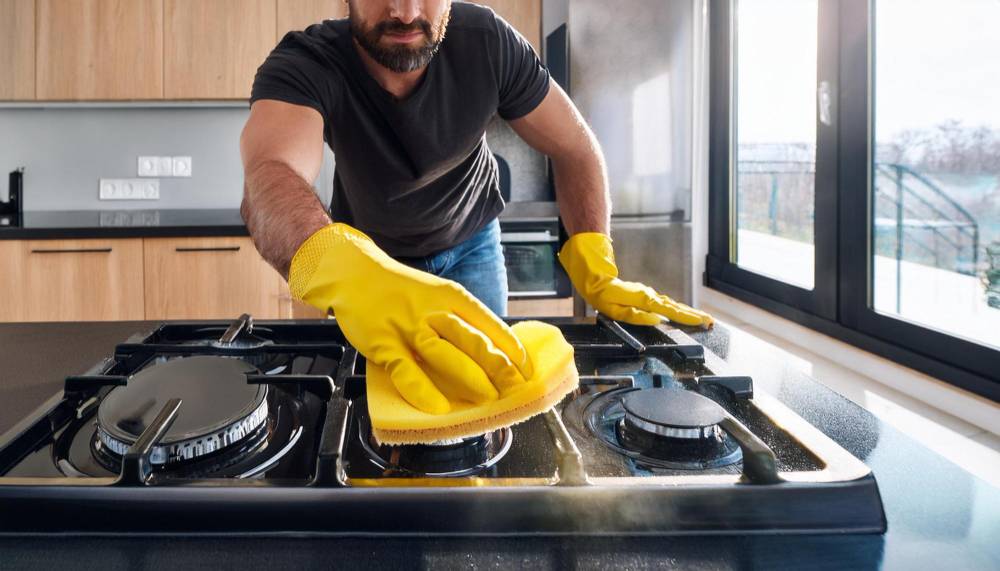
Miele gas stove care means wiping the porcelain or stainless deck after every meal with warm water and a little dish soap, washing the cast-iron grates and burner caps by hand (the grates are also dishwasher safe), and keeping the ignitor bone-dry. Skip abrasives and stainless cleaners on the knobs, and never use a steam cleaner.
A Miele gas range is built to a tighter standard than most kitchens see: heavy cast-iron grates, sealed burners with removable caps, a porcelain or stainless deck, and an M-Touch interface on the deluxe models. That precision is the reason to clean it by Miele’s rules rather than your old habits, because the wrong cleaner on a knob or a damp ignitor causes problems a budget range never has. This guide walks through the daily wipe, the weekly deep clean, monthly maintenance, the quirks that make a Miele different, and a troubleshooting table. It applies to Miele’s US gas equipment, the all-gas and dual-fuel professional-style ranges in 30, 36, and 48-inch widths, and the KM-series gas cooktops. Every brand-specific step here traces to Miele’s own operating instructions and support pages. For maintenance practices that apply to most gas ranges, see our general stove care reference.
Key Takeaways
- Wipe the porcelain or stainless-steel cooktop after every use with warm water, mild dish soap, and a soft microfiber cloth to prevent stains, water spots, and baked-on residue.
- Wash the cast-iron grates weekly by hand or in the dishwasher (where permitted by Miele), but always hand-wash burner caps and heads, drying every part completely before reinstalling.
- Keep the ignitor and thermocouple clean and completely dry, as moisture is the most common reason a burner fails to ignite after cleaning.
- Use only non-abrasive cleaners on the cooktop, and avoid steam cleaners, ammonia, chlorides, descalers, and abrasive pads that can damage Miele finishes.
- Clean Miele control knobs with warm, soapy water only never place them in the dishwasher or use stainless-steel cleaner, as this can damage the printed markings.
- Inspect burner flame holes monthly and remove any blockages to maintain steady blue flames and even heat distribution.
- Tighten the burner-head T20 screws if they become loose during cleaning, as loose burner heads can cause ignition and flame problems.
- A custom-fit stove protector can help keep the porcelain or stainless deck cleaner, but it must never cover burners or flame ports.
- Watch for a steady blue flame during operation. Persistent yellow or sooty flames, gas odors, or ignition issues that remain after cleaning should be inspected by a qualified technician.
- Following Miele’s recommended cleaning methods helps preserve the premium finish, electronic ignition system, and long-term performance of both gas ranges and KM-series gas cooktops.
How is a Miele gas range built?
Four build details decide how you clean one.
- Sealed burners with removable caps. Each burner has a flat cap that lifts off, a burner head beneath it, and a base holding the ignitor and thermocouple. Miele’s professional-style burners are designed to deliver everything from gentle simmering to high-heat cooking, depending on the model.
- Heavy cast-iron grates over a porcelain or stainless deck. For the Miele gas ranges and cooktops covered in this guide, the cast-iron grates are dishwasher safe according to Miele’s operating instructions. The deck is an easy-clean porcelain top with stainless fronts, and on the ranges the high sides are designed to help contain spills.
- An electronic spark ignitor with a thermocouple. Turn the knob and the ignitor sparks; the thermocouple senses the flame. Both sit right at the burner base, and both have to stay dry to work.
- M-Touch controls on deluxe models. The deluxe feature set adds one-touch cooking, preset modes, a wireless cooking probe, and Moisture-Plus; standard models use Direct-Select. That doesn’t change the cleaning, but the probe and touch glass want a soft cloth, not a scouring pad.
Before your first deep clean, check your manual to confirm your burner layout and whether your model is all-gas or dual-fuel. For the complete step by step process, see our full gas stove top cleaning method.
How do you clean a Miele gas stove every day?
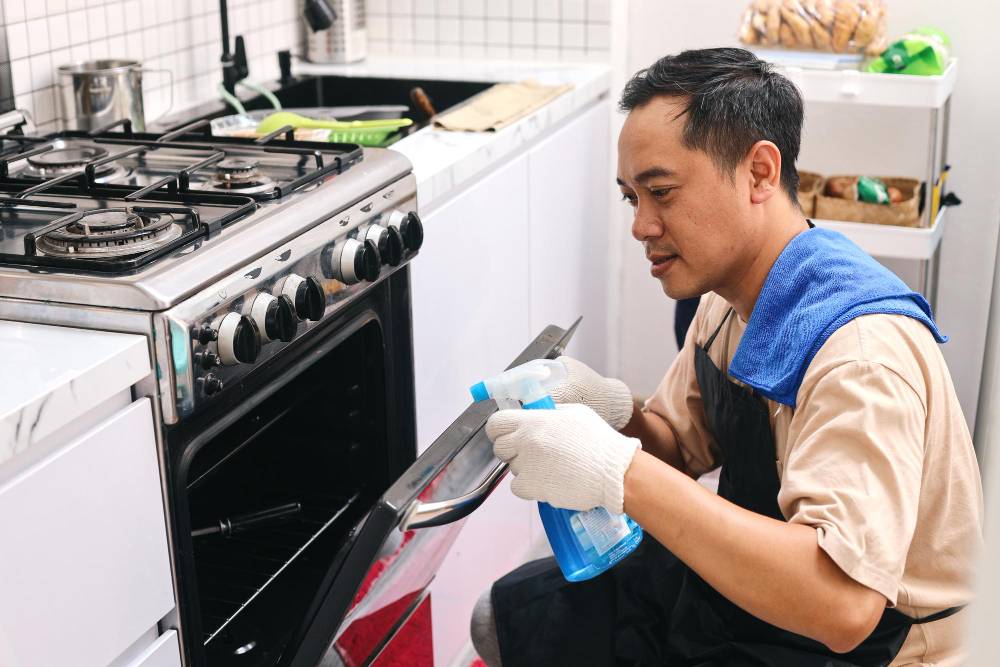
Daily Miele gas range cleaning takes about two minutes once you stay ahead of spills. First, turn every burner off, switch the cooktop off, and let it cool. Miele warns that the grates, caps, and burner parts stay hot long after the flame is out and can burn you.
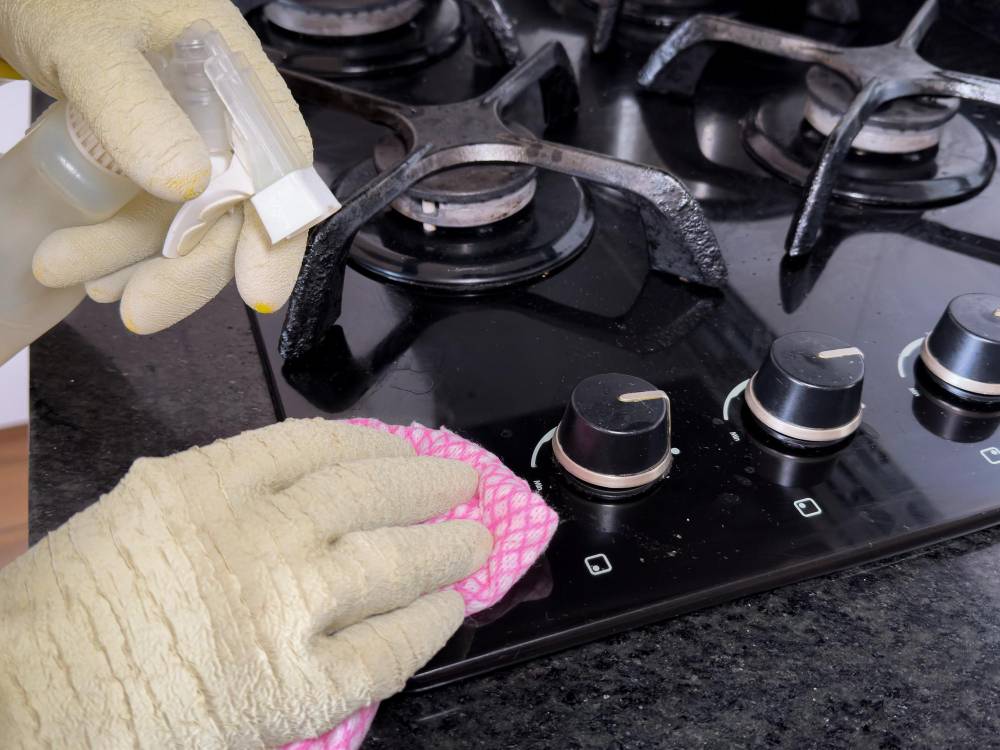
- Lift the grates and wipe the deck with warm water, a little dish soap, and a soft sponge or microfiber cloth. Soften any stuck-on soiling first rather than scrubbing it dry.
- Catch boil-overs and salt or sugar splashes right away. Miele is specific here: left on a warm cooktop, they discolor the burner components.
- Dry the deck with a clean soft cloth so water spots and limescale don’t set in.
That after-dinner wipe is what keeps the weekly clean short, and keeps the stainless looking new.
How do you deep clean a Miele gas range each week?
Once a week, take the cooktop apart. With the burners cool and the power off, lift off the grates, then the burner caps and heads.
Grates the part Miele makes easy. Wash the cast-iron grates in the dishwasher or in warm soapy water with a soft sponge, softening stubborn soiling first. Stand them upright while you clean so they can’t scratch the deck, then dry them fully. See our cast iron grate cleaning guide for detailed drying and rust-prevention tips.
Burner caps and heads by hand only. Burner parts are not dishwasher safe. Wash the cap and head with a soft sponge, warm water, and a little dish soap, and clear every flame hole. Then dry each part completely before it goes back, because a damp burner lights unevenly. One reassurance: the cap’s surface gets duller and more matte over time. Miele says that’s normal, not damage.
The deck. Wash the porcelain or stainless surface with warm soapy water, rinse, and dry. For water spots or limescale, Miele’s own ceramic and stainless steel cleaner is the safe choice, but never apply it to a hot cooktop, since that can discolor the surface. Wipe off every trace afterward so residue doesn’t burn on next time.
Keep the ignitor dry When you wipe the burner base, use a well-wrung-out cloth and keep the ignitor of the small white piece on the side of the base dry. A wet ignitor will not spark.
What monthly maintenance does a Miele gas stove need?
Monthly maintenance is a short inspection on top of the weekly clean.
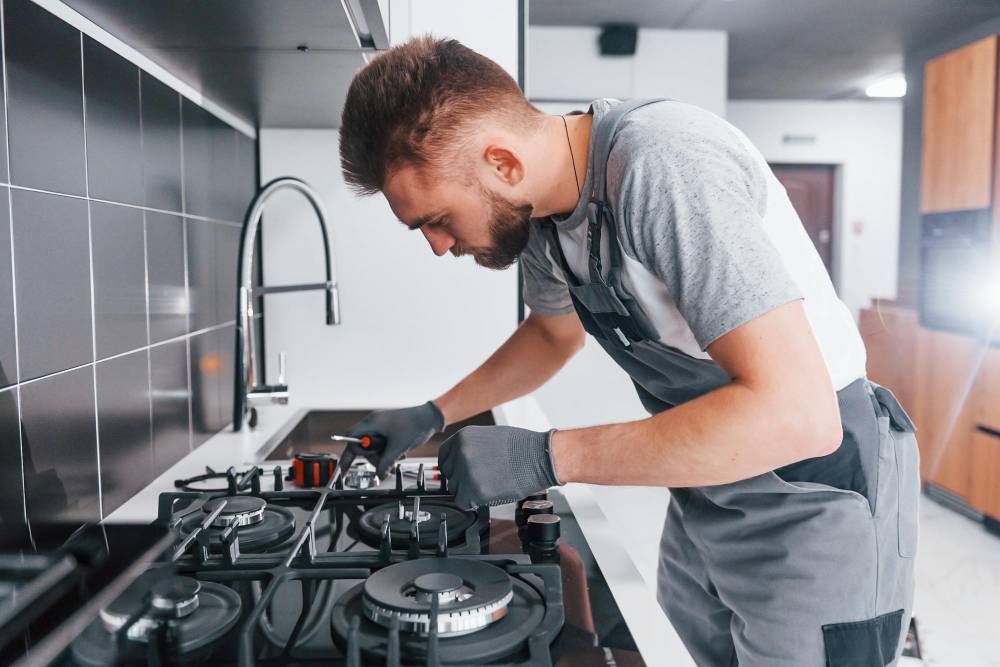
- Pull and clean every burner part. Once a month, remove the caps and heads, wash them by hand, clear the flame holes, dry fully, and refit. Even when they look clean, this clears the ports you can’t see into. If you uncover burner or ignition issues during inspection, follow our diagnostic walkthrough before replacing parts or arranging service.
- Check the ignitor and thermocouple. If a burner sparks weakly, the ignitor is usually dirty or damp. Wipe it and the thermocouple carefully with a barely-damp cloth and let them dry before you test.
- Watch the flame and the gas line. A healthy Miele flame burns steady blue with no yellow tipping. Check the gas supply line behind the range for kinks. If you smell gas, stop using the appliance immediately and follow your gas utility’s emergency guidance before contacting a qualified technician.
- Wipe the controls. On M-Touch models, clean the touch glass and the wireless probe with a soft damp cloth, never an abrasive.
What’s different about caring for a Miele?
This is where a Miele parts ways with a standard painted range.
- The knobs follow the opposite rule from the deck. Do not put the control knobs in the dishwasher, and do not use a stainless-steel cleaning agent on them, even though that same cleaner is fine on the deck. Wash them with warm soapy water and a soft sponge only. Miele warns the knobs discolor if they aren’t cleaned regularly, and owners on the r/Miele forum say the same thing, sticking to mild cleaning to keep the printed markings readable.
- No adhesives, no magnets on the coated stainless. Sticky notes and tape strip the dirt-repellent coating, and magnets scratch it. Keep both off the stainless fronts.
- Burner heads are screwed down. On the ranges, two T20 Torx screws hold each burner head to its base. If they work loose, food residue gets underneath and the burner misbehaves, so check and snug them when you reassemble.
- You get shortcuts other ranges don’t. The cast-iron grates are dishwasher safe, full ranges can run the oven’s cleaning cycle with the shelves left in place, and deluxe ranges add a catalyzer that burns off grease and odors. Use them just to keep the burner parts out of the dishwasher.
What are common Miele gas stove problems?
Many common Miele cooktop issues trace back to a wet or misseated burner part, a clogged flame hole, or a loose burner-head screw, not a broken stove.
| Symptom | Likely cause | What to do |
|---|---|---|
| Burner won’t light after cleaning | Wet or misseated cap/head, clogged flame holes, damp ignitor, loose T20 screws | Dry every part, clear the holes, seat the cap flat, tighten the burner-head screws, confirm a clean spark. |
| Burner keeps clicking | Moisture in the ignition or a misseated cap | Dry the cap and ignitor, reseat the cap so it can’t shift, and let parts air-dry fully, then follow our clicking diagnostic if the ignitor continues clicking after everything is completely dry. |
| Weak or no spark | Dirty or damp ignitor | Wipe the ignitor with a barely-damp cloth and let it dry it has to be dry to spark. |
| Yellow or fluttering flame | Clogged flame holes or a part out of place | Clear the holes and check the cap and head sit correctly; if it stays yellow and sooty, see the safety note. |
Safety note A persistent yellow, sooty flame that cleaning doesn’t fix can mean incomplete combustion, which carries a carbon-monoxide risk. If you ever smell gas, don’t light a burner, don’t touch an electrical switch, leave the building, and call your gas utility or a qualified technician.
How do you protect a Miele stovetop between cleanings?
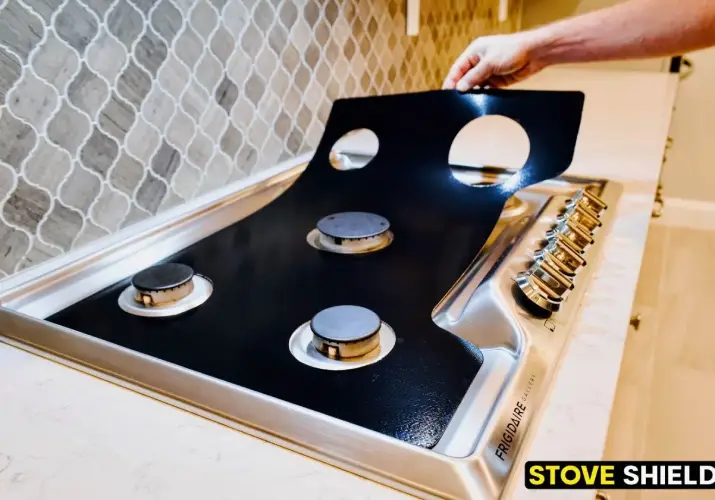
The fastest way to clean a Miele less often is to keep spills off the deck in the first place. A custom-fit stove protector, a thin, heat-resistant liner cut to your cooktop sits in the flat areas around the burners and takes the splatter, so you wipe a liner instead of buffing the porcelain or stainless. Fit matters on a Miele: a model-matched cut that follows the burner openings and great positions sits flush, where a generic liner can bridge the deck or creep toward a flame.
One hard safety rule holds on any gas range: nothing goes over the burners or flame holes. A liner that covers a burner can overheat, melt, or create a fire or carbon-monoxide risk. A proper protector clears the burners, never touches an open flame, and is no substitute for the daily wipe.
To add one, explore Miele stove protectors, compare materials in our best gas stove protectors roundup, and read the stove protector safety guide first so you place it correctly.
How do you find your Miele model number?
You need the model number to order the right grate, burner cap, ignitor, or a correctly cut protector. On a Miele gas range the rating label usually sits inside the lower panel or behind the kickplate along the bottom of the range. If you can’t find it, our model number finder walks through reading the label, and Miele support can identify your model from its serial number.
Frequently asked questions
How do you clean a Miele gas stove top?
Cool the cooktop and switch it off, then wipe the porcelain or stainless deck with warm water and a little dish soap on a soft sponge. Soften stuck-on spills first, dry with a clean cloth, and wash the cast-iron grates and burner caps separately, drying the burner parts fully before refitting.
Are Miele cast iron grates dishwashers safe?
Yes. Miele lists the cast-iron grates as dishwasher safe, or you can wash them in warm soapy water. The burner caps and heads are not dishwasher safe; those are hand-wash only.
What cleaner should I use on a Miele gas cooktop?
Warm water and a little dish soap for everyday cleaning. For water spots or limescale on the deck, use Miele’s ceramic and stainless steel cleaner, but never on a hot surface. Avoid abrasives, steam cleaners, and anything with ammonia, chlorides, or descalers.
Why won’t my Miele burner light after cleaning?
Almost always a wet or misseated part. Make sure the cap and head are bone-dry and seated flat, the flame holes are clear, the ignitor is dry, and the two T20 burner-head screws are snug.
How do you clean Miele stainless control knobs?
With warm soapy water and a soft sponge only. Don’t put the knobs in the dishwasher and don’t use a stainless-steel cleaner on them, since both can damage the printed markings. Clean them regularly, because Miele notes the knobs discolor if they’re neglected.
Is a stove protector safe on a Miele gas range?
Yes, on the flat deck only. A custom-cut protector sits in the areas around the burners, never over them, because nothing should cover a burner or its flame holes.
Sources
- Miele gas cooktop operating instructions (KM 2355, KM 3010, KM 3054, KM 360/391, KM 34xx; “Gas Cooktop 30″/36″/48″ Ranges”) after-each-use cleaning, dishwasher-safe grates, burner parts not dishwasher safe, dry-the-ignitor, no steam cleaner, no abrasive/ammonia/chloride cleaners.
- Miele USA support, “Range | Burners not igniting properly” disassembly with two T20 screws, clean and dry the burner head and flame holes, keep the ignitor dry.
- Miele operating instructions, control knobs in stainless color no dishwasher, no stainless-steel cleaner, regular cleaning prevents discoloration.
- Miele USA support, “Burn stains cannot be removed (gas cooktop)” soft sponge, hot water and dish soap, or Miele ceramic and stainless steel cleaner.