
To care for a ZLINE gas range, wipe the porcelain enamel cooktop and sealed burners after each use with warm, soapy water, hand-wash the cast-iron grates weekly with hot water or white vinegar (never the dishwasher), and clear the burner ports monthly.
Many ZLINE professional ranges use a porcelain enamel cooktop instead of the stainless-steel cooking surface found on many commercial-style ranges. That enamel is durable, but it cleans by different rules than stainless. This guide covers the daily wipe, the weekly deep clean, monthly checks, the features that distinguish many ZLINE ranges, and a troubleshooting table. It applies to ZLINE’s freestanding gas and dual-fuel ranges the Professional and Autograph Edition lines, in the CGR, HGR, and SGR model families and 30- through 60-inch widths. Brand-specific steps trace to ZLINE’s owner’s manuals and support pages. For maintenance practices that apply to nearly every gas range, see our general stove care reference.
Key Takeaways
- Clean the porcelain enamel cooktop after each use with warm, soapy water and a soft microfiber cloth.
- Hand-wash cast-iron grates weekly and never place them in the dishwasher, as moisture and detergent can promote rust.
- Wipe up acidic spills such as vinegar, lemon juice, and tomato sauce promptly to help prevent staining on the enamel surface.
- Inspect burner ports and burner cap alignment monthly to maintain reliable ignition and an even flame.
- Use only non-abrasive cleaners and avoid steel wool or scouring powders, which can damage the porcelain enamel finish.
- If you use a stove protector, ensure it fits around the burners and never covers burner ports or comes into contact with an open flame.
How is a ZLINE gas range built?
Four build details decide how you clean one.
- A porcelain enamel cooktop, not stainless. ZLINE gives its gas and dual-fuel ranges a heavy-duty, scratch-resistant porcelain enamel cooktop. It looks sleek, but enamel stains if you leave acids on it and dulls if you scrub it with powders the opposite of how people treat a stainless deck.
- Cast-iron grates with rubber feet. Each grate has rubber feet that drop into slots on the cooktop. They span the surface for sliding heavy pots, but they have to go back in their own positions, and the cast iron rusts if treated like dishwasher-safe steel.
- Sealed burners with a white electrode. Each burner has a removable spread and cap that sits over a white ceramic spark electrode. Boil-overs stay on the surface but a cap knocked out of place is the top reason a clean burner won’t light.
- Spark ignition, with auto re-ignition on some models. Turn a knob and the electrode clicks out a spark; SGR-series burners auto-relight if a draft blows one out. One quirk: when any burner is set to high, all of them spark at once.
Before your first deep clean, check your manual to confirm your burner layout and whether your model has a griddle or self-clean oven. For the complete step by step process, see our full gas stove top cleaning method.
How do you clean a ZLINE gas stove every day?
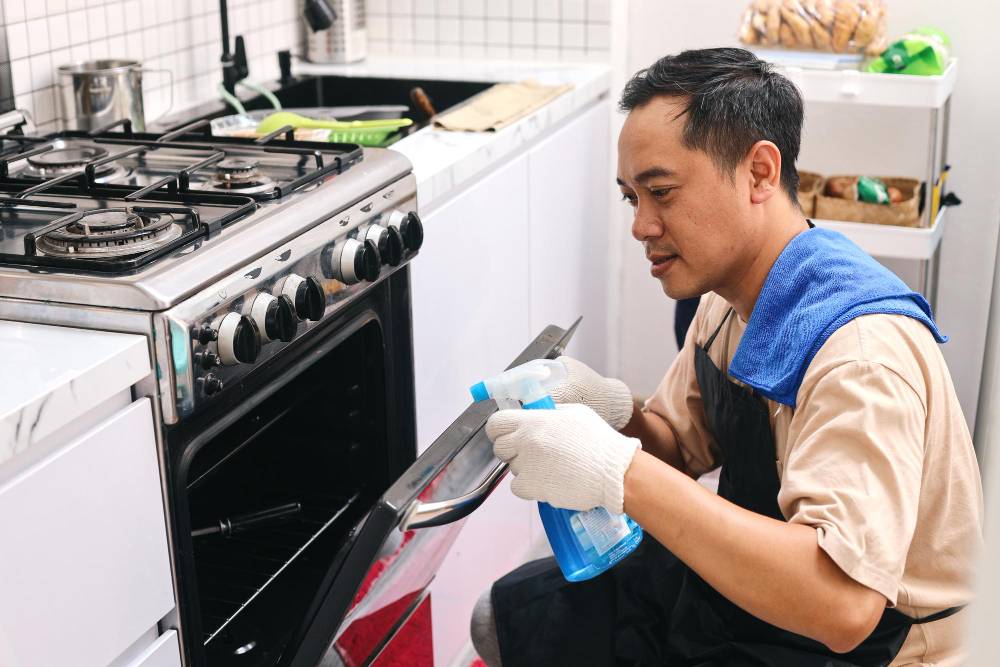
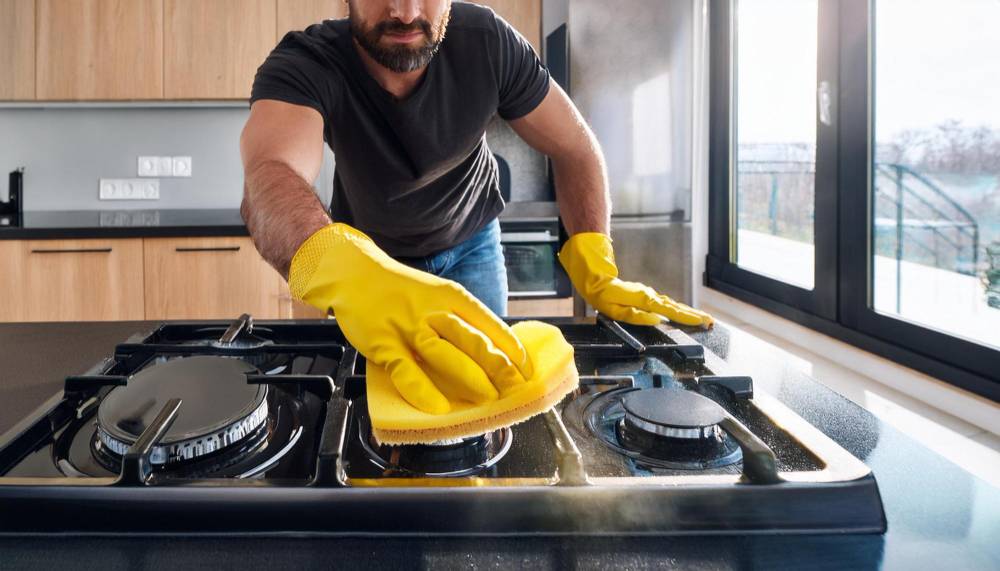
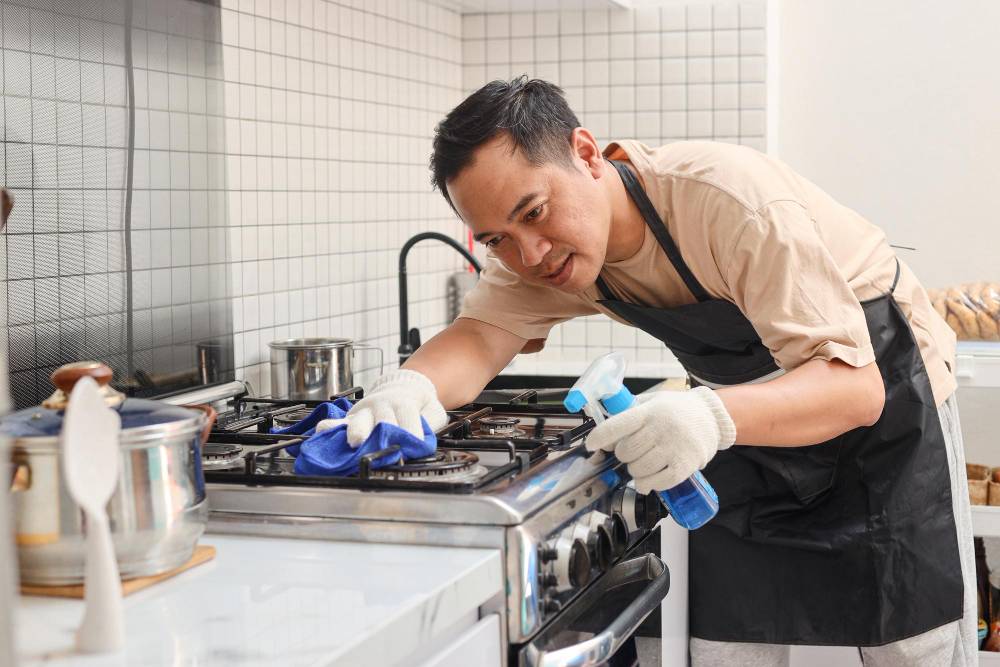
Daily ZLINE gas range cleaning is a two-minute job if you stay ahead of spills. First, turn every knob off and let the cooktop cool the cast-iron grates to hold heat long after the flame is out.
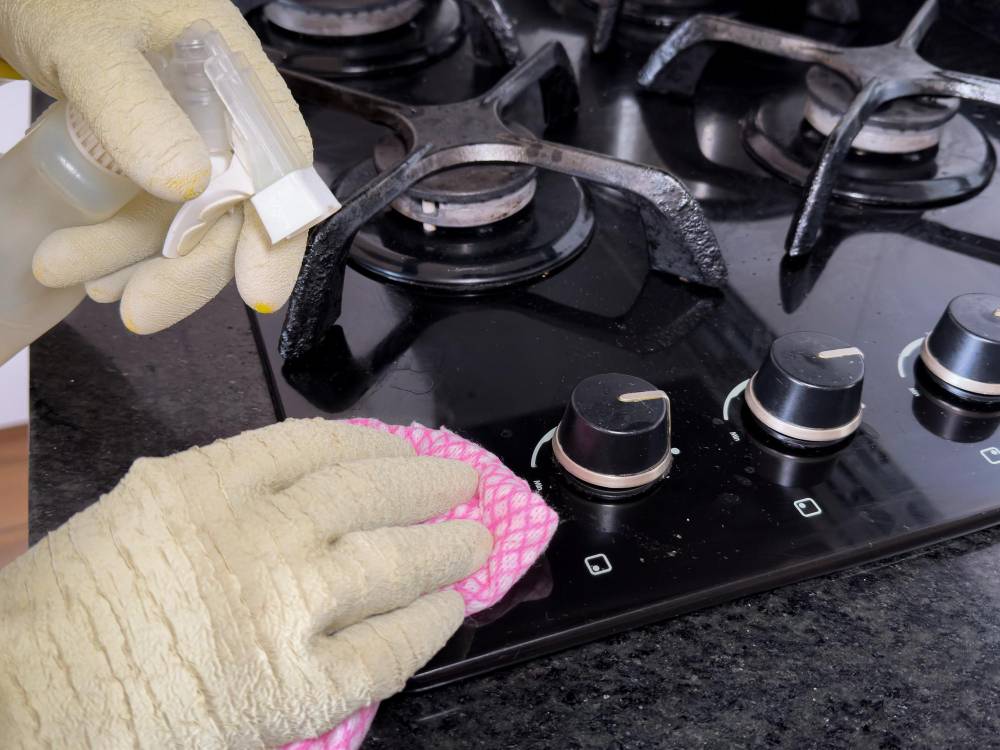
- Lift the grates off and wipe the enamel cooktop with warm water, a little dish soap, and a soft sponge or microfiber cloth, then wipe it dry.
- For baked-on spots, scrape gently with a rubber spatula rather than a metal tool or scouring pad. ZLINE’s guidance is to lift residue with a rubber edge before it hardens.
- Catch acidic and sugary spills fast. ZLINE is specific that vinegar, lemon juice, salt, and tomato sauce can stain enamel, so wipe them up once the surface is cool enough to touch.
That two-minute wipe after dinner is what keeps weekly cleaning quick and keeps the enamel looking new.
How do you deep clean a ZLINE gas range each week?
Once a week, take the cooktop apart. With the burners cool and the knobs off, lift off the grates, then the burner caps and spreads.
Grates-the rule people get wrong. Let the cast-iron grates cool, then clean them with hot water or white vinegar and dry them thoroughly. Do not put ZLINE grates in the dishwasher the manual says so plainly, and detergent plus a long wet cycle strips the cast iron and invites rust. See our cast iron grate cleaning guide for drying, oiling, and long-term rust prevention.
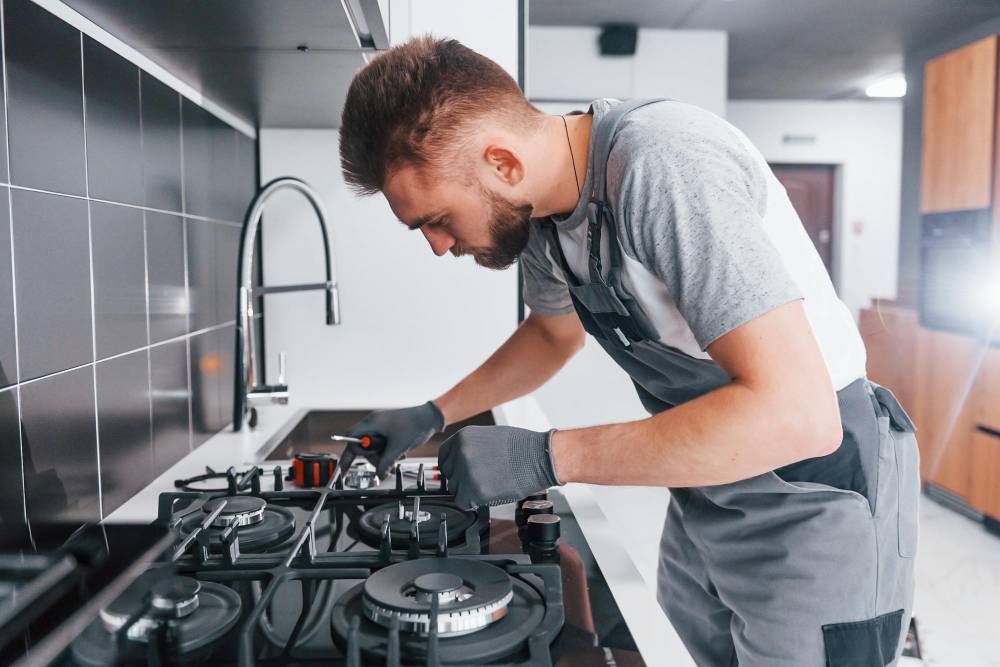
Burner caps and spreads. Soak them in warm, soapy water, then clear each flame port with a straightened paperclip or needle, working gently around the white electrode so you don’t snap it. Dry every part completely and reseat each spread so its hole sits over the electrode, cap snug on top. A misaligned burner cap is one of the most common reasons a cleaned burner won’t light.
The enamel cooktop. Wash it with warm soap and water, rinse, and dry with a soft cloth. Never use abrasive powders or liquids. ZLINE warns they create a rough patch where residue soaks in and gets harder to remove and don’t leave acids sitting on the enamel.
The stainless façade. ZLINE’s front panels and handles are stainless, which cleans by the opposite rule from enamel: wipe with the grain using a microfiber cloth, then buff dry, so you don’t leave streaks or fine scratches.
What monthly maintenance does a ZLINE gas stove need?
Monthly ZLINE stove maintenance is a five-minute inspection.
- Watch the flame. A healthy gas flame burns steady blue. Orange or yellow tips usually mean a clogged port or an off air-mix clean the ports first and see if it clears.
- Check the ignition. Dim the lights and turn a burner to light; you want a crisp blue-white spark at the electrode. A weak or wandering spark often points to a dirty or damp electrode.
- Look at the gas connection. Check the supply line behind the range for cracks or kinks, and treat any lingering gas smell as a reason to stop, ventilate, and call a professional.
If your monthly inspection uncovers ignition or burner problems, follow our diagnostic walkthrough before replacing parts or scheduling service. Annual service by a qualified technician is also wise for any gas appliance.
What’s different about caring for a ZLINE?
This is where a ZLINE range differs from a standard 30-inch stove or a bare stainless-steel professional-style range.
- The enamel has its own rulebook. No abrasive powders, no acids left to sit, and a rubber spatula instead of a scraper. Treating enamel like a stainless deck steel wool, harsh scrubs is what dulls it.
- Brass burners change color by design. The optional brass burner caps patina with heat. ZLINE flags this as normal, so resist the urge to polish them with anything abrasive.
- Clean cold, and keep moisture out. Because turning one burner to high sparks all of them, ZLINE warns against cleaning a cap while another burner is lit. Skip steam-jet cleaners too forced steam drives water into the electrode and leaves a burner clicking instead of lighting.
What are common ZLINE gas stove problems?
Most ZLINE issues trace back to a wet or misseated burner cap, a clogged port, or a damp electrode not a broken stove. ZLINE’s own troubleshooting starts with “dry or clean the igniters.”
| Symptom | Likely cause | What to do |
|---|---|---|
| Burner won’t light after cleaning | Wet or crooked cap, dirty electrode, water in the ports | Dry and reseat the cap so its hole sits over the electrode, clear the ports, confirm a clean spark. |
| Burner keeps clicking | Wet or misseated cap, moisture in the ignition | Dry the cap and electrode, reseat squarely, and let parts air-dry fully after a wash, then follow our clicking diagnostic if the igniter continues clicking after the burner is dry. |
| Orange or yellow flame | Clogged ports or off air-mix | Clean the ports; if it stays orange and sooty, see the safety note below. |
| Brass burner darkening | Normal heat oxidation | Leave it ZLINE notes brass burners change color; don’t scour them. |
Safety note A persistent orange, sooty flame that cleaning doesn’t fix can signal incomplete combustion, which carries a carbon-monoxide risk. Shut off the gas, ventilate, leave, and call a qualified gas technician or your utility.
How do you protect a ZLINE stovetop between cleanings?
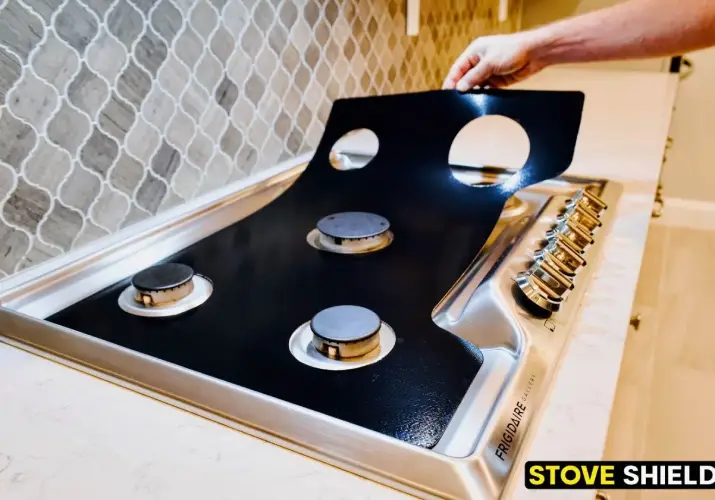
One way to reduce cleanup is to use a properly fitted stove protector that helps catch everyday splatters before they reach the cooktop. A custom-fit stove protector, a thin, heat-resistant liner cut to your cooktop, sits in the flat porcelain enamel areas around the burners, so you clean the liner instead of the cooktop after routine cooking. Because many ZLINE ranges use a porcelain enamel cooktop, a model-specific cut that follows the burner openings and grate slots provides a better fit than a generic liner.
One hard safety rule: nothing goes over the burners or ports. A liner covering a burner can overheat, melt, or create a carbon-monoxide or fire risk. A proper protector clears the burners, never touches an open flame, and isn’t a substitute for the daily wipe.
To add one, explore ZLINE stove protectors, compare materials in our best gas stove protectors roundup, and read the stove protector safety guide first so you place it correctly.
How do you find your ZLINE model number?
You need the model number it starts with a prefix like CGR, HGR, or SGR to order the right grate, cap, igniter, or a correctly cut protector. The rating label sits in one of two spots: behind the kickplate (the panel along the bottom of the range) or inside the oven door, on the front edge of the frame. If you want help reading the label, our model number finder walks through it.
Frequently asked questions
How do you clean ZLINE gas stove grates?
Let the cast-iron grates cool, wash them with hot water or white vinegar, and dry them thoroughly never in the dishwasher. Drying fully, plus a thin coat of oil, keeps bare cast iron from rusting between cleans.
Can you put ZLINE grates in the dishwasher?
No. ZLINE’s manual says not to put the cast-iron grates in a dishwasher; the detergent and long wet cycle strip the cast iron and leave it prone to rust.
Why do my ZLINE brass burners change color?
That’s expected. ZLINE notes the optional brass burners change color with use of heat oxidation, not damage. Don’t scour the patina off; clean them gently like the other burner parts.
Do ZLINE ranges have self-cleaning ovens?
Some do, some don’t. Certain ZLINE ranges include a self-clean oven cycle while others are manual-clean check your model’s manual before running one.
How do you clean a ZLINE porcelain enamel cooktop?
Remove the grates, then wipe the enamel with warm soapy water and a soft sponge or microfiber cloth, lifting stubborn spots with a rubber spatula. Skip abrasive powders and don’t leave acidic spills sitting on the surface.
Is a stove protector safe on a ZLINE?
Yes on the enamel cooktop surface only. A custom-cut protector sits in the flat areas around the burners, never over them, because nothing should cover a burner or its ports.
Sources
- ZLINE CGR / HGR / SGR gas-range owner’s manuals burner spread and cap seating, white-electrode ignition, auto re-ignition, “all burners spark on high,” cast-iron grate and porcelain-surface cleaning rules, brass-burner color note.
- ZLINE Kitchen and Bath, “How to Clean Your ZLINE Professional Range Cooktop” (enamel-cooktop care: warm soap and water, soft sponge, rubber spatula, no abrasives, no acids).
- ZLINE stainless-steel cleaner and care guidance (wipe stainless with the grain, buff dry).
- ZLINE customer-service troubleshooting (gas range user manual: “dry or clean igniters”; burner-cap alignment and igniter-spark checks).