
For a flexible mat-style stovetop protector, aim for around 0.5 mm of fiberglass based material. This premium thickness normally lasts two to three years and shrugs off everyday spills, while thin 0.15–0.3mm mats can wear out in under a year. Thickness drives lifespan, lay-flat fit, and cleaning more than any other spec.
The catch is that “thickness” means two different things depending on the protector you’re holding. A flexible, fiberglass-based cooking mat is measured in millimeters.
Key Takeaways
- Over ~0.5–0.6 mm, fit beats thickness. A model-matched cut matters more than the highest millimeter number.
- For flexible mats, target around 0.5 mm fiberglass-based material. That’s Stove Shield’s premium thickness, marketed as “2X thicker” than thin budget mats.
- Millimeters measure flexible mats; gauge measures rigid metal covers. They’re different product classes, not one scale.
- Stove Shield’s published data: 0.15–0.3 mm budget mats last 6 months – 1 year; 0.5 mm mats typically last 2–3 years.
- Heat-resistant is not fireproof. Keep the mat away from open flame and cut to fit your burners.
- Flexible mats don’t belong on induction cooktops. Gas and electric coil are the core use case.
How Thick Should a Stovetop Protector Be?
For flexible stovetop protectors, a good target is roughly 0.5 mm thick fiberglass-based material. That is the thickness Stove Shield uses for its premium gas and electric-coil protectors, and it’s marketed as roughly twice as thick as the thin mats common in the category.
Thinner is not automatically worse for every kitchen, but it does cost you lifespan. Stove Shield’s published material data shows budget mats around 0.15–0.3mm may last only six months to a year. A 0.5mm mat typically lasts two to three years under normal home cooking, so if you cook most days, the thicker mat earns its keep.
The order that works is simple: pick the material first, then choose the thickness inside that material. The next sections show why each step matters.
What Do Stovetop Protector Thickness Numbers Mean (Millimeters vs Gauge)?
Stovetop protector thickness shows up in two unrelated measurement systems, and mixing them up is the most common buyer mistake. Flexible mats use millimeters. Rigid metal covers use gauge.
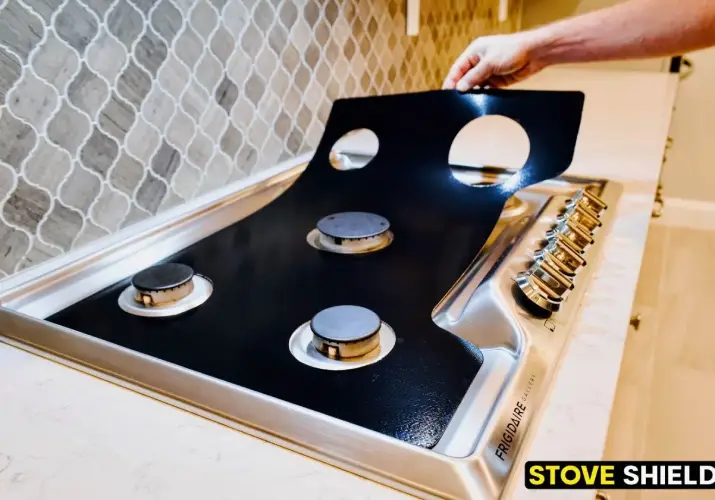
Millimeters describe flexible mat protectors made from fiberglass or silicone. These are the thin sheets that sit under your grates and hug the cooktop. A spec like 0.2mm or 0.5mm tells you how thick that sheet is, and a higher number means more material between heat and your stove.
Gauge describes rigid steel covers, where a lower gauge number means thicker metal. A 16-gauge stainless panel runs roughly 1.5 mm thick, which sounds dramatic, but a rigid board is a different product than a custom-cut cooking mat. Comparing a 0.5mm mat against a 16-gauge cover means comparing two separate categories, not two points on one scale.
How Does Thickness Change Durability and Lifespan?
Within a single material, thickness is the main thing that decides how long a stovetop protector lasts. More material takes longer to scorch, scuff, and thin out at the burner cutouts where heat concentrates.
Stove Shield’s published figures put a 0.5mm fiberglass-based protector at a typical two-to-three-year lifespan under normal home use. The same source notes that budget mats around 0.15–0.3mm can show wear inside six months to a year. That gap is the difference between replacing a mat once and replacing it three or four times.
One honest caveat thickness extends lifespan inside a material, not across materials. A 0.5mm silicone mat and a 0.5mm fiberglass-based mat are not equally durable, because the material sets the ceiling and the thickness stretches it. Choose the material first, as covered in the “stovetop protector materials guide”, then use thickness to push lifespan higher.
How Does Thickness Affect Lay-Flat Fit and Cleaning?
Thickness changes how a protector lays on the cooktop and how easily it wipes clean, which is where many buyers feel the difference day to day. A premium mat is thick enough to lay flat without curling, yet still flexible enough to follow the contours around raised burner areas.
Very thin mats tend to ripple, lift at the edges, and shift when you slide a pan across them. A thicker fiberglass-based mat resists that movement and gives you a flatter surface, so spills pool on top instead of creeping underneath. That flat, non-stick surface is the whole point of a protector that helps you “spend less time scrubbing the stovetop”.
Cleaning is also a material story, not just a thickness story. The non-stick coating is what lets grease and boil-overs wipe off with a cloth, and a thicker substrate keeps that coating intact longer before it abrades away.
What Thickness Is Right for Your Stove Type?
The right thickness depends on your stove type, because each burner style stresses a protector differently. The table below maps flexible-mat thickness tiers to typical use, using published spec ranges rather than guesses.
| Thickness (flexible mat) | Tier | Typical lifespan | Best for |
|---|---|---|---|
| ~0.15–0.2 mm | Budget | 2-6 months | Light, occasional cooking |
| ~0.4 mm | Mid | 3-8 months | Regular cooking |
| ~0.5–0.6 mm | Premium (Stove Shield) | 2-3 years | Daily cooking, messy households |
Gas and electric-coil stoves are the core use case for flexible fiberglass-based mats, and a 0.5–0.6 mm protector handles the heat and boil-overs of daily cooking best. Stove Shield builds custom-cut protectors for over 19,000 stove models across both stove types. To see how the burner styles differ, compare “how gas, electric, and induction stoves stack up”.
Induction is the exception: flexible mats are not safe or useful on an induction cooktop, because a barrier between the pan and the surface drops cooking speed and can stop pan detection. Glass and electric smooth-tops have their own protection approach.
Is a Thicker Stove Protector Always Better?
Not quite. Thicker is better up to a point, and then fit and stove type take over as the deciding factors. Past roughly 0.5–0.6 mm, a flexible mat gains little useful durability while getting stiffer and harder to contour around burner hardware.
A protector that doesn’t lay flat or doesn’t match your model’s burner layout is a worse buy than a slightly thinner one that fits precisely. Precision cut to your exact stove model matters more than chasing the highest millimeter number, which is why a custom fit beats a generic oversized sheet. If you’re still weighing whether a protector is worth it at all, the “do you need a stovetop protector” guide walks through that decision.
The smarter rule is “thick enough, and cut to fit.” Aim for a premium 0.5 mm or so in a protector rated for your heat, then prioritize a model-matched fit over raw thickness.
How Do You Choose the Right Stove Protector Thickness?
Choosing the right stove top protector thickness comes down to three steps in order: material, thickness, and fit. Pick a fiberglass-based protector rated for your stove’s heat, target around 0.5 mm of thickness for daily cooking, then make sure the protector is cut for your exact model.
Skipping straight to “biggest number wins” is how buyers end up with a stiff mat that curls or a thin one that wears out by spring. The mat that helps long-term is the one that lays flat, survives the heat, and matches your burners. Weighing the replacement math against “what stovetop repairs actually cost” usually settles the budget-versus-premium question on its own.
When you’re ready, “enter your stove model number to find your custom-fit protector”. If you’re not sure where your model number is, here’s “how to locate your stove model number”.
Frequently Asked Questions
How thick should a stove top protector be?
For a flexible mat style protector, aim for 0.5mm-.6mm thick fiberglass-based protector. That’s the premium thickness Stove Shield uses, and it typically lasts two to three years versus six months to a year for thin 0.15–0.3mm budget mats.
What does “2X thicker” mean for a stove protector?
It means the mat uses roughly twice the material of a standard thin protector, about 0.5mm-0.6mm versus the common 0.15–0.3mm. The extra thickness mainly buys lifespan and a flatter lay, since the mat resists scorching and curling longer at the burner cutouts.
Is a thicker stove protector safer?
A thicker mat adds a little margin near a hot burner, but the material’s heat rating drives safety more than thickness. Stove Shield’s fiberglass-based protectors are rated to 500 °F (260 °C); heat-resistant still isn’t fireproof, so keep any protector clear of open flame.
What thickness is best for a gas stove?
For a gas stove, a 0.5–0.6 mm fiberglass mat handles daily heat and boil-overs best. Just as important, it should be cut for your exact model so it lays flat and keeps clearance around each burner rather than overlapping the flame.
Can you use a stove protector on an induction cooktop?
No. Flexible mats aren’t safe or useful on induction, because a barrier between the pan and the surface slows cooking and can block pan detection. Stove Shield protectors are designed for gas and electric-coil stoves only.
Sources
- Stove Shield What Stove Top Protectors Are Made Of (first-party material and thickness specs)
- Stove Shield Stove Top Protectors hub (heat rating and custom-fit specs)
- NCBI StatPearls Polymer Fume Fever (PTFE temperature thresholds)
- Poison Control Teflon Flu (PTFE coating breakdown temperature)