
Bosch gas stove care follows the same fundamentals covered in our general stove care reference: a quick wipe after every meal, a weekly hand-wash of the grates and burner caps in mild soapy water, and a monthly flame check. The Bosch-specific rules: don’t soak the grates or caps, and always reseat each cap flush on its matching burner before you cook.
Bosch builds its gas ranges around one idea that they should be easy to clean and the cooktop care follows from there. Rounded surface edges, sealed burners, and continuous cast-iron grates keep spills on top instead of letting them drop into the works. This guide walks through the daily, weekly, and monthly routine for Bosch gas ranges and slide-ins across the 300, 500, and 800 Series and the Benchmark line, plus the brand-specific quirks that trip owners up and how to read your model number. For the universal cleaning process, see our full gas stove top cleaning method.
Key Takeaways
- Clean the cooktop with a soft cloth and non-abrasive cleaner once the surface is completely cool.
- Hand-wash Bosch grates and burner caps in mild soapy water; avoid soaking unless your specific model manual allows otherwise.
- Always dry and reseat burner caps correctly after cleaning—misaligned caps are the most common cause of ignition and flame problems.
- Keep burner ports free of grease and debris to maintain an even blue flame and reliable ignition.
- Inspect flames monthly; yellow or orange flames usually indicate clogged burner ports or incorrectly seated caps.
- Many Bosch 800 Series models feature dishwasher-safe enameled grates, but cleaning requirements vary by model, so verify your owner’s manual first.
- Replace missing grate rubber feet promptly to prevent cooktop scratches and unstable cookware.
- Locate your model number before ordering parts or troubleshooting; it is usually found behind the storage drawer or around the oven door frame.
- A custom stovetop protector can help reduce cleanup between deep cleanings but should never replace routine maintenance.
- Schedule professional gas-line and ignition-system inspections annually for optimal safety and performance.
What’s actually inside your Bosch gas range?
Before you clean anything, know what you’re cleaning. A Bosch gas cooktop differs from the generic gas range most how-tos assume.
- Sealed burners. Bosch uses sealed gas burners, so there are no parts underneath the cooktop to take apart spills that stay on the surface. Each burner has a removable cap on a base, and the caps are size-specific and not interchangeable.
- Diffusion and OptiSim caps. Depending on the model, your cooktop has one to four diffusion caps that spread heat more evenly at low settings. The OptiSim burner is built for simmering delicate sauces or melting chocolate, and its cap belongs on the small front-left burner.
- FlameSelect. On select models, FlameSelect gives you nine fixed power levels instead of an analog low-to-high sweep, so a flame height repeats exactly.
- Continuous cast-iron grates. Most Bosch gas cooktops use heavy continuous cast-iron grates with rubber feet. Those feet drop into dimples on the cooktop. They stop the grate sliding and keep the surface from scratching.
- Ignition. Electronic igniters light the burners. Turn a knob to the light symbol and you’ll hear clicking until the flame catches.
How do you clean a Bosch gas cooktop after each meal?
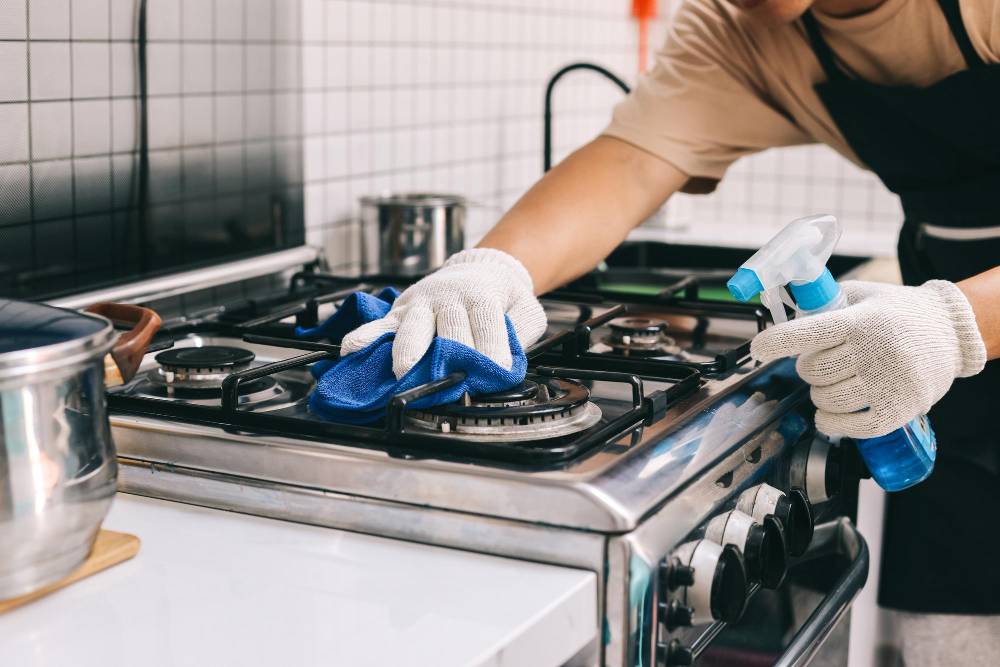
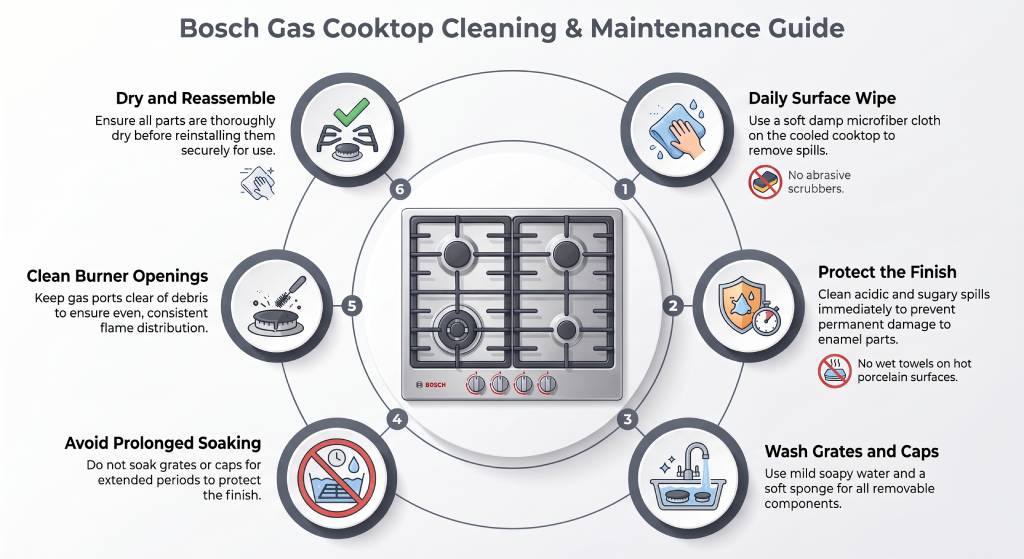
The daily job is short. Once the cooktop is fully cool, wipe the surface with a soft, damp cloth to lift spills before they bake on. For the stainless surface, Bosch points to a stainless-steel cleaner its own Bosch Stainless Steel Cleaner on a soft cloth, then a buff dry. Keep abrasive pads and scouring tools off the surface; they scratch.
Two habits protect the finish from day one. Wipe acidic and sugary spills tomato, citrus, juice, jam as soon as the surface cools, because they deteriorate the porcelain enamel on the caps and grates. And never lay a wet sponge or towel on hot porcelain.
How do you deep clean Bosch grates and burner caps each week?
About once a week the grates and caps come off for a real clean, using the five-step method Bosch publishes.
- Prepare. Let the cooktop cool completely, then lift off the grates and burner caps and set them aside.
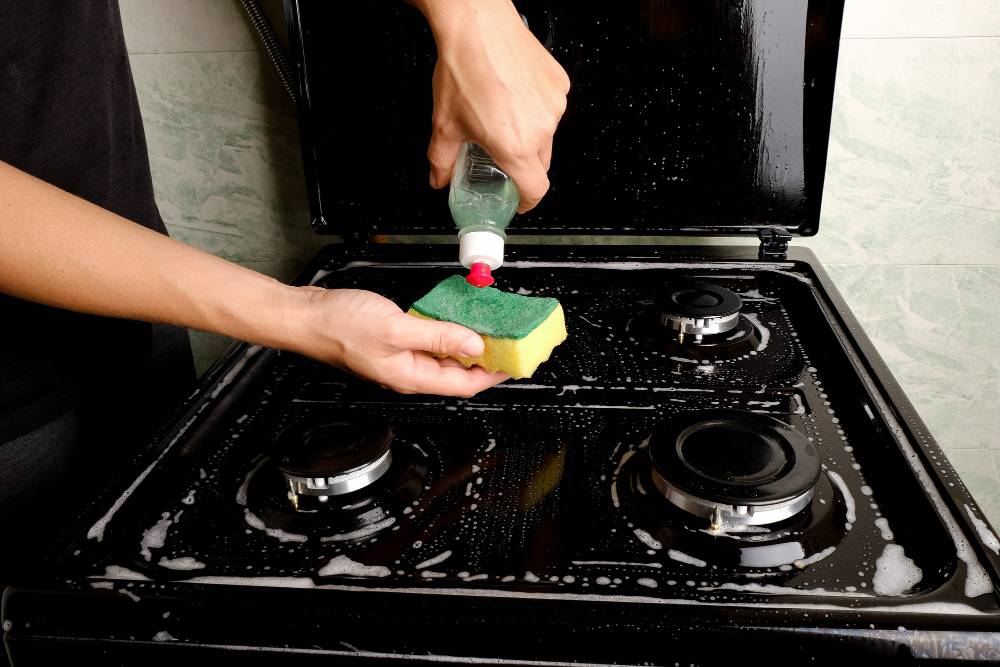
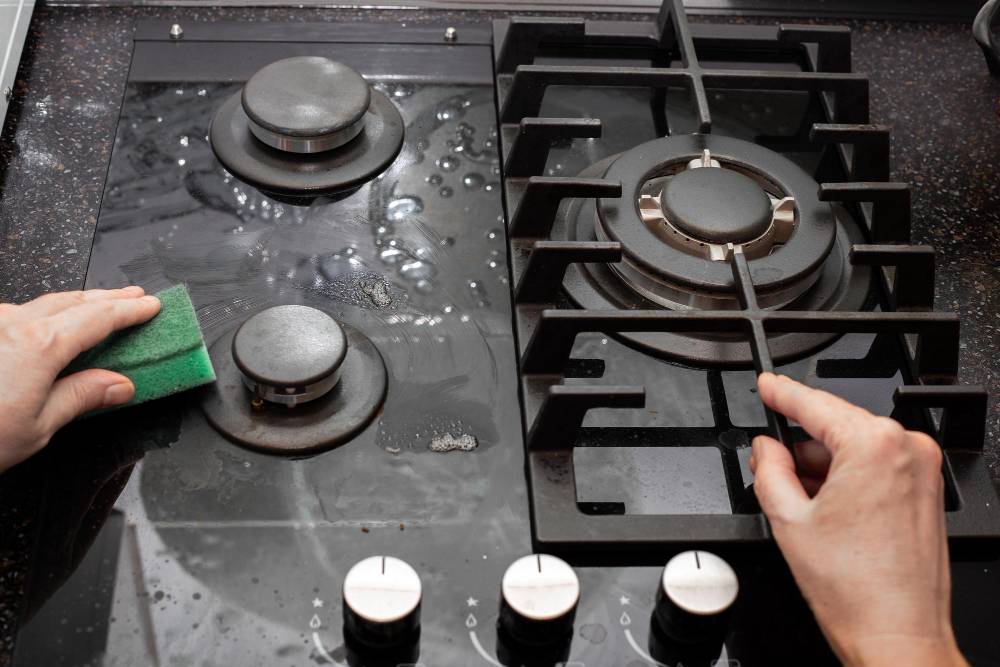
- Wash the grates and caps. Wash them in the sink with mild, soapy water and a soft sponge. The key Bosch rule: don’t soak them; prolonged soaking can damage the finish. For greasy buildup, Bosch recommends its Bosch Degreaser on a soft cloth.
- Clean the burner heads. Use a soft brush or sponge to clear food debris and grease, and keep the small gas openings clear so gas flows evenly. If a burner opening appears blocked, follow Bosch’s cleaning instructions in your owner manual and use only approved cleaning tools.
- Wipe the surface. Clean the cooktop with a stainless-steel cleaner and a soft, damp cloth, then buff dry.
- Dry and reassemble. Rinse, dry everything completely, and put the caps and grates back so every part is secure.
For rust, dull spots, or baked-on stains, Bosch’s manual approves hot water and detergent, Fantastic, or Formula 409 (rinse and dry right away); mild abrasives like Bon Ami or Soft Scrub; and soap-filled steel-wool pads for the stubborn stuff. For more detailed maintenance and restoration tips, see our cast iron grate cleaning guide.
What monthly maintenance does a Bosch gas range need?
Cleaning keeps the stove looking right; maintenance keeps it safe and accurate. Once a month:
- Read the flame. A healthy Bosch flame is steady and sharp, a clear blue that’s barely visible in a well-lit room. Yellow or orange means the burner needs cleaning, so clear the ports and reseat the cap.
- Inspect the gas connection. Look over the supply line for kinks or wear. If you ever smell gas, don’t troubleshoot, don’t light anything, don’t flip a switch, leave, and call your gas utility from outside.
- Confirm the anti-tip bracket. Bosch ranges ship with an anti-tip device that must be installed; give it a tug test now and then.
A professional gas-line and ignition inspection once a year is the one job worth handing to a technician.
Which Bosch-specific quirks should every owner know?
This is where a Bosch stops behaving like a generic stove.
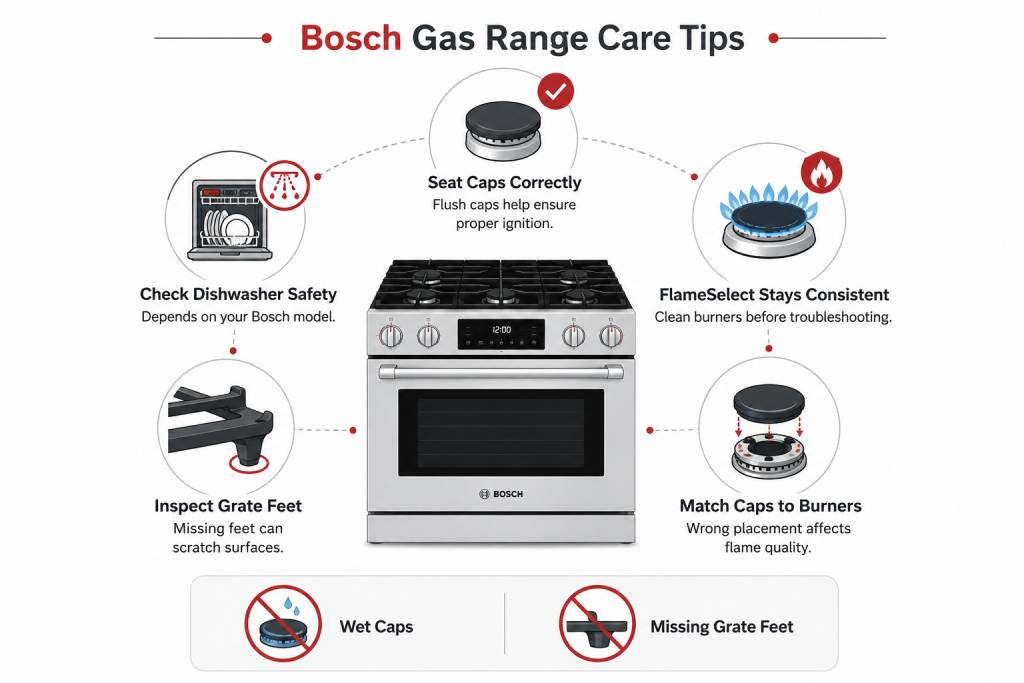
- Cap seating is everything. A cap that goes back wet, crooked, or on the wrong-size burner is behind most Bosch cooktop complaints. The manual spells out what a misplaced cap causes: flames too high, flames shooting out, stainless discoloration, a burner that won’t ignite, an uneven flame, even a gas odor. Match each cap to its burner and seat it flush.
- The dishwasher question depends on your model. Bosch’s general cleaning page says hand-wash the grates and don’t soak them. But many 800 Series cooktops ship with dishwasher-safe heavy-duty enameled cast-iron grates, and the manual allows washing enameled grates in the dishwasher to remove burnt-on food first and use the lowest rack. Check your model’s spec before assuming either way.
- FlameSelect repeats, it doesn’t drift. If a FlameSelect level seems off, the fix is usually a clean burner and a seated cap, not a calibration setting; the levels are fixed steps.
- Great feet matter. If a rubber foot falls off a grate, the bare metal can scratch the cooktop, and a grate that isn’t seated in its dimples can cause flare-ups. Replace missing feet before you cook.
What are the most common Bosch gas stove problems (and fixes)?
Most Bosch gas issues are cleaning or seating problems in disguise. Here’s where Bosch’s own troubleshooting starts.
| Problem | Most likely cause on a Bosch | First fix |
|---|---|---|
| Burner won’t light | Clogged port, off-seated cap, or weak igniter | Remove the burner cap and grate, clean the burner head with a soft brush, and clear any debris from the burner openings. If the igniter sparks but the burner still will not light, contact Bosch support or a qualified technician. |
| Burner keeps clicking | Wet or misaligned cap, debris in the port | Dry and reseat the burner cap so it sits flush on the burner base. Follow Bosch’s owner manual instructions for cleaning burner openings and removing debris. |
| Uneven flame | Off-center cap or debris in the head | Reposition the cap so it sits square; clean the head with a non-abrasive brush |
| Flame too low | Blocked ports or a gas-regulator issue | Clean the ports; if it persists, contact your gas supplier or Bosch |
| Cooktop won’t turn on | Gas supply off, ignition fault, misaligned knob | Confirm the gas valve is open; check the knob; if there’s no clicking |
A brief click when you turn a knob is just the igniter working. Clicking that won’t quit after the flame lights is the real fault and is almost always a cap that went back wet or crooked.
If the clicking continues after drying and reseating the burner cap, follow our clicking diagnostic for a complete troubleshooting process.
How do you protect a Bosch gas stovetop between cleanings?
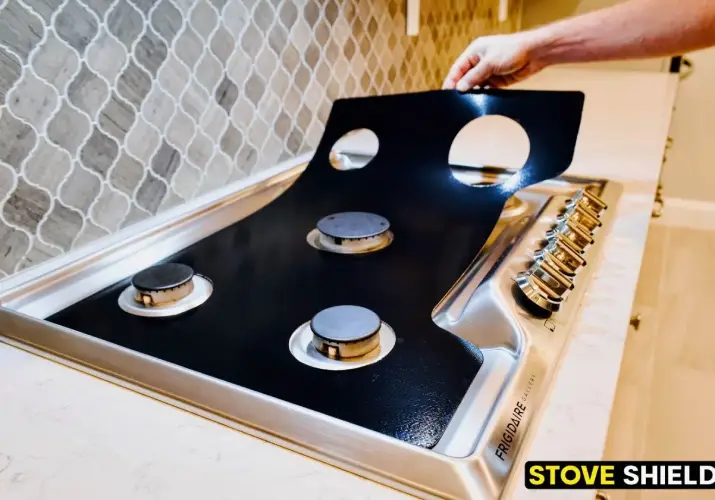
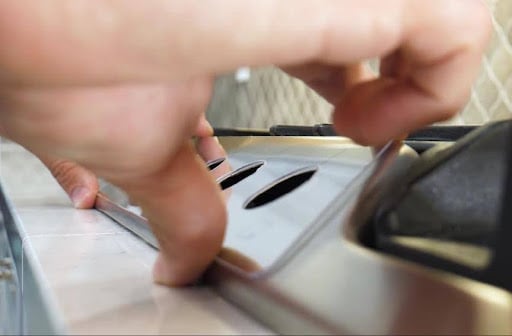
Even a sealed-burner cooktop collects boil-overs and grease in corners that a daily wipe can miss. A custom-cut stovetop protector, a thin, heat-tolerant liner designed to fit around the burners can help catch spills and splatters before they bake onto the surface, reducing routine cleanup between deep cleanings.
A liner is a convenience tool, not a substitute for regular maintenance. You should still clean burner ports, wipe the cooktop regularly, and make sure burner caps are seated correctly after cleaning. Because fit varies by model, always confirm compatibility with your exact Bosch range or cooktop before purchasing.
Stovetop protectors can help reduce the amount of grease and food residue that reaches the cooktop surface, making weekly cleaning easier. Follow the manufacturer’s installation and safety instructions, keep the protector clear of open flames and burner caps, and remove it for periodic cleaning according to the product guidelines.
Where is the model number on a Bosch gas range?
You’ll want the model and serial number for parts, manuals, and warranty checks. Bosch puts the rating plate in one of a few spots on a range:
- Behind the storage or warming drawer open or remove the bottom drawer and look at the frame.
- Around the oven door frame along the edge with the door open.
- On the side trim or, on a slide-in, the body depending on the model.
Bosch’s own serial-number finder walks through every location by product type, and you can enter the number there to pull your manual and parts list. StoveShield offers custom-fit protectors for many Bosch models, including HGI8056UC, NGM8058UC, NGM5659UC, NGM8659UC, and HGS8055UC. You can explore Bosch stove protectors to check compatibility with your exact model. If you’re still having trouble locating it, follow our diagnostic walkthrough with photos of the most common model-number locations.
Bosch gas stove care FAQs
How do you clean a Bosch gas cooktop?
Let it cool, then wipe the surface with a stainless-steel cleaner and a soft cloth. Weekly, lift off the grates and burner caps, wash them in mild soapy water without soaking, follow Bosch’s owner manual instructions for cleaning burner openings, dry everything, and reseat each cap on its matching burner. Keep abrasive tools off the surface.
Are Bosch gas range grates dishwashers safe?
It depends on the model. Many Bosch 800 Series cooktops ship with dishwasher-safe enameled cast-iron grates to remove burnt-on food and use the lowest rack. Bosch’s general cleaning page recommends hand-washing and warns against soaking, so check your model’s spec first.
Why won’t my Bosch burner light, or why does it keep clicking?
Usually a burner cap that’s wet, off-center, or on the wrong burner, or a clogged port. Dry and reseat the correct cap flush on its base, follow Bosch’s owner manual instructions for cleaning burner openings, and confirm the gas is on. If there’s no clicking at all, the igniter may need service.
What does FlameSelect do on a Bosch gas range?
FlameSelect gives Bosch models nine fixed power levels instead of a continuous dial, so a flame height repeats exactly every time. If a level seems wrong, clean the burner and reseat the cap rather than hunting for a calibration setting.
Why is my Bosch flame yellow or orange?
A proper Bosch flame burns clear blue and is barely visible in a well-lit room. Yellow or orange usually means a dirty or clogged burner, clean the head, clear the ports, and reseat the cap. If it continues, contact Bosch.
Where do I find my Bosch model number?
Check behind the storage or warming drawer, around the oven door frame, or on the side trim. Use Bosch’s serial-number finder to confirm the full number and pull your manual and parts list.
How we made this guide
The cleaning steps, flame guidance, cap-seating cautions, approved cleaners, and troubleshooting information in this guide come from Bosch owner-support pages, gas cooktop cleaning and troubleshooting resources, quick-start guides, and use-and-care manuals. Because Bosch specifications can vary by model, always consult the manual for your exact appliance when maintenance, cleaning, or operating instructions differ.
Sources
- Bosch Home How to Clean & Maintain Bosch Gas Cooktops.
- Bosch Home Bosch Gas Cooktop & Rangetop Troubleshooting.
- Bosch Home Gas Cooktop Quick Start Guide (PDF): FlameSelect / OptiSim, flame color, port clearing.
- Bosch Home Gas Cooktop Use & Care Manual: burner-cap seating, porcelain-enamel cautions, approved cleaners, dishwasher guidance.
- Bosch Home 800 Series Gas Cooktop spec: dishwasher-safe enameled cast-iron grates.
- Bosch Home Find Serial or Model Number.