
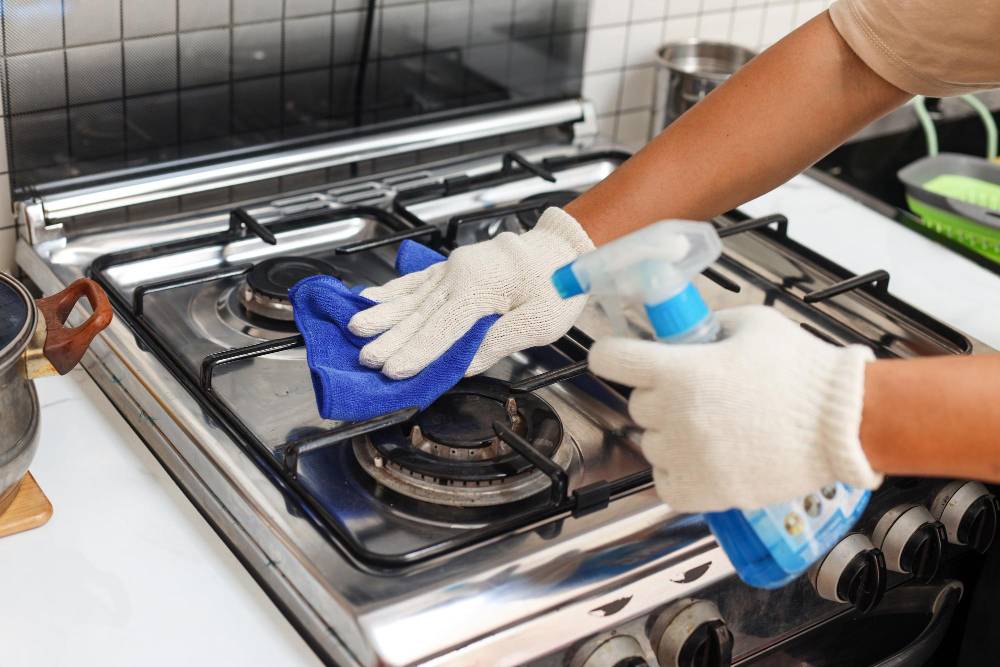
Dacor gas stove care comes down to three habits: a quick wipe after every meal, a weekly hand-wash of the grates and burner caps (never the dishwasher), and a monthly flame check. The Dacor-specific rules: keep brass and porcelain caps in their own spots, and reseat every cap flat before you cook.
A Dacor gas range is built to a different standard than the average stove, and the care follows from that. Heavy porcelain-coated cast-iron grates, sealed Simmer Sear burners, and a choice of brass or porcelain caps reward a careful routine and punish shortcuts like a dishwasher cycle or a steam cleaner. This guide covers daily, weekly, and monthly Dacor gas stove care across the Modernist, Heritage, and Professional lines, plus the brand specific quirks owners miss and how to read your model number. For the universal steps, see our deeper stove care guide.
Key Takeaways
- Clean your IKEA gas stove after cooking and perform a deeper cleaning of grates and burner caps at least once a week.
- Many IKEA gas ranges sold in the U.S. have historically been manufactured by Whirlpool, but the manufacturer can vary depending on the model, year, and market.
- Use only non-abrasive cleaners, soft cloths, and warm soapy water to protect enamel surfaces and burner components.
- Keep burner ports free of food debris and grease to maintain reliable ignition and an even blue flame.
- Hand-wash grates and burner caps rather than using a dishwasher, which can damage enamel coatings over time.
- Most ignition and clicking problems are caused by moisture, grease buildup, clogged burner ports, or improperly seated burner caps.
- Warranty coverage differs by product line, so check your model documentation before assuming standard coverage terms.
- A properly fitted stove protector can reduce grease buildup, catch spills, and make routine cooktop cleaning faster and easier.
What makes a Dacor gas range different to clean?
Before you clean anything, know what you’re cleaning. A Dacor cooktop has parts a generic how-to never mentions.
- Sealed burners. Gaskets around the base of each burner stop spills from leaking into the cooktop’s internals, so messes stay on top where you can reach them.
- Brass and porcelain caps. Most Dacor ranges ship with two sets of burner caps brass and porcelain so you can pick the look you want. The brass discolors over time; that’s cosmetic and doesn’t change how the burner performs.
- SimmerSear burners. SimmerSear is Dacor’s precision burner-control system, giving one or two burners a true simmer-to-sear range. Depending on the model, SimmerSear burners provide significantly higher output than standard burners while still allowing precise low-temperature simmering.
- Porcelain-coated cast-iron grates. Dacor calls them Long Life Grates. They’re position-specific: the right-hand grate is notched, and the feet drop into dimples so the openings center over the burners.
- Smart Flame and Illumina. Smart Flame lowers the temperature under the grate fingers to extend grate life, and the Illumina knobs glow when a burner is lit, so a knob left on is obvious.
How do you clean a Dacor gas cooktop after each meal?
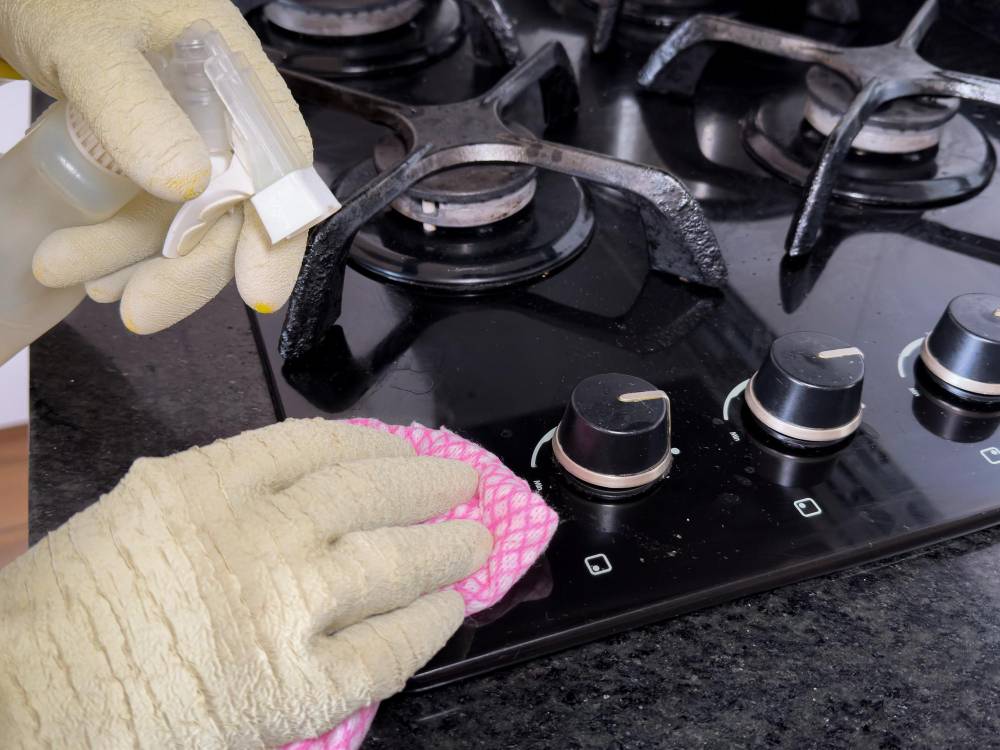
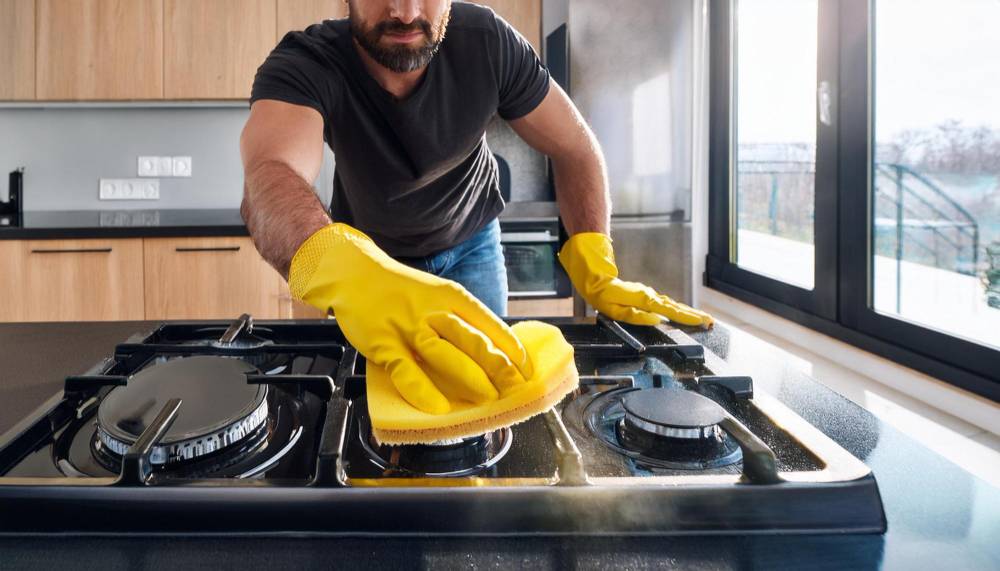
The daily job is short. Once the surface is fully cool, wipe it with a soft, damp cloth to lift spills before they bake on. On stainless, always wipe with the grain and finish with Dacor’s own Stainless Steel Cleaner or a mild detergent and warm water, then dry with a soft, lint-free cloth. Keep abrasive pads and scouring powders off stainless and porcelain alike. For a more detailed cleaning process, see our full gas stove top cleaning method.
Two habits protect the finish from day one. Wipe acidic and sugary spills tomato, citrus, jam as soon as the surface cools, and never lay a wet sponge on hot porcelain.
How do you deep clean Dacor grates and burner caps each week?
About once a week the grates and caps come off for a real clean. Dacor’s manuals lay out the order, and the order matters.
- Cool and disassemble. With everything cool and the burners off, lift off the grates, then the burner caps, then the burner heads. Note each part’s size and spot before it leaves the cooktop. They go back exactly where they came from.
- Wash in warm, soapy water. Clean the grates and burner parts in warm, soapy water with a soft cloth or non-abrasive pad. No steel wool, no scouring powder. For burned-on food on a head or cap, a plastic scouring pad is fine.
- Clear the burner-head holes. Use a sewing needle or a twist tie to unclog the small holes in the burner head so gas flows evenly. Don’t ream them out with a metal brush.
- Rinse and dry fully. Rinse with clean water and dry every part completely. A wet cap is the number-one cause of a burner that won’t behave.
- Reassemble and verify. Seat each head into its manifold slots, lay each cap flat on its head, return the grates to their notched positions, and light each burner to confirm a clean flame.
For stubborn stains on the porcelain grates, Dacor approves full-strength Simple Green, Ajax All-Purpose Cleaner, or Formula 409, and only occasionally mild abrasives like Bon Ami, Soft Scrub, or soap-filled steel-wool pads. Lean on the mildest cleaner that works; aggressive abrasives wear the porcelain, and that damage isn’t covered under warranty. If the brass caps pick up burned-on residue, soak them in one cup of water with a tablespoon of white vinegar or lemon juice and skip the metal brush. For additional rust removal and long-term maintenance tips, see our cast iron grate cleaning guide.
What monthly maintenance does a Dacor gas range need?
Cleaning keeps the stove looking right; maintenance keeps it safe and accurate. Once a month:
- Read the flame. A healthy Dacor flame is a steady, sharp blue. Yellow or orange means the burner needs cleaning, clear the head holes and reseat the cap.
- Inspect the gas connection. Look over the supply line for kinks or wear. If you ever smell gas, don’t troubleshoot leave, and call your gas utility from outside.
- Mind the oven cleaning cadence. On Modernist steam ranges the Clean menu offers Self-Clean, GreenClean, Descale, and Draining. Dacor recommends running the high-heat self-clean only once a year and using GreenClean, which loosens residue with steam so it can be wiped away with a damp cloth.
- Confirm the anti-tip bracket. Like any range, a Dacor should have its anti-tip device installed. Give it a tug now and then.
A professional gas-line and ignition check once a year is the one job worth handing to a technician.
Which Dacor-specific quirks should every owner know?
This is where a Dacor stops behaving like a generic stove.
- The grates and burner parts are not dishwasher-safe. Dacor’s manuals are blunt: washing the grates, burner parts, or wok ring in a dishwasher will damage them. Hand-wash, always.
- Brass versus porcelain is your call. Keep whichever set you prefer, but keep each cap on its own burner they’re sized to their spot. Brass will patina; that’s expected.
- Self-cleaning is a once a year tool. The high-heat cycle is hard on a premium oven’s seals and electronics, which is exactly why Dacor caps it at annual and steers you to GreenClean the rest of the year.
- Never put a steam cleaner near the cooktop. Dacor warns that steam can penetrate the electrical components and cause a short circuit. The handheld steamer that’s great on tile is wrong here.
- Grate feet and positioning matter. The right-hand grate is notched for a reason; seat every grate so its feet rest in the dimples, or you’ll get an off-center flame and a grate that slides.
What are the most common Dacor gas stove problems (and fixes)?
Most Dacor gas issues trace back to a wet cap, a clogged port, or a part that went back in the wrong spot. Here’s where to start. If these quick fixes don’t solve the issue, continue with our diagnostic walkthrough.
| Problem | Most likely cause on a Dacor | First fix |
|---|---|---|
| Burner won’t light | Wet or misplaced cap, clogged head holes, weak igniter | Dry and reseat the correct cap flat; clear the holes with a needle; if there’s spark but no flame. |
| Burner keeps clicking | Moisture under the cap or debris in the port | Dry and reseat the cap; clear the port. |
| Yellow or orange flame | Dirty or clogged burner head | Clean the head, clear the holes, reseat the cap; a clean Dacor flame is blue. |
| Uneven flame | Off-center cap or a grate out of position | Reseat the cap flat and the grate in its dimples. |
| Oven acts up after self-clean | The annual high-heat cycle can leave the oven needing a reset | Let it cool fully and reset power; use GreenClean going forward, and call Dacor support if it recurs. |
A short click when you turn the knob is just the igniter. Clicking that won’t stop after the flame catches is the real fault, almost always a cap that went back wet or crooked. If the problem continues after drying and reseating the cap, follow our clicking diagnostic for additional troubleshooting steps.
How do you protect a Dacor gas stovetop between cleanings?
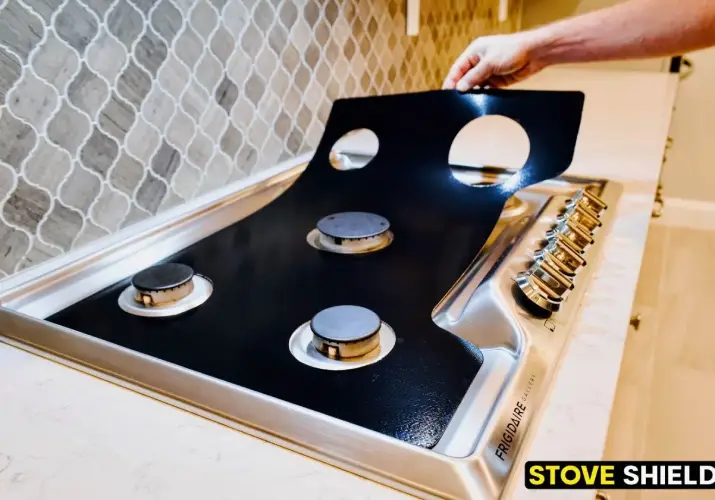
Even a sealed-burner cooktop collects boil-overs and grease in the corners a daily wipe misses. A custom-cut stovetop protector, a thin, heat-tolerant liner cut around the burners catches that mess so you lift out a sheet instead of scrubbing porcelain. On a 30- or 36-inch Dacor it lies flat and pulls out for cleaning; keep it clear of the flame and off the caps.
Dacor uses sealed surface burners, the protector sits similarly to other sealed-burner gas ranges we tested. These protectors are made for gas and electric-coil tops, not glass or induction.
Where is the model number on a Dacor gas range?
You’ll want the model and serial number for parts, manuals, and warranty checks. On a Dacor gas range, check two spots first:
- Behind the kickplate the lower front panel below the oven door.
- Inside the oven door frame along the edge with the door open.
Once you’ve identified your appliance, you can also explore Dacor stove protectors designed for specific Dacor model numbers. If you’re still having trouble finding the label, locate your Dacor model number using our illustrated guide showing the most common rating-plate locations.
Dacor gas stove care FAQs
How do you clean a Dacor gas cooktop?
Let it cool, then wipe the surface stainless with the grain using Dacor’s stainless cleaner or mild soapy water. Weekly, lift off the grates, caps, and heads, wash them in warm soapy water without abrasives, clear the head holes with a needle, dry everything, and reseat each part where it came from. Never use the dishwasher.
Are Dacor gas range grates dishwashers safe?
No. Dacor’s manuals specifically warn that washing the grates, burner parts, or wok ring in a dishwasher will damage them. Hand-wash the porcelain-coated cast-iron grates in warm soapy water, rinse, and dry fully before putting them back.
Should I use the brass or porcelain burner caps on my Dacor range?
Either Dacor ships both so you can choose. Brass develops a patina with heat, which is cosmetic and doesn’t affect performance; porcelain keeps a consistent look. Whichever you run, keep each cap on its matching burner and reseat it flat.
How often should I self-clean my Dacor oven, and what is GreenClean?
Dacor recommends the high-heat self-clean only once a year. For routine cleaning, use GreenClean, which heats the chamber just enough to loosen residue so you wipe it away with a damp cloth far gentler on a premium oven’s seals and electronics.
Why won’t my Dacor burner light, or why does it keep clicking?
Usually a burner cap that’s wet, off-center, or on the wrong burner, or clogged head holes. Dry and reseat the correct cap flat, clear the holes with a sewing needle or twist tie, and confirm the gas is on. Constant clicking after the flame lights points back to a damp or crooked cap.
Where do I find my Dacor model number?
Look behind the kickplate below the oven door and inside the oven door frame. Use that number on Dacor’s specifications page to download the manual matched to your model.
How we made this guide
The cleaning steps, cap-seating order, approved cleaners, flame guidance, and the self clean versus GreenClean cadence come from Dacor’s own use-and-care manuals and owner-support pages. Where Dacor behavior is model-specific and across the Modernist, Heritage, and Professional lines it often is that your manual and model number have the final word.
Sources
- Dacor Modernist 36″ Pro Dual-Fuel Steam Range User Manual: GreenClean / Self-Clean / Descale, burner caps and heads, brass-cap note.
- Dacor Modernist Rangetop Use & Care Manual: 7-step grate/burner cleaning, brass-cap vinegar soak, Smart Flame, grate positioning.
- Dacor Distinctive 30″ Gas Range and RGC SimmerSear Rangetop Use & Care Manuals: SimmerSear, sealed burners, Long Life Grates, no-dishwasher warning, no-steam-cleaner warning.
- Dacor Use & Care Manual stainless-steel section: wipe with the grain, Dacor Stainless Steel Cleaner.
- Dacor Product Specifications & Manuals