
JennAir gas stove care comes down to three habits: a daily wipe once the cooktop cools, a weekly wash of the burner caps and grates with a non-abrasive pad, and a monthly check of the ports and igniters. The premium Rise and Noir finishes need non-abrasive cleaners, and the burner caps are never dishwasher safe.
This guide pulls JennAir’s own care instructions, scattered today across separate cooktop, range, grate, and stainless-steel help pages, into one routine. It then adds what our team has learned testing stove protectors on comparable sealed-gas burners. It applies to JennAir Rise, Noir, and Professional-style gas ranges and rangetops in 30″, 36″, and 48″ widths. For maintenance practices that apply to most ranges, see our general stove care reference.
Key Takeaways
- Daily: wipe the cool cooktop with warm soapy water and a soft cloth. Catch acidic spills like tomato and vinegar fast, since JennAir warns they can affect the finish.
- Weekly: wash the burner caps and grates with a non-abrasive pad and a mild cleaner. Caps are never dishwasher-safe; some grates are, but only if your Owner’s Manual says so.
- Burner ports: clear clogs with a straight pin, needle, or small-gauge wire. Never use a wooden toothpick, which can snap off inside the port.
- Noir and Rise finishes: both rule out abrasive scrubbers and harsh chemicals like oven cleaner, bleach, and rust removers.
- Won’t light after cleaning? Nine times out of ten it’s a damp or misseated cap. Dry it and reseat it flush before assuming a part failed.
- The protection guidance below is based on category-level testing and should be matched to your specific JennAir model.
What Makes a JennAir Gas Range Different?
JennAir is Whirlpool Corporation’s luxury cooking brand, and it sells its ranges in two design expressions: Rise, with a bright stainless look, and Noir, with a dark graphite finish. On select pro-style ranges and rangetops, JennAir offers a high-output Gourmet burner with output varying by model.
For cleaning, the design that matters most sits under the pots. Each sealed surface burner has a removable burner cap on a burner base, with heavy cast-iron grates on top. That cap-and-base setup is the heart of JennAir gas range cleaning: take the caps off to clean properly, then seat them back correctly so every burner lights.
The premium finishes change your cleaner choices, not your routine. A Noir front panel and a Rise stainless deck both reward gentle, non-abrasive care and punish steel wool. JennAir’s own instructions are blunt about it: no oven cleaners, no bleach, no rust removers on the cooktop.
How Do You Clean a JennAir Gas Range Every Day?
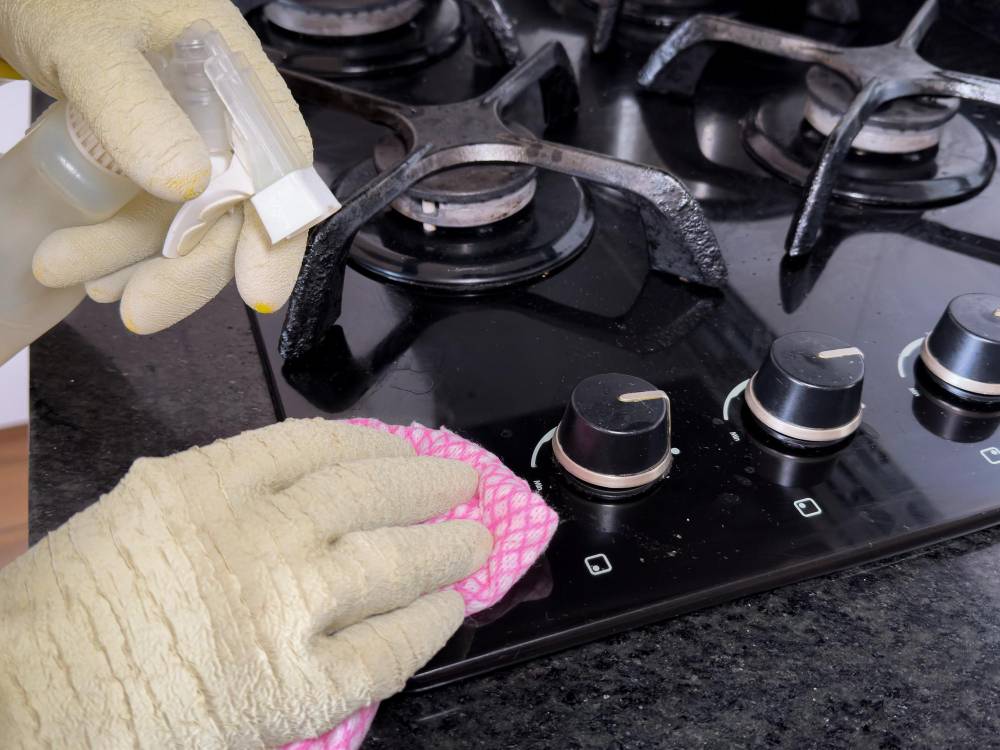
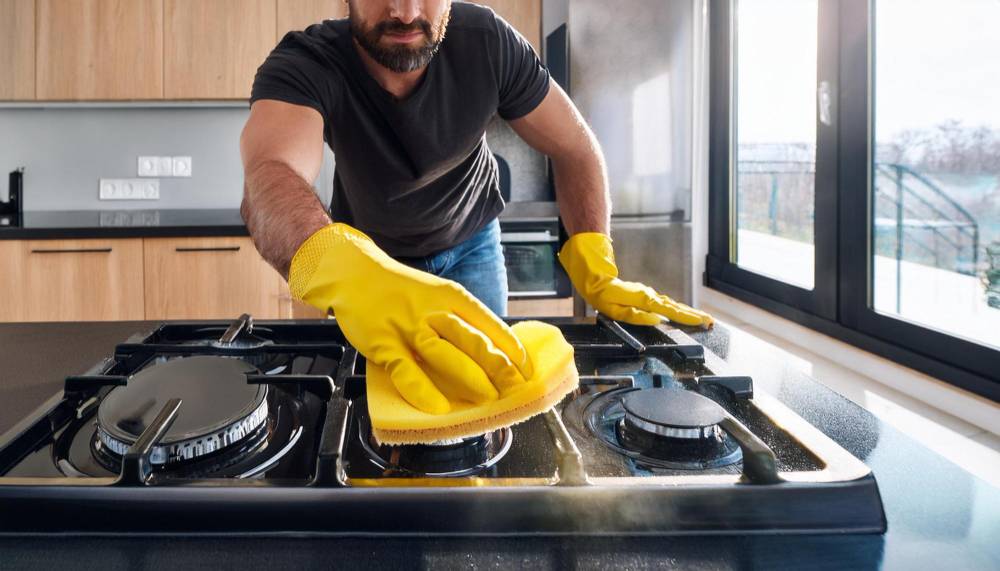
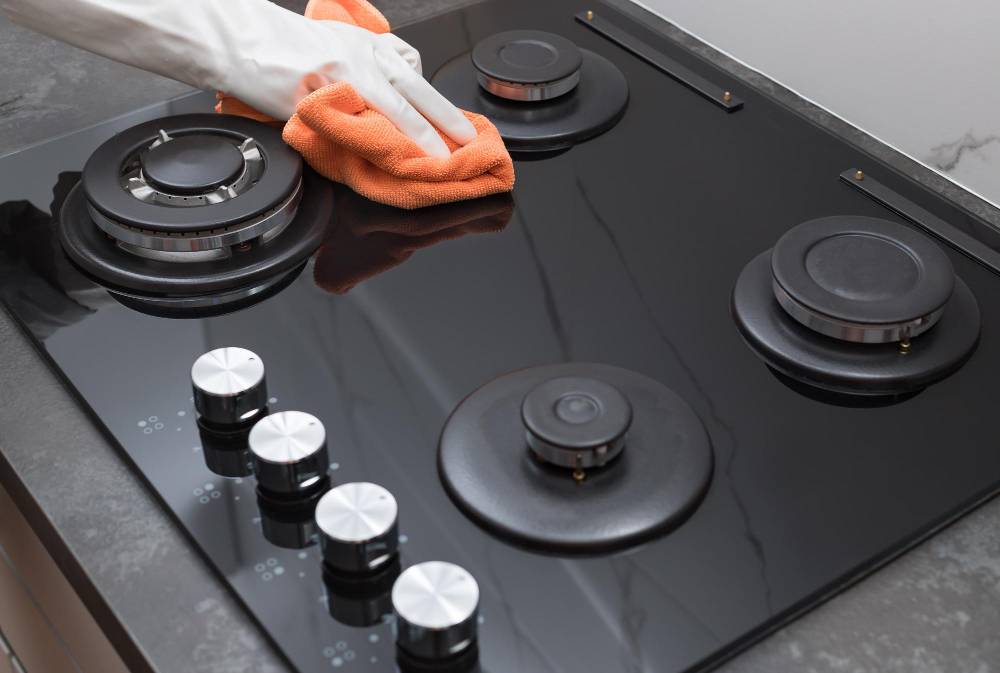
Daily care is the two-minute job that prevents the hour-long one. Wait until the cooktop is fully cool, then wipe the surface with a soft cloth or sponge and a little warm soapy water. Dry it afterward so you don’t leave water spots on the Rise stainless or streaks on the Noir finish. For a more detailed cleaning routine, see our full gas stove top cleaning method.
The spills that never leave overnight are the acidic ones. JennAir specifically warns that food containing acids, such as tomato sauce, vinegar, or citrus, should be cleaned as soon as the surface is cool, because those spills can affect the finish. A quick wipe after dinner is the whole job most nights.
What to skip daily: don’t drag steel wool or a gritty powder across the deck, and don’t reach for oven cleaner, bleach, or a rust remover to speed things up. Those are the products JennAir tells you to keep off the cooktop, and on a Noir panel especially, an abrasive pad leaves marks you can’t undo.
How Do You Deep-Clean JennAir Burner Caps, Grates, and the Griddle?
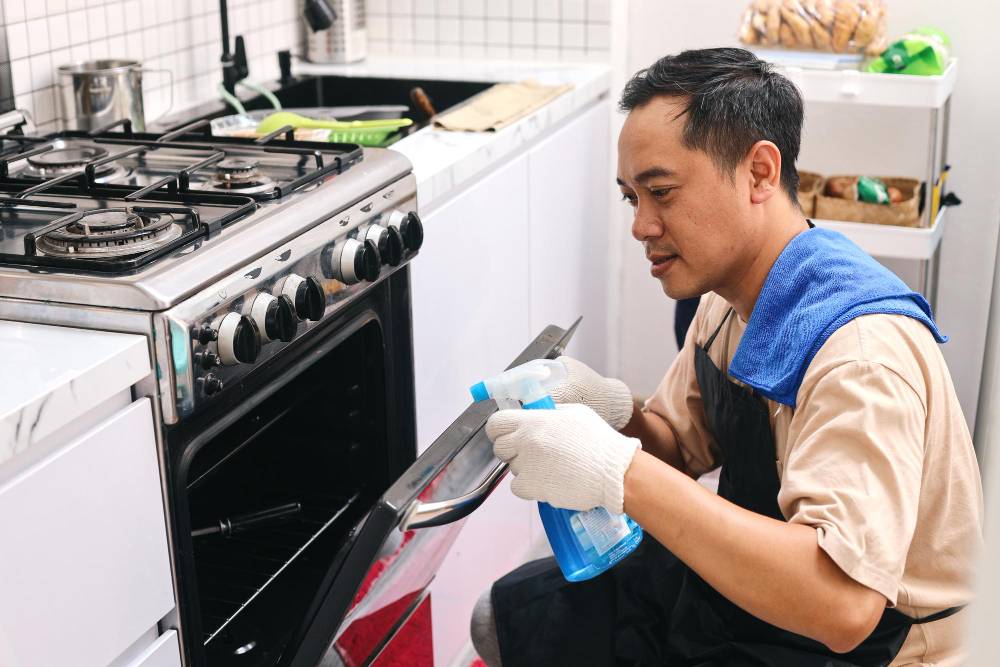
This is the weekly job, and it’s the core of JennAir gas range cleaning. Make sure every burner is off and fully cool first.
Burner caps. Lift them off and wash them by hand with a non-abrasive plastic scrubbing pad and a mild cleaner. Two hard rules from JennAir: caps are not dishwasher-safe, and you must never clean them in the oven during a Self-Cleaning cycle. Don’t reinstall a wet cap. Dry it fully first, because a damp cap is a common reason a burner won’t light.
Grates. Here JennAir is more flexible than most brands. The heavy cast-iron grates can be hand-washed with warm water and a mild cleaner, and some JennAir grates may go in the dishwasher on the most aggressive cycle. The catch: only if your Owner’s Manual confirms it for your model, and you should soak or scrub burned on food off first. If you’re seasoning or fighting rust on cast iron, see our cast-iron grate cleaning guide. One careful note: don’t bang grates and caps against each other or against cast-iron cookware, since chips expose the metal.
The chrome griddle. If your model has the chrome-infused griddle, treat it as its own surface. Let it cool, lift off cooked-on residue with a non-abrasive pad, and avoid harsh scouring that can scratch the plating. For routine baked-on grime across the cooktop, JennAir points owners to its Affresh cooktop cleaner, which is non-abrasive by design.
When everything’s dry, reassemble. Seat each cap on its matching base, which often carries a matching mark, so it sits flush with very little side-to-side movement.
What Monthly Maintenance Does a JennAir Range Need?
Once a month, go past cleaning into a quick check. This is the JennAir stove maintenance most owners skip until a burner acts up.
- Burner ports. If a flame looks weak or uneven, a port is likely clogged. Clear each one with a straight pin, needle, or small-gauge wire. JennAir is explicit: don’t use a wooden toothpick, which can break off and block the gas flow, and don’t enlarge or distort the port.
- Igniters. Wipe each igniter gently with a damp cloth. A dirty or damp igniter is one of the most common reasons a clean burner suddenly won’t spark.
- The gas tube opening. With the base off, clean the gas tube opening underneath so nothing restricts the flame.
- Flame color. A healthy gas flame burns mostly blue. Yellow or orange tips that linger usually point back to a clogged port worth re-cleaning.
If a burner won’t light at all after a cleaning, work through our gas stove won’t light checklist before assuming a part has failed. Most of the time it’s a wet igniter or a cap that’s a hair out of its seat.
What Are JennAir’s Finish, Griddle, and Burner Quirks?
A few JennAir behaviors get reported as problems when they’re usually normal.
The Noir finish is unforgiving of shortcuts. The dark graphite look is striking, but it shows abrasive scratches more than a busy stainless surface does. Stick to non-abrasive pads and JennAir-approved cleaners, and the Noir finish keeps its even tone.
A faint click before a burner lights is the spark igniter doing its job. The clicking that signals a real fault is the kind that won’t stop after the burner lights, and that usually traces back to a damp or misseated cap. Follow our clicking diagnostic for step-by-step troubleshooting of the most common causes.
A brief gas smell at the moment of ignition can be normal as the burner catches. A smell that lingers after the burner is lit is different: turn off the burner, ventilate, and if it continues, shut the main gas supply and call a professional.
Downdraft models JennAir’s heritage includes downdraft cooktops with a built-in vent. If yours has one, wipe the vent grille on the same weekly schedule so grease doesn’t build where you can’t see it.
What Are Common JennAir Gas Range Problems?
Here’s a quick troubleshooting reference. Anything involving a persistent gas smell or a suspected leak should go to a professional, not a DIY fix. For more in-depth troubleshooting, continue with our diagnostic walkthrough.
| Symptom | Likely cause | First thing to try |
|---|---|---|
| Burner won’t light | Wet or misseated cap, dirty igniter | Dry and reseat the cap flush; wipe the igniter with a damp cloth |
| Weak or uneven flame | Clogged burner port | Clear ports with a pin, needle, or small-gauge wire |
| Yellow or orange flame | Clogged port or air-mix issue | Re-clean ports; if it persists, schedule service |
| Marks on the Noir or Rise finish | Abrasive pad or harsh cleaner | Switch to a non-abrasive pad; finish damage may be lasting |
| Grate chipping | Banging grates together or on cookware | Handle gently; replace badly chipped grates |
| Lingering gas smell after ignition | Possible leak or valve issue | Turn off the main gas supply; call a pro |
On the lifespan question owners ask JennAir doesn’t publish an average service life, and it depends on use and upkeep. Most failures owners actually hit are wear parts, such as igniters, caps, and knobs, that are replaceable rather than terminal.
How Do You Protect a JennAir Cooktop Between Cleanings?
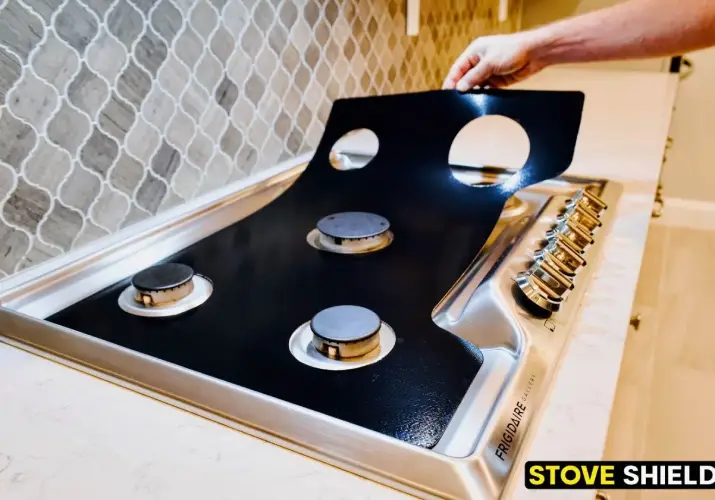
The honest shortcut to less cleaning is keeping spills off the deck in the first place. A custom-cut gas-stove protector lays over the flat cooktop around the burners and catches boil-overs and splatter, so most weeks you wipe a liner instead of scrubbing grates and clearing ports.
A few JennAir-specific notes. A protector covers the flat cooktop surface, not the burners, caps, or grates themselves, so it doesn’t change how you clean those. It only suits gas and electric-coil cooktops, not glass, ceramic, or induction. And because JennAir sells pro-style rangetops in several widths, measure your own deck before ordering any custom liner.If you’re considering a stove protector, compare sizing and cutout compatibility with your specific JennAir model before purchasing.
A fair-warning limit JennAir was not one of the three ranges in our hands-on testing, covered below, so treat protector fit as a category-level finding and confirm the cutout against your exact model.
Where Is the Model Number on a JennAir Range?
You’ll need the model and serial number to order the right caps, grates, or igniters, and to confirm whether your grates are dishwasher-safe. Once you’ve identified your appliance, you can also explore JennAir stove protectors designed for specific JennAir model numbers. If you still can’t find the label, locate your JennAir model number using our illustrated guide showing the most common rating-plate locations.
How Did We Research and Test This Guide?
The JennAir-specific instructions here come straight from JennAir’s official Product Help and Use & Care pages. The cleaning steps, cleaner cautions, port-clearing rules, and cap-reinstall guidance are all from the manufacturer.
JennAir Gas Stove Care: FAQs
How do you clean a JennAir gas cooktop?
Wait until it’s cool, then wipe it with warm soapy water and a soft cloth. Weekly, lift the burner caps and grates, wash them with a non-abrasive pad and a mild cleaner, clear the ports with a pin or wire, and dry everything before reseating the caps.
Are JennAir burner grates and caps dishwasher-safe?
Burner caps are never dishwasher-safe, so hand-wash them only. Some JennAir grates may go in the dishwasher on the most aggressive cycle, but only if your Owner’s Manual confirms it for your model. Soak or scrub burned-on food off the grates first.
What is the best cleaner for a JennAir cooktop?
JennAir points owners to its non-abrasive Affresh cooktop cleaner for baked-on grime, with warm soapy water and a soft cloth for everyday wiping. Avoid oven cleaners, bleach, and rust removers, which JennAir warns against on the cooktop.
How do you clean a JennAir Noir finish without scratching it?
Use only non-abrasive pads and mild, JennAir-approved cleaners, and wipe in the direction of any grain. Skip steel wool, gritty powders, and harsh chemicals. The dark Noir finish shows scratches more than stainless, so gentle care matters even more here.
Why won’t my JennAir burner light after cleaning?
Almost always it’s a damp or misseated burner cap. Dry the cap fully, then seat it on the matching base so it sits flush with little side-to-side movement. Check that the igniter is dry and the port is clear before assuming a part has failed.
Can you put a stove protector on a JennAir gas range?
Yes. A custom-cut protector lays over the flat cooktop around the burners and suits gas and electric-coil ranges, not glass or induction. It covers the deck, not the burners or grates. Measure your JennAir cooktop and match the cutout to your exact model before ordering.