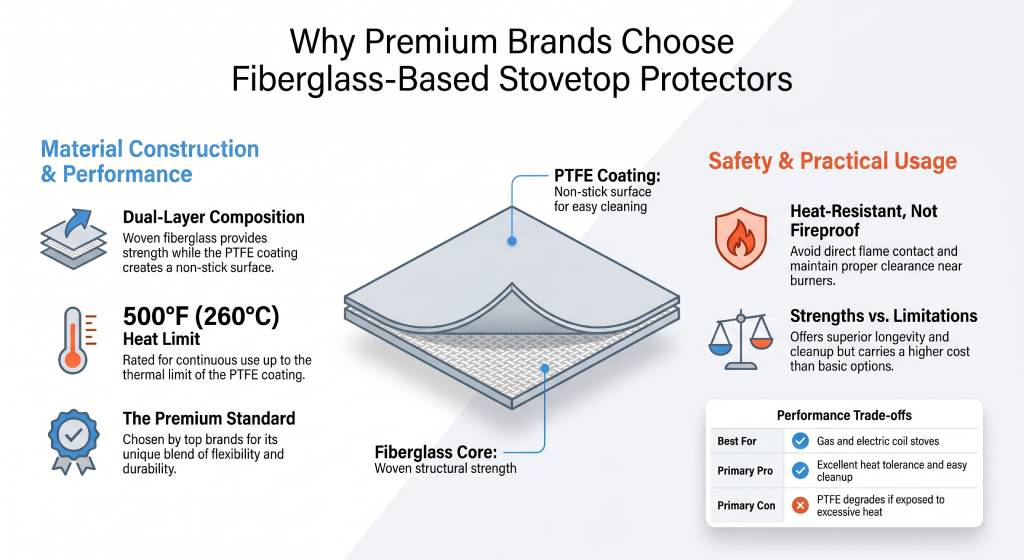
Stove top protector material falls into two core types: Fiberglass-based and silicone-based. Fiberglass-based protectors with PTFE-coatings are heat-resistant and hold up best under heat. Silicone-base protectors are more flexible but has published user fire-risks. The right pick comes down to your stove type, cooking style, and how hot the mat gets. Our stove top protector buying guide can help you choose the right option.
The stove top protector material sold in 2026 lands in one of two types. Fiberglass-based or silicone-based. Each one has a different heat ceiling, safety profile, and useful lifespan.
Every material trades off heat, safety, durability, and which stove types it works on. A 0.2mm protector is not the same product as a 0.5mm protector. Both can be sold under the same label. Thickness extends lifespan. But the material decides if the mat smokes, chars, or stays intact when a hot spot near the burner climbs past its ceiling.
The next sections break down each material. After that, one table puts the trade-offs in a single view.
Fiberglass-based protectors are woven fiberglass cloth covered in polytetrafluoroethylene. That is the same polymer used in non-stick cookware coatings. The fiberglass gives structure and heat tolerance. The PTFE layer keeps the surface non-stick and easy to wipe. It’s important to remember this is not cookware, and you’re not heating the protector directly over the burner flames. The non-stick covering makes this an easy-to-clean solution rather than scrubbing your stovetop. For broader maintenance tips, see our complete stove care guide.
Fiberglass with PTFE-coating is a commonly used material in premium stove protector brands. Stove Shield, for example, offers fiberglass-based protectors with .5-.6mm premium thicknesses. Other brands may offer different thicknesses with this same general composite.
Heat ceiling. PTFE-coated fiberglass is rated for steady use up to about 500 °F (260 °C). The fiberglass cloth on its own can take close to 1,000 °F. But PTFE starts to release fumes at 500 °F and breaks down above 752 °F. The coating fails before the cloth does. A properly designed protector should not overlap the raised areas around each burner, giving ample space between the burner flames and the protector.
The honest caveat: polymer fume fever. When PTFE is heated past about 500 °F, it can release fumes that cause flu-like symptoms. The effect is commonly referred to as polymer fume fever and is documented by Poison Control and medical toxicology references such as NCBI StatPearls. A stove top protector is not cookware, doesn’t operate directly overtop of flames, and sits under the grates; direct exposure to flames is lower than with overheated non-stick pans. But hot spots near the burner may exceed 500 °F. Heat resistant does not mean 100% Fireproof. Avoid Direct Contact With Flames.
For most home gas and electric coil stoves, fiberglass-based protectors are the most heat-tolerant pick in this category. It is not the cheapest. It is not invincible.
This is the stove protector material comparison the rest of the SERP skips. Each row shows the published spec or an evidence-backed range. Not marketing copy.
| Material | Heat ceiling (sustained) | Gas-flame safe? | Electric coil safe? | Induction-safe? | Typical lifespan |
|---|---|---|---|---|---|
| Fiberglass-based PTFE coated | ~500 °F | Yes, with clearance from open flame | Yes | No | 1–3 yrs |
| Silicone-based | ~400–500 °F | Yes, with caution (chars, smokes, can ignite) | Yes, with caution | No | 1-3 yrs |
A few honest notes on the table:
Every stove type has a different failure mode. The material that handles it best changes with the stove.
Gas burners. Open flame. Peak heat over 1,900 °F at the cone. The protector sits under or around the burner cap, not in the flame. The risk is oversized cookware pushing flame onto the mat. The other risk is a boil-over running hot fat onto the surface. PTFE-coated fiberglass at 0.5-.6mm or above handles this best. Find the browse stove protector materials designed and fitted for your exact stove model.
Search interest in glass electric and induction stove protectors has increased in recent years. The category is real. But it is small and material-specific. Do not buy fiberglass or silicone mats and assume it works on induction. It does not.
Real-world lifespan reports cluster by material more than by brand. Here is what the evidence shows, sorted by source type.
PTFE-coated fiberglass protectors at 0.5mm typically last two to three years under normal use.
Verified incidents (Trustpilot + Shopper Approved): Silicone failures cluster in the first cooking session and throughout the first month. Fiberglass-based protectors shows fewer first-month failures on the same review sites. The bulk of complaints on fiberglass-based protectors are cosmetic. Think discoloration after a year, not active failure.
Independent buyer review: A comparison on ralphsway.com (a third-party review site) finds that a 0.5mm PTFE-coated fiberglass protector outlasts a competing brand’s 0.3 mm PTFE-coated version. The result confirms thickness matters within a material. But no test isolates material from thickness with other variables held steady.
The honest answer: 0.5mm PTFE-coated fiberglass is the material that lasts longest on a typical gas or electric coil stove.
Are silicone stove top protectors safe on a gas burner?
Food-grade silicone is rated for steady use up to about 400–500 °F. Trustpilot and Shopper Approved reviews log silicone protectors that charred, smoldered, or ignited during normal gas cooking. The risk grows when oversized pots push flame onto the mat.
Can you use a stove top protector on an induction cooktop?
Most stove top protectors are not safe or useful on induction. Wolf and other induction-cooktop makers recommend no barriers between cookware and the induction surface. The barrier drops cooking speed and can stop pan detection. PTFE-coated fiberglass, pure silicone, and aluminum are not induction-ready.
Stove-top protector material determines how a product performs.
For active cooking on gas or electric coil stoves, 0.5-.6mm fiberglass-based protectors are among the most heat-tolerant materials commonly used in consumer stove protectors. It is a material commonly used in many premium stove-protector brands and has been on the market for over a decade.
Silicone is a flexible option with a known heat risk. It works well for off-stove use but is risky near active burners based on publicly available consumer reviews.
To care for a ZLINE gas range, wipe the porcelain enamel cooktop and sealed burners…
RV gas stove care means a quick wipe after every meal, a deep clean where…
Miele gas stove care means wiping the porcelain or stainless deck after every meal with…
Fisher & Paykel gas stove care comes down to a daily wipe of the brushed-stainless…
To care for a Tappan gas stove, wipe the cooktop and grates after each use…
Crosley gas stove care comes down to a daily wipe-down once the cooktop is cool,…